
Burgh House
Address: Burgh House, New End Square, Hampstead, London, NW3 1LT
Opening Hours: Wed-Fri and Sun 10am to 4pm, and most Public Holidays
Date house first built: 1704
Major enlargement: 1720
Historical period: Queen Anne / Late Stuart / Early Georgian
Architectural period: Queen Anne style /Early Georgian
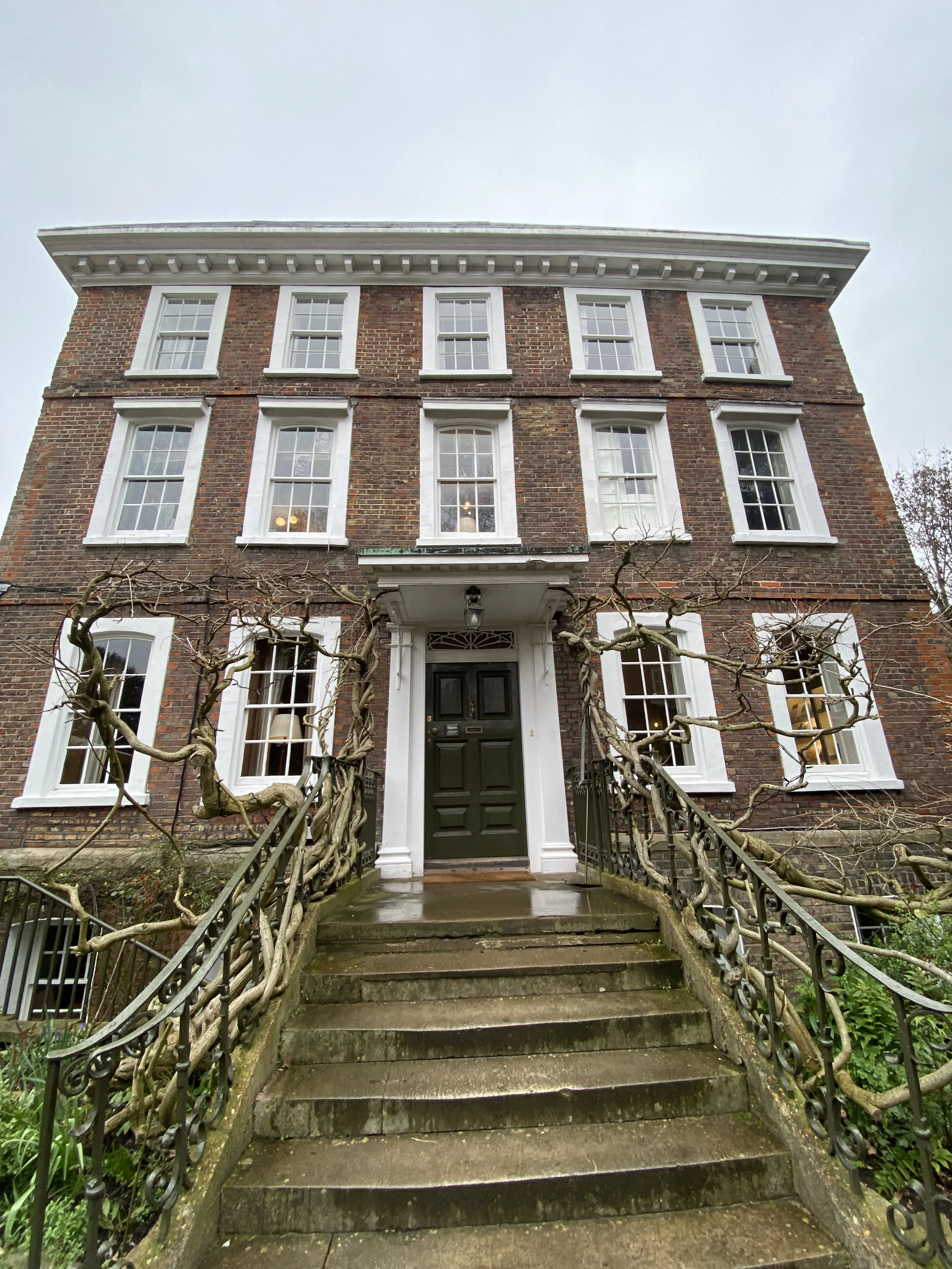
Front facade & entrance door at raised ground floor level. Photo taken February 2026
Continuing our visits to historic houses, the second of the year, we visited Burgh House one of Hampstead’s earliest surviving houses and a pleasing example of domestic architecture from the 1700s. It is a Grade I Listed Queen Anne era (final Stuart monarch) / early Georgian era house situated in the heart of Hampstead Village.
So far we’ve visited seven houses:
Sir John Soane’s Museum (Georgian)
Burgh House’s history
When Burgh House was first built in 1702, the last of the Stuart monarchs was on the throne - Queen Anne. The population of London at the time would have been circa 600,000. Hampstead was not part of London at that time and was seen as a rural escape from the polluted air and congestion of the City of London. The UK was going through the industrial revolution and the factories of London were powered by burning coal, so the air was very polluted. Hampstead by contrast, sitting far away from London at the time was not affected by the pollution and crowded conditions. The specific residential area that Burgh House lies within came into existence in the form we now know due to some iron rich (Chalybeate) springs dating from 1698 known as The Hampstead Wells. The water would have had an unpleasant taste but was understood to have great health benefits. The development of the wells was the primary driver of Hampstead’s early growth. These alongside the clean rural air drew people to the area, first as tourists and then later to live there in increasing numbers. The peak popularity of the wells started to decline in the mid 1720s. The fashionable set started to move on to other springs such as Tunbridge Wells. However, the area continued as a spa town until the end of the 1700s, when the final ‘Long Room’ a spa destination, shut its doors. Physical traces of the wells era remain in place names and urban layout between Hampstead High Street and Hampstead Heath. A monument to the spring still exists on Well Walk, called the Chalybeate fountain, however by the time it was built in 1882, there was very little spring water available, having been affected and more or less cut off by the sewerage system and associated water infrastructure in London.
1702 - The house is first built
Within this context Burgh house emerged, first built in 1702 on land purchased from requisitioned heath land by a prosperous haberdasher family, the Sewells who moved from the City of London. They like other well -to-do families were attracted by the proximity to the heath, the clean air and the healthy spring waters. More detail on their history further below.
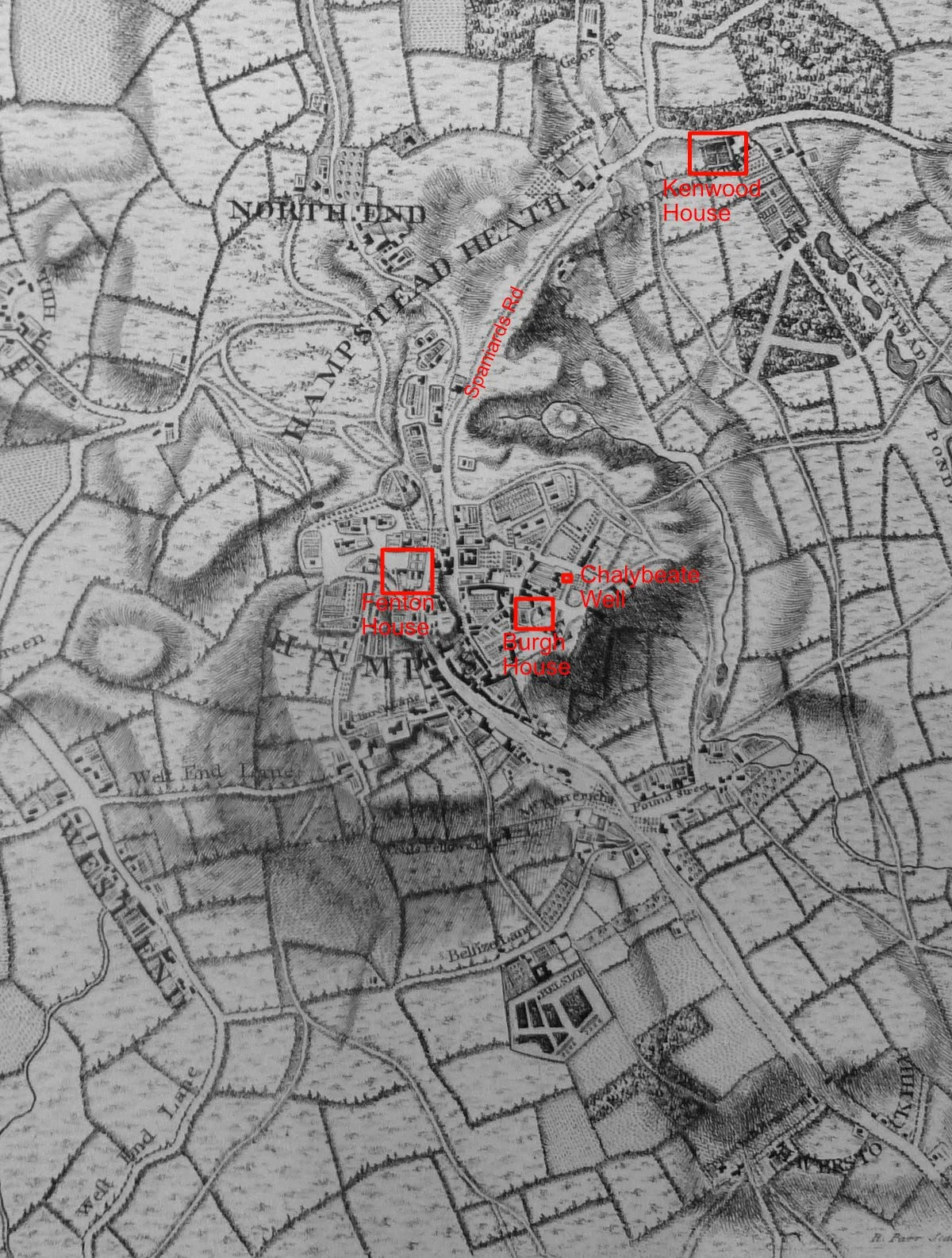
A marked up map showing the location of Burgh House in relation to Kenwood House and Fenton House
1720 to 1743
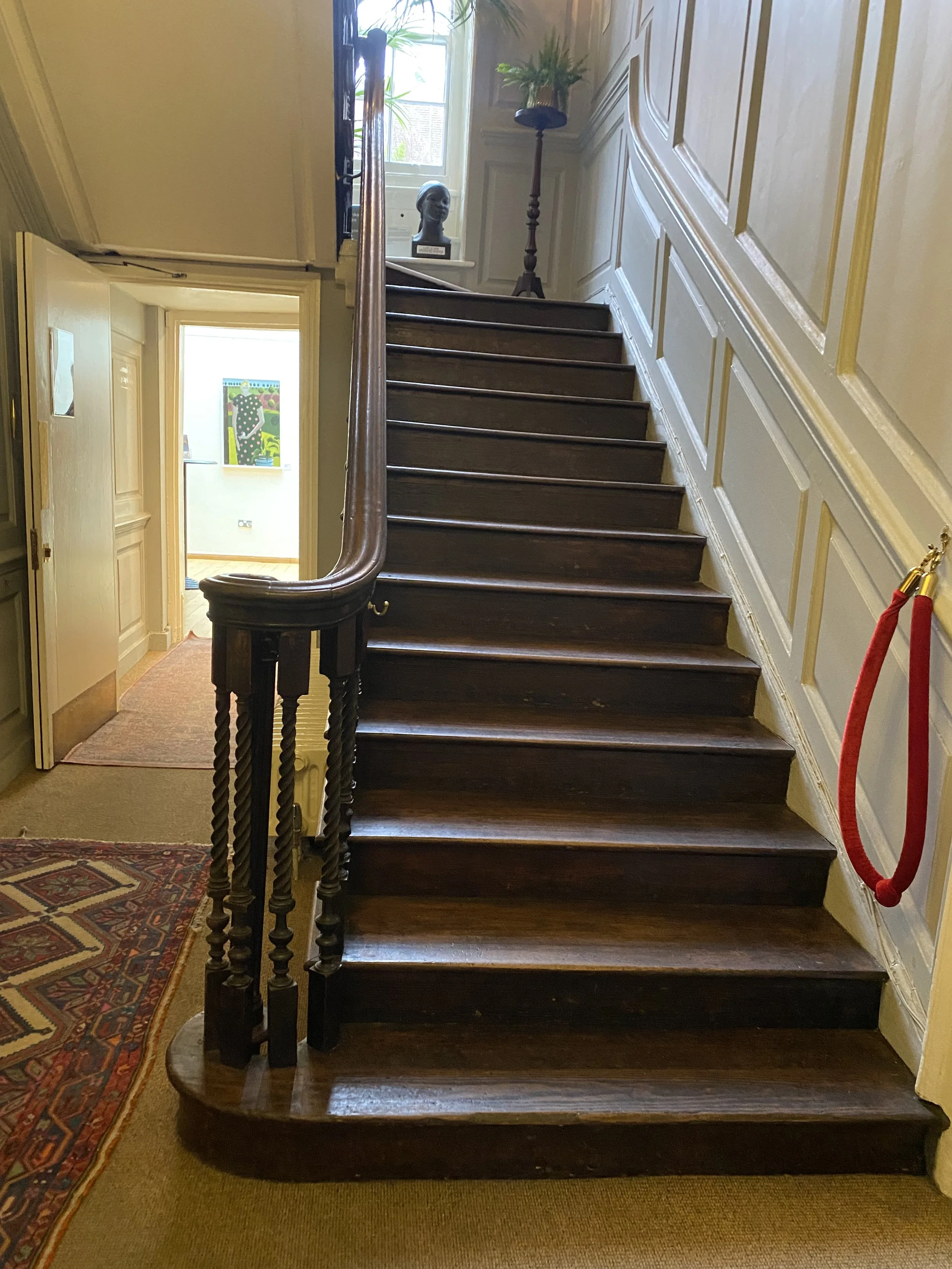
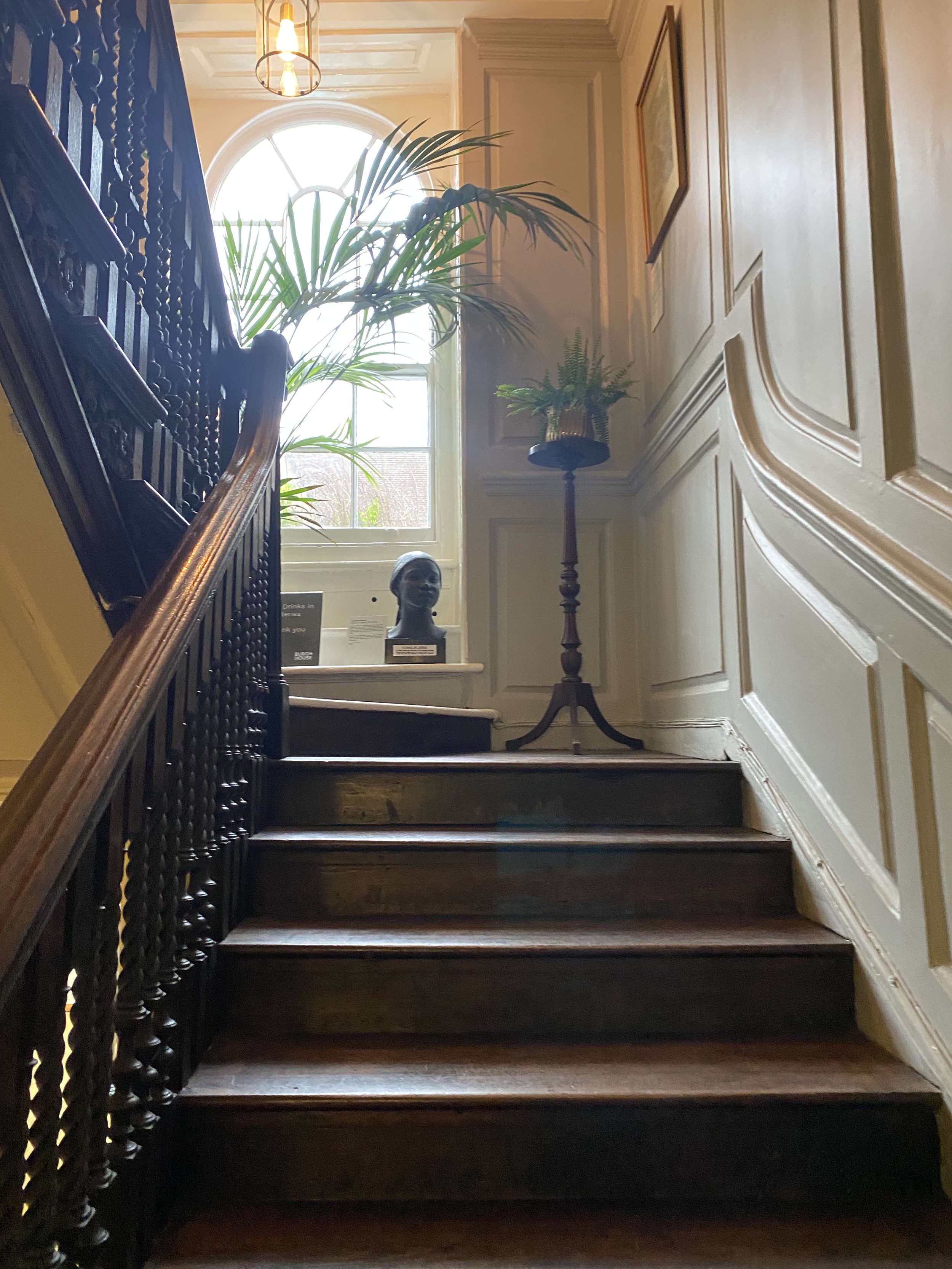
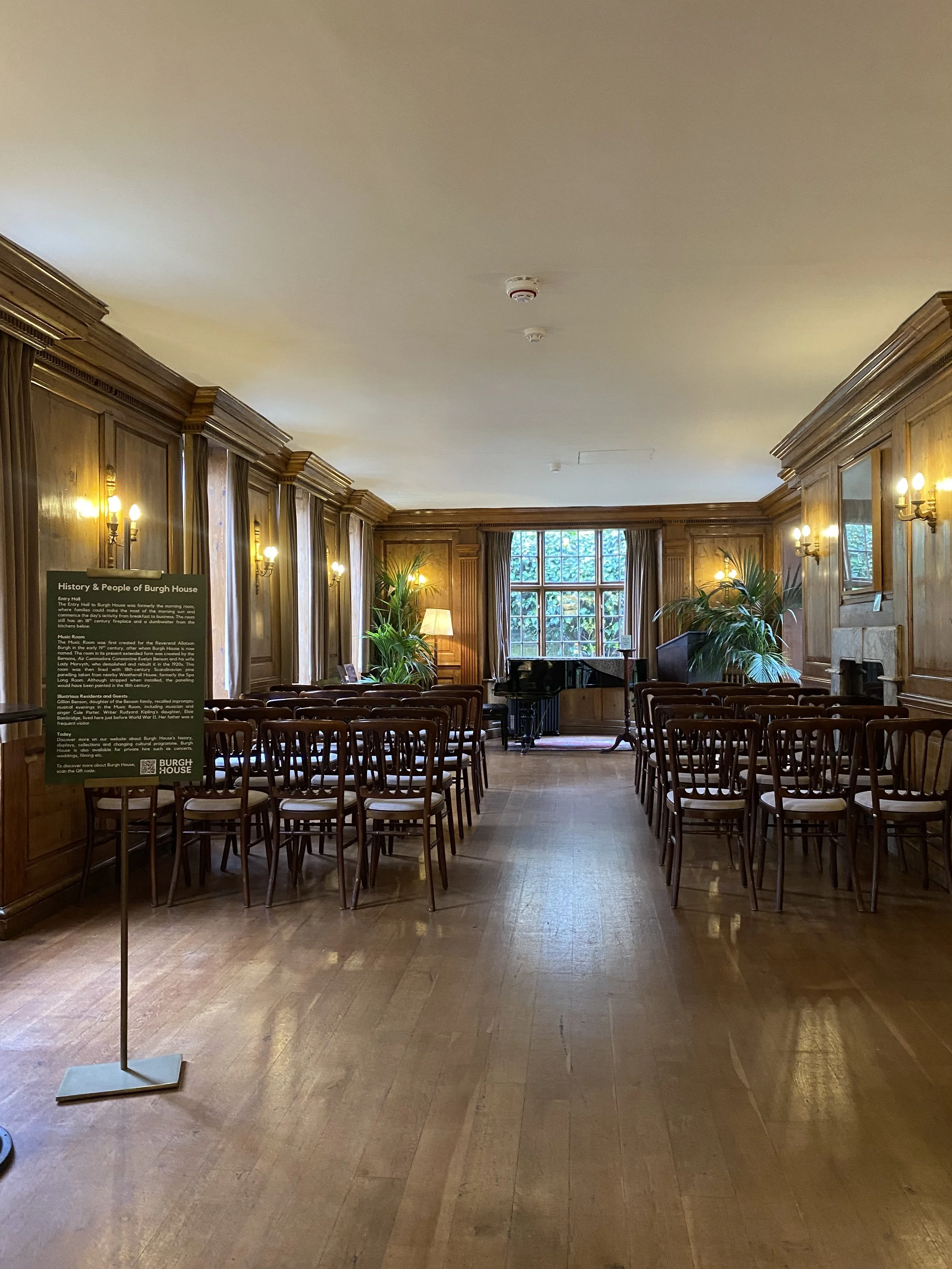
Dr William Gibbons was the doctor attached to Hampstead’s spa at the period when the wells were most fashionable. Architecturally, this is the moment when the house becomes more ambitious. The staircase, panelled rooms and wrought iron gates belong to this expansion. After buying the house, he extended it substantially to the rear of the house. He also added the wrought iron gates and his initials “WG” are still to be seen on the gates which are also part of the Grade II listing. He is also associated with the early import of mahogany into England and is said to have commissioned some of the earliest furniture made from it. I understand that the new grand staircase which he built in the house is made from mahogany Panelling from the nearby spa’s former Long Room was later installed in what is now Burgh House’s Music Room, although during Dr Gibbons time this room was still a small two bay room - its later expansion into the music room happened in the 1920s.
1776 to 1820
Israel and Sarah Lewis
In the later eighteenth century the house belonged to Israel Lewis, an upholsterer who also supported Rosslyn Hill Chapel. During his ownership the building was known as Lewis House. He knew John Keats, who lived locally and is recorded as visiting him and sending him apples from his orchard. Lewis was an eccentric and was once fined for keeping a dung heap in the garden.
1822 to 1856
Reverend Allatson Burgh
Allatson Burgh, vicar of Guildhall church of St Lawrence Jewry in the City, gave the house the name it still carries. He bought the house from the Lewis family for for £2,546. He was evidently a colourful and difficult figure. His parishioners became so dissatisfied that they attempted to have him removed by petitioning Queen Victoria. Samuel Wesley, who knew him, described him as an odd but highly entertaining man. Whatever his personal eccentricities, he played an important local role in arguing against development of Hampstead Heath.
1858 to 1881
Royal East Middlesex Militia
From the late 1850s the house became the base and officers’ mess of the Royal East Middlesex Militia. The militia’s role was domestic defence. However, the social life of the mess was lively enough to irritate nearby residents. During these years barrack buildings were erected over the garden, they would later be removed by Hampstead Borough Council.
1884 - 1906
Thomas Grylls and family
The house became a private home again in 1884 when Thomas Grylls moved in with his wife and their twelve children. Grylls was a notable stained glass designer and, as a partner in Burlison and Grylls, was responsible for the rose window above Poet’s Corner in Westminster Abbey.
1906 - 1924
Dr George Williamson, an internationally recognised art historian with a particular interest in portrait miniatures and trade tokens, later lived in the house. He was highly prolific, publishing more than one hundred books. Among them was a study of Wedgwood’s “Frog Service”, a 950 piece dinner set created in 1774 for Empress Catherine the Great of Russia, which included several plates illustrating Burgh House. During his time there, he also commissioned Gertrude Jekyll to design the garden, of which only the terrace survives today.
1925 - 1933
Captain Constantine Evelyn Benson
In 1925, the house was purchased for £4,750 by Captain Constantine Evelyn Benson DSO CBE, a director of Lloyd’s Bank. During his ownership, the current music room was constructed, replacing Dr Williamson’s former library.
1933-1937
Elsie and George Bambridge
Elsie Bambridge, daughter of Rudyard Kipling, lived in the house with her husband, Captain George Bambridge. They were were the final private occupants of the house. She described it as a place that brought her father great happiness, and it was to this house that he made his final visit in 1936 to see her before his death in 1937. After Kipling’s death in 1937, Elsie used her inheritance to purchase Wimpole Hall in Cambridgeshire. Burgh House was then put up for sale but, with war approaching, no buyer came forward. The lease subsequently passed to Hampstead Borough Council, and later to Camden Council.
1937 - 1946
The house was unoccupied for many years as a buyer could not be found due to the uncertainty and difficulties of World War II.
1946 - 1974
After being empty and facing potential demolition during the war years, the the now defunct Hampstead Borough council bought the property in 1946. The barrack buildings that had stood in front of the house once added by the Middlesex militia were removed, and in 1947 it reopened as a community centre, with a Citizen’s Advice Bureau located in the basement. Over the years weddings and other community events for the local residents took place at the house and it became a beloved local asset.
1974 - 1979
In 1965, Hampstead council was consumed in the newly formed much larger Camden Council. 1974 when Camden Council officially took over the running of the house, it was clear that they didn't want to keep the house on. "They had inherited a Grade II listed building that was in a sorry state. Their attitude was 'we don't want to deal with that'," said Burgh House's director Mark Francis in the Ham and High paper. The house had dry rot and Camden Council had damaged some of the interior of the building, including its fireplaces.
Thankfully, locals rallied, raising over £50,000 to save it. The Burgh House Trust took over the lease in 1979, and it reopened as the Burgh House and Hampstead Museum we know and love today.
When plans emerged that Camden Council were planning to convert the house to commercial use, local residents were outgraged, they rallied together, raising over £50,000 to save it. and responded by launching a “Keep Burgh House” campaign. This eventually led Camden Council granting the newly formed Burgh House Trust a lease for the building for a peppercorn rent.
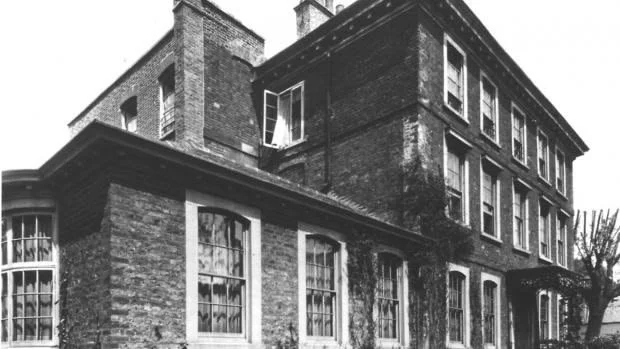
Burgh House in 1979
The architectural details of Burgh House
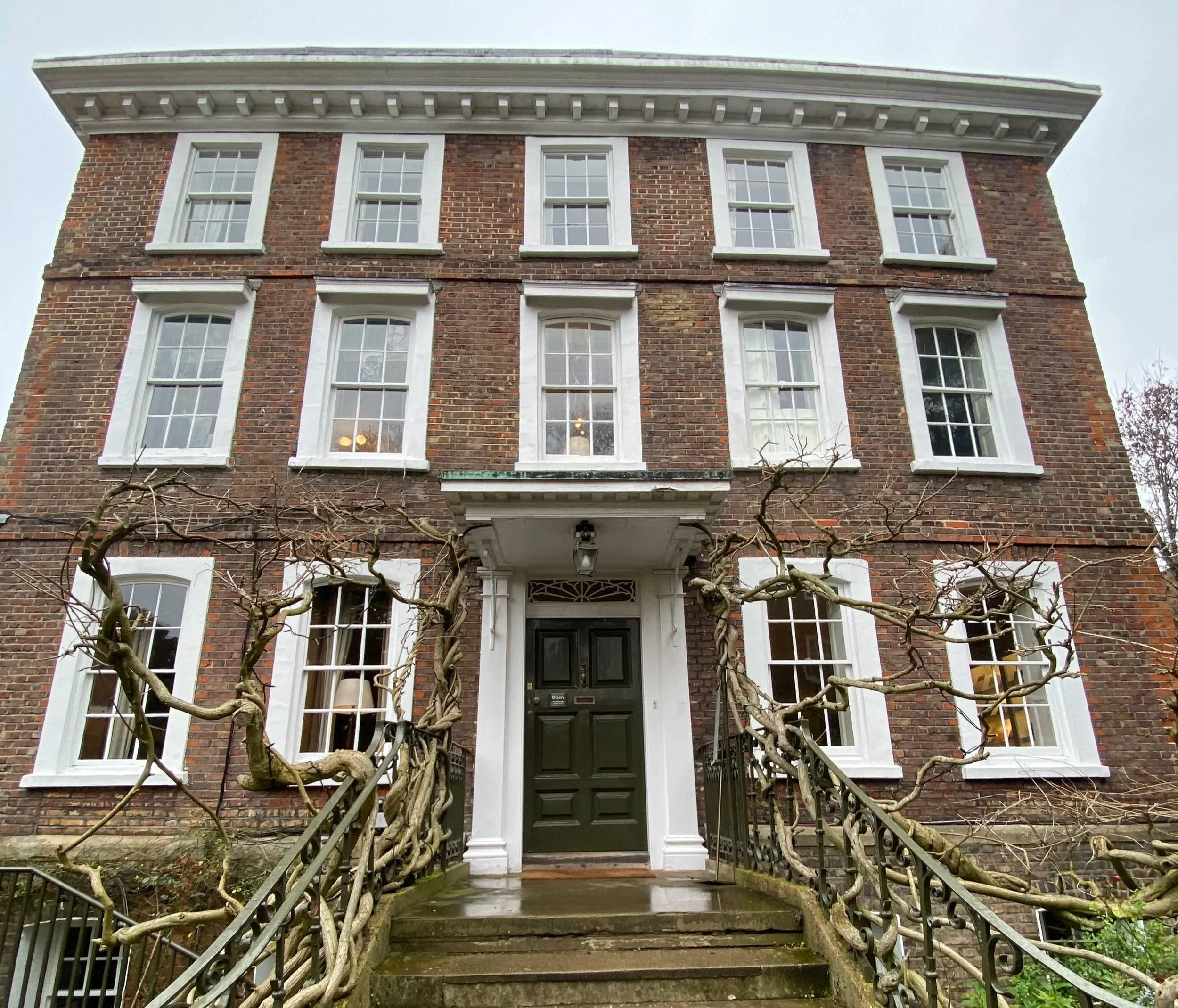
The Front Facade
The house is built in Brown brick with red brick dressings and some later patching. It has hipped tiled roofs. When it was first built it would have had a perfectly symmetrical facade, with three storeys above ground and one below, spanning five bays across on the top two stories and first and second floor.
At raised ground floor level there is a centrally located entrance door and attractive cantilevered porch with ornate brackets, freestanding fluted columns and a fielded panelled soffit (the underside of the porch). with wide generous stone steps connecting the garden level entrance area to the house.
At raised ground floor level, the symmetry is interrupted by an additional two bays, a later extension in 1925 that allow for the much used music room internally.
The brickwork is pleasing with horizontal banding across each of the storeys on the front facade. It has a wood modillion (an ornate bracket that supports the cornice at the top of the house below the roof level
In architecture, a modillion is an ornate bracket, more horizontal in shape and less imposing than a corbel. They are often seen underneath a cornice which helps to support them. Modillions are more elaborate than dentils (literally translated as small teeth).
The evolution of the architectural design of the house over time
In 1702, the house was much smaller, consisting only of the front portion, with the rest added incrementally over time, mainly in 1720 by Dr Gibbons. At ground floor level, the plan was quite simple. There was an entrance hall and a modest room on the footprint of what is now the Music Room. This would likely have been used by Sewell, a haberdasher, to store and sell fabrics. At the time, it was common to trade directly from the home rather than from a separate shopfront.
The basement was entirely practical in nature, housing the kitchen, servants’ hall and wine cellar. The larder was tucked beneath the front steps, while an ice house was set within the moat, a reminder of how carefully food storage had to be managed before modern refrigeration.
Upstairs, the first floor would have felt broadly familiar in layout, with a central space similar to what we see today, then referred to as a closet. The staircase, however, was positioned closer to the front of the house in this earlier phase. Rooms now known as the Wells Room and the Office would most likely have been used as bedrooms or more informal reception rooms.
The most dramatic change came in the 1920s, when the Music Room was significantly enlarged to create the space we see today. It now works beautifully as a performance space, hosting concerts, talks and small productions, while also being used for weddings and private events. I used to do Mini Mozart baby music classes in it and it was a lovely space to spend time in every week.
More recent interventions have been handled quite carefully. The Peggy Jay Gallery, added in 2005 on the raised ground floor, was introduced to improve access and provide modern facilities, including step free entry and baby changing. It is deliberately restrained, allowing it to function as a calm backdrop for contemporary exhibitions.
Elsewhere, the house has been gently adapted to support its current use. The Library is now used for meetings and smaller gatherings, while the Heath and Wells Rooms house the Hampstead Museum. Temporary exhibitions are shown in the Art Gallery and the Christopher Wade Room. The basement, along with the Gertrude Jekyll terrace, is now occupied by the Buttery Café, which sits comfortably within what was once the working heart of the house.
The staircase
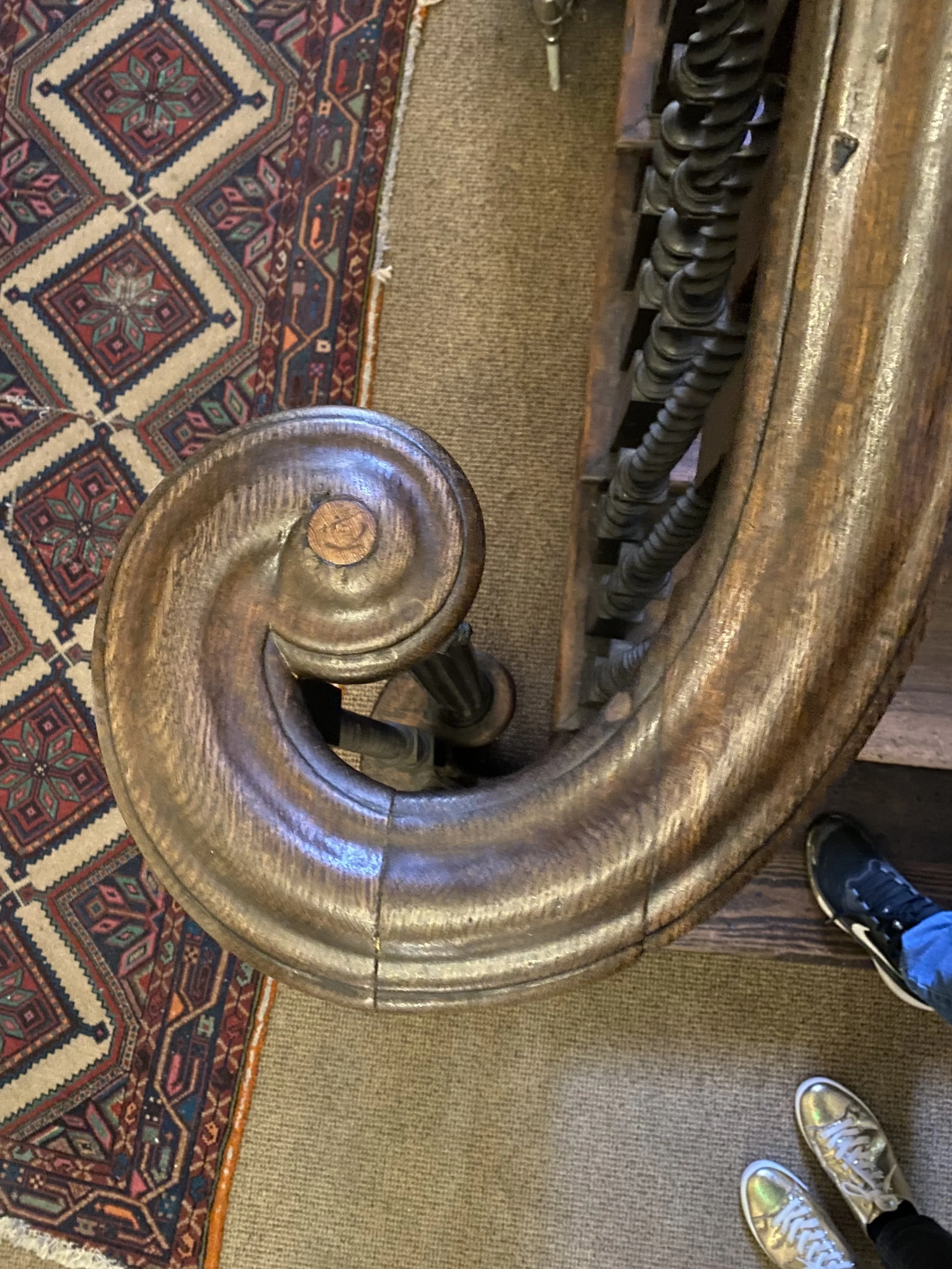
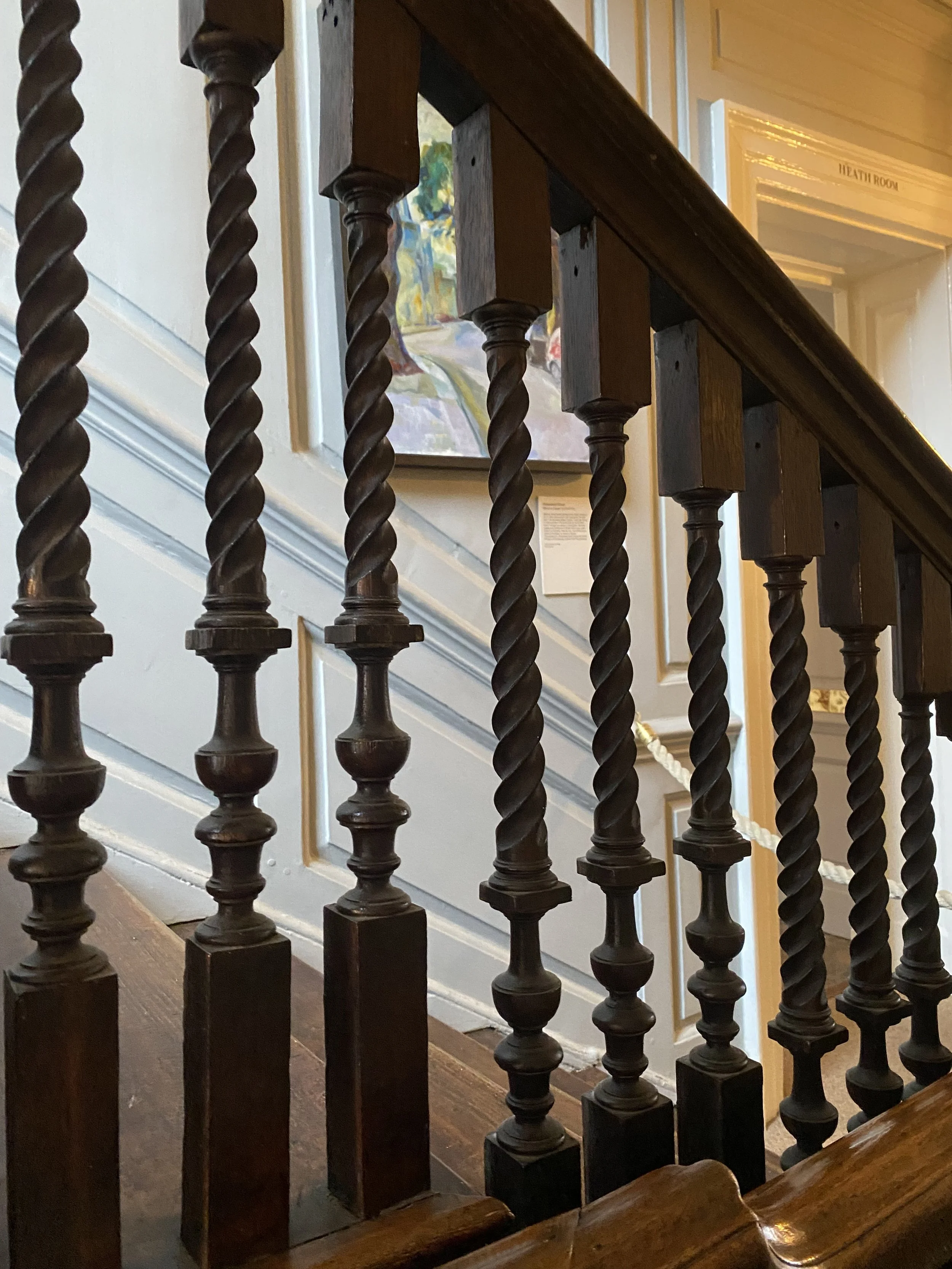
In 1702 the staircase would have originally been located closer to the front of the house but in 1720 when Dr Gibbons purchased the house, he undertook a vast extension and relocated and created a much grander staircase in mahogany. Dr Gibbons imported mahogany. I love the beautiful volute of the staircase (the swirling end of the handrail).
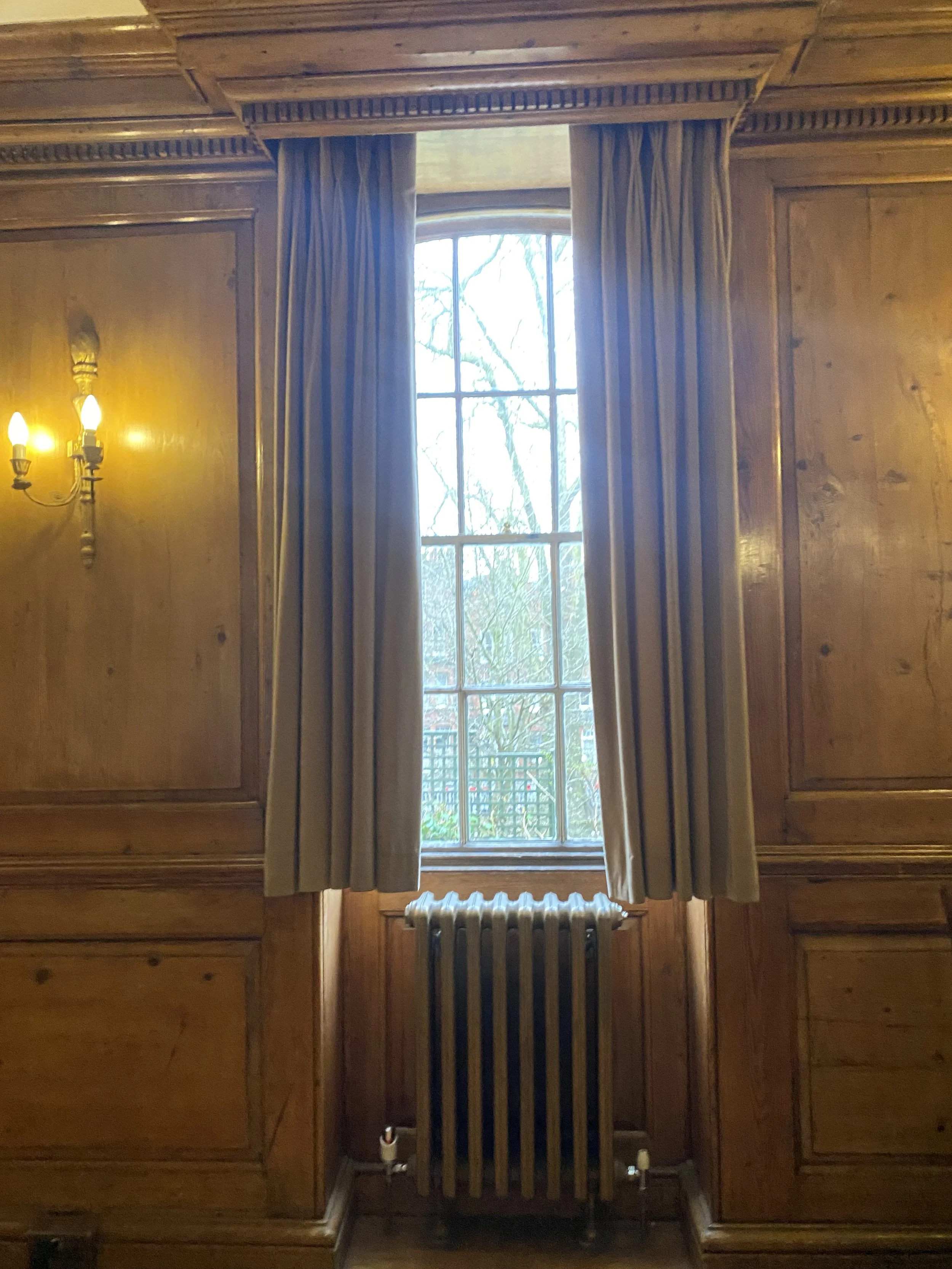
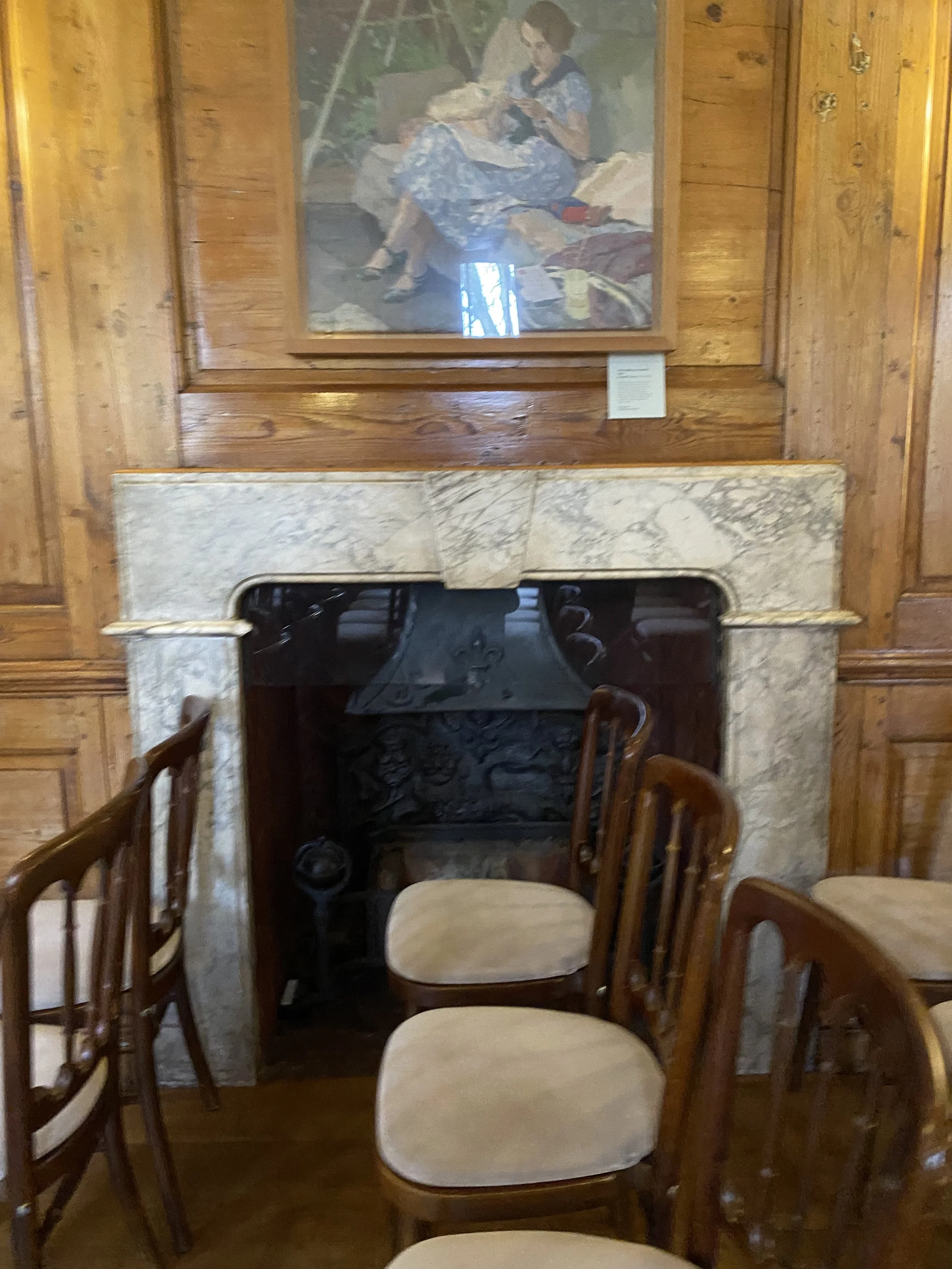
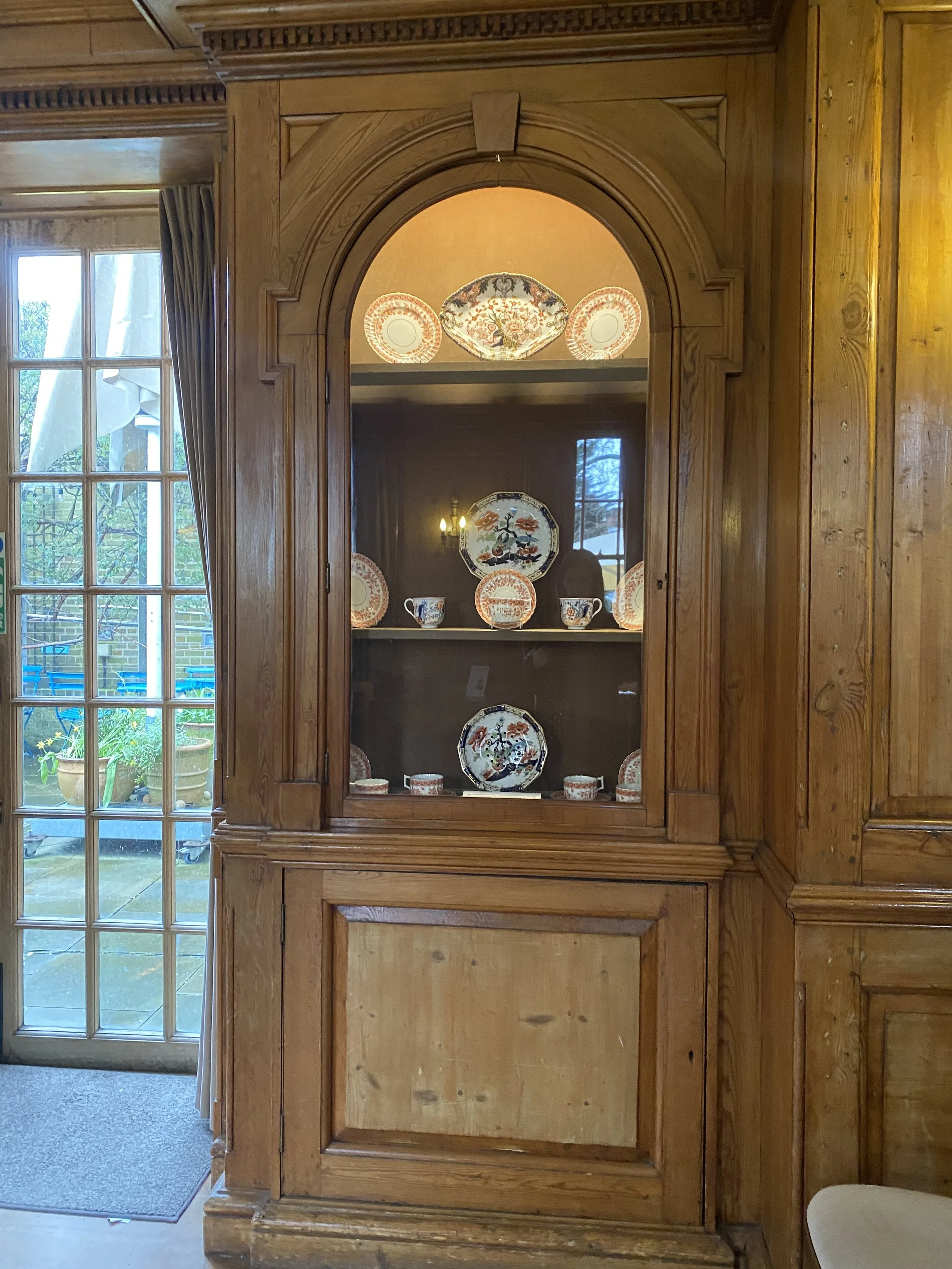
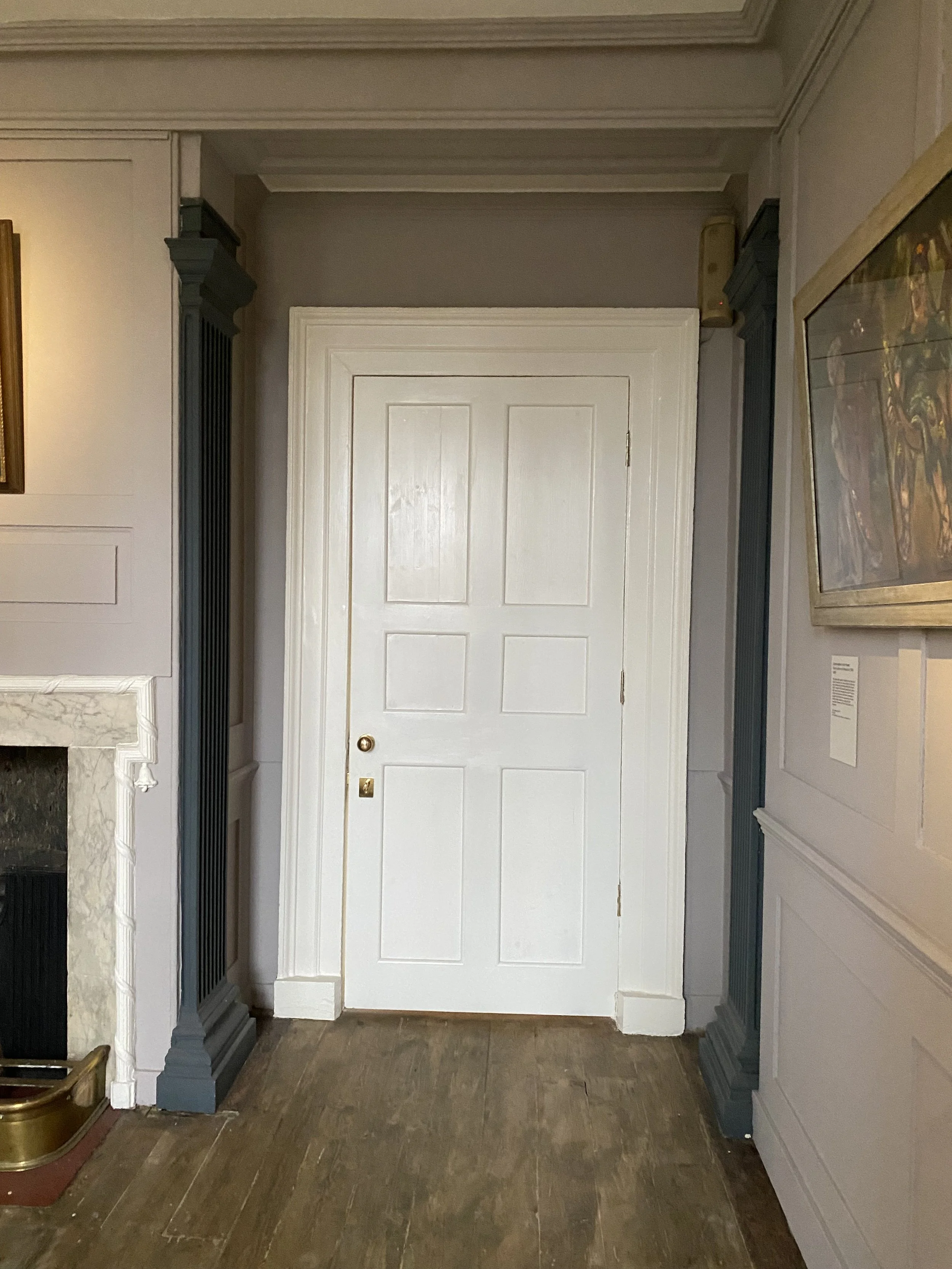
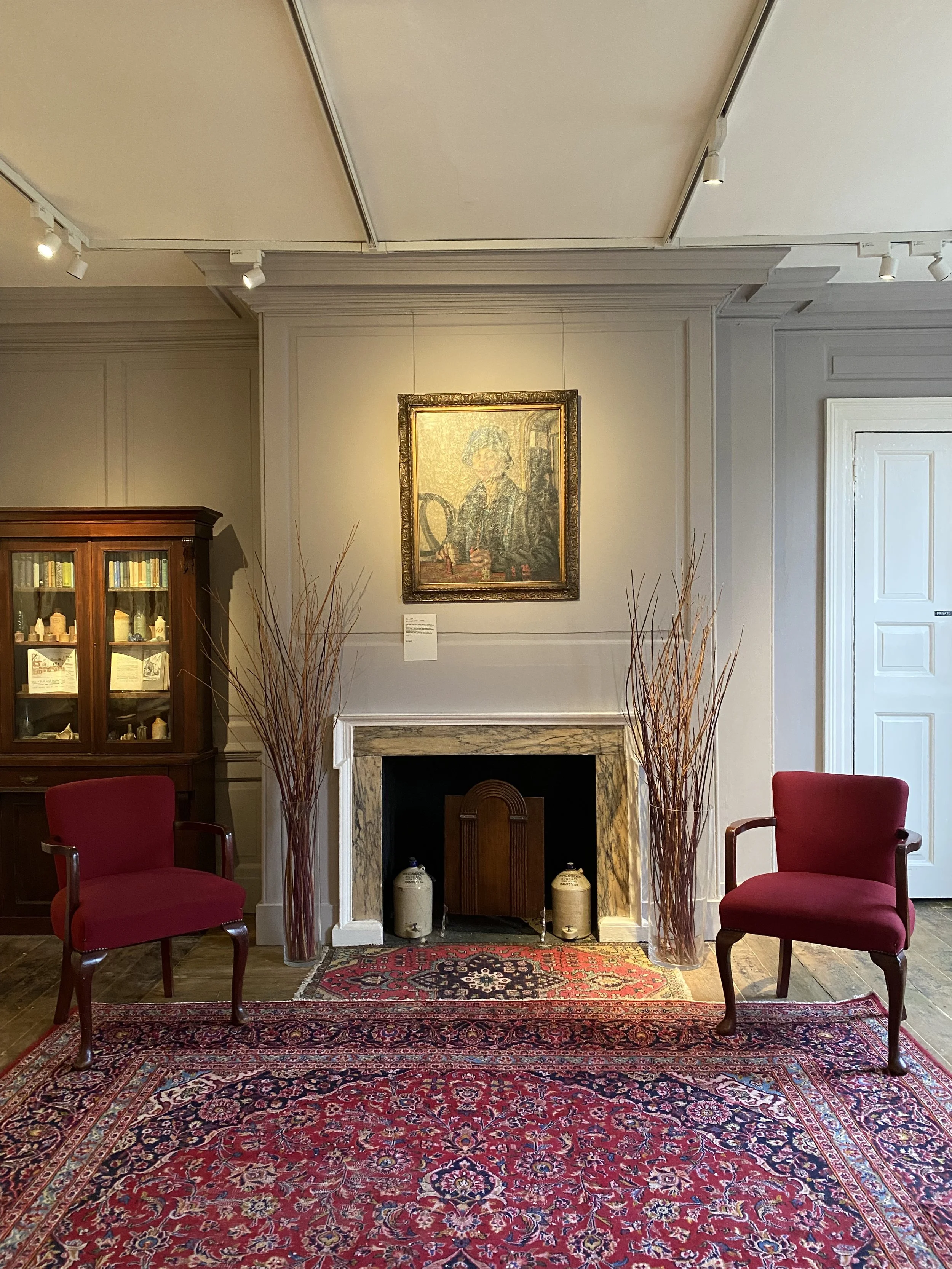
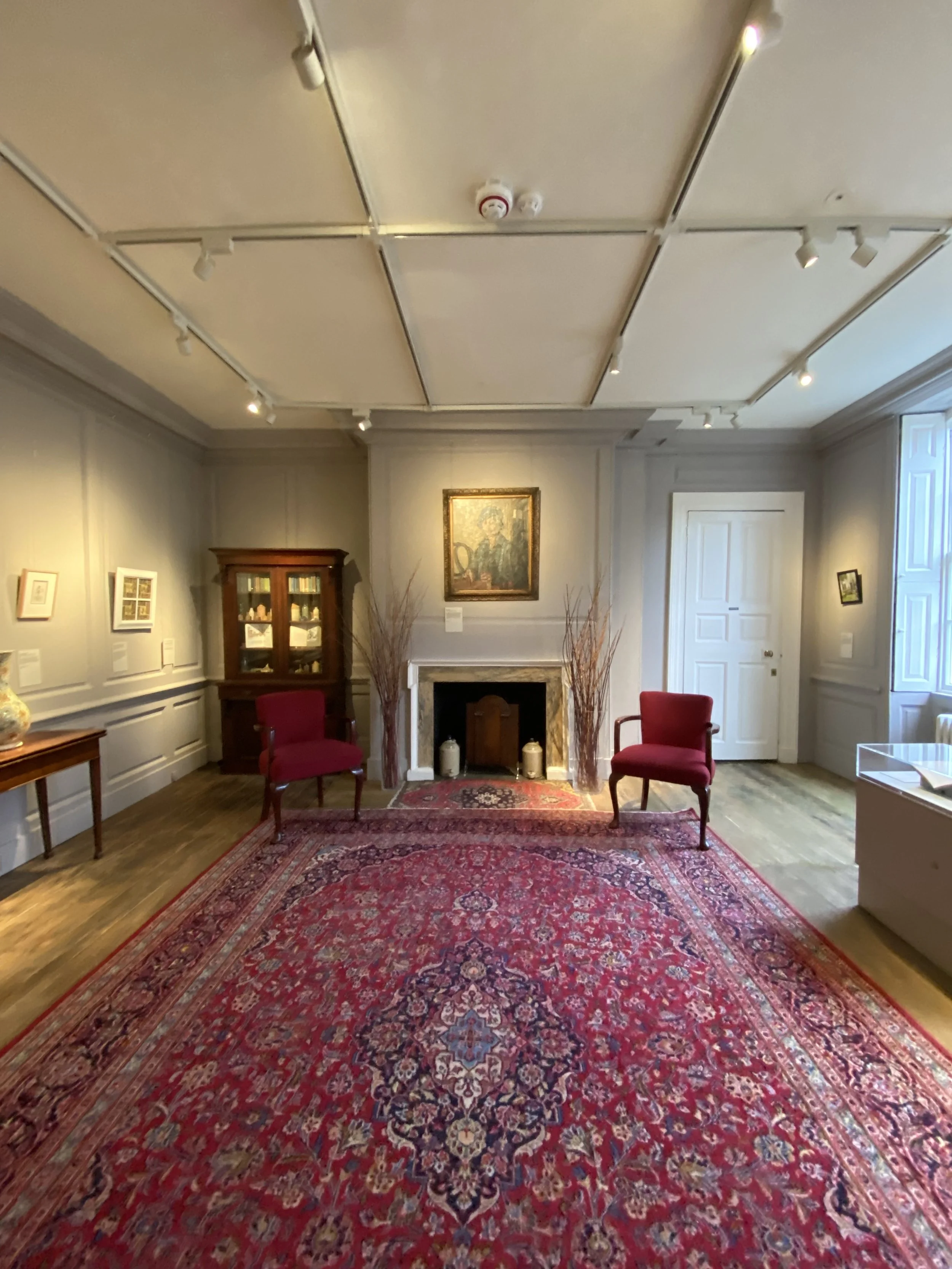
The Music Room & panelled interiors
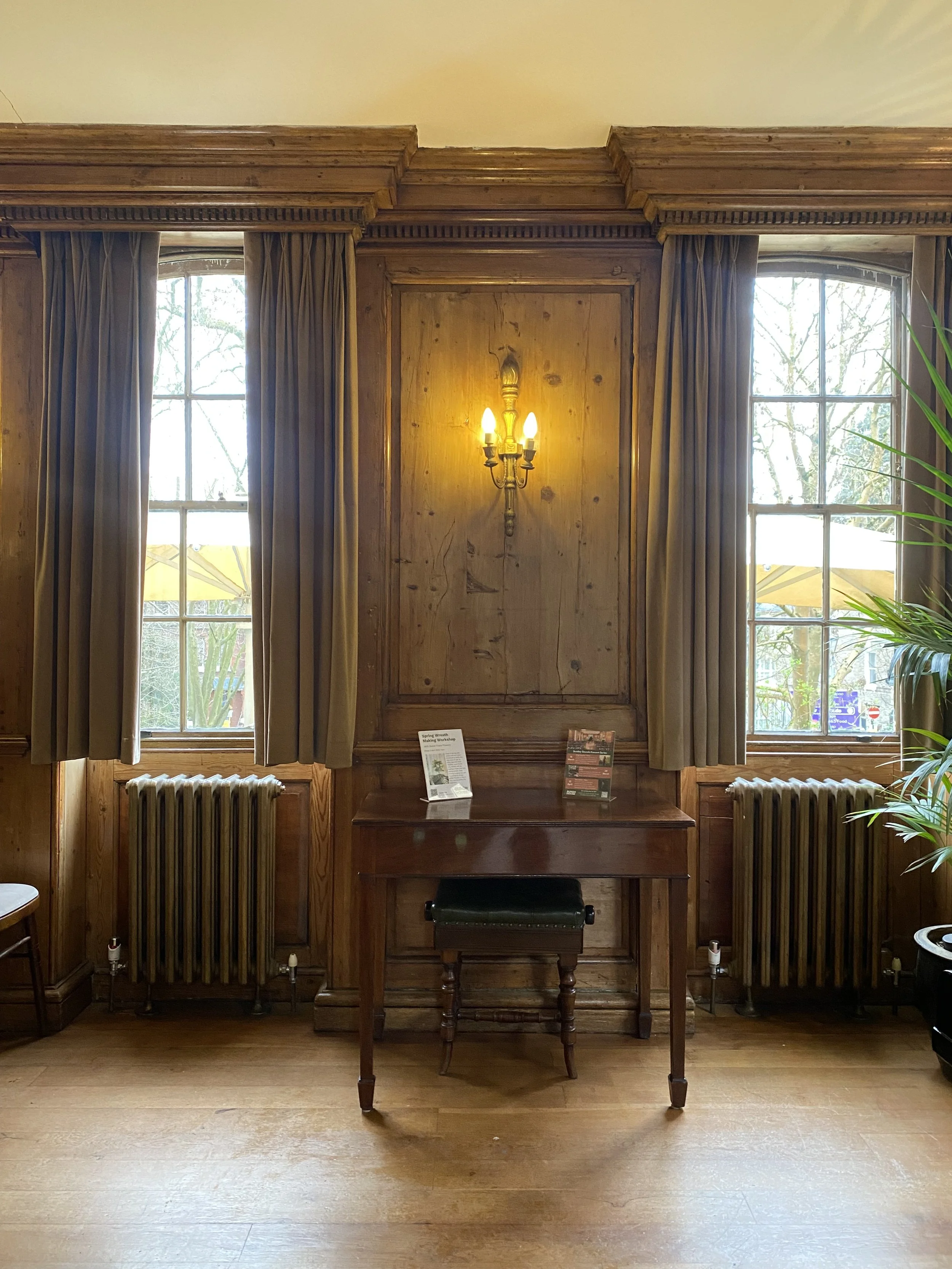
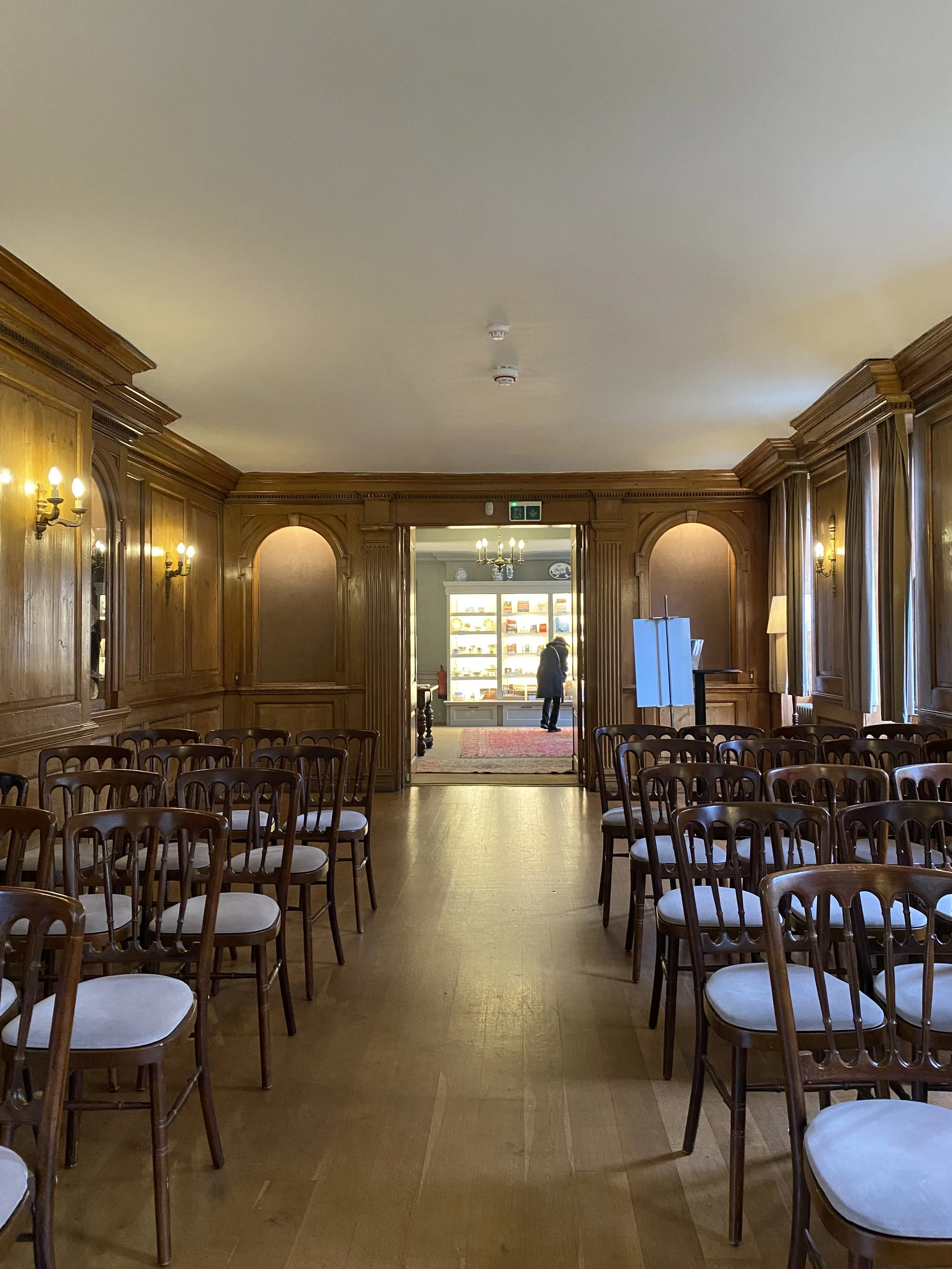
The Library on the raised ground floor
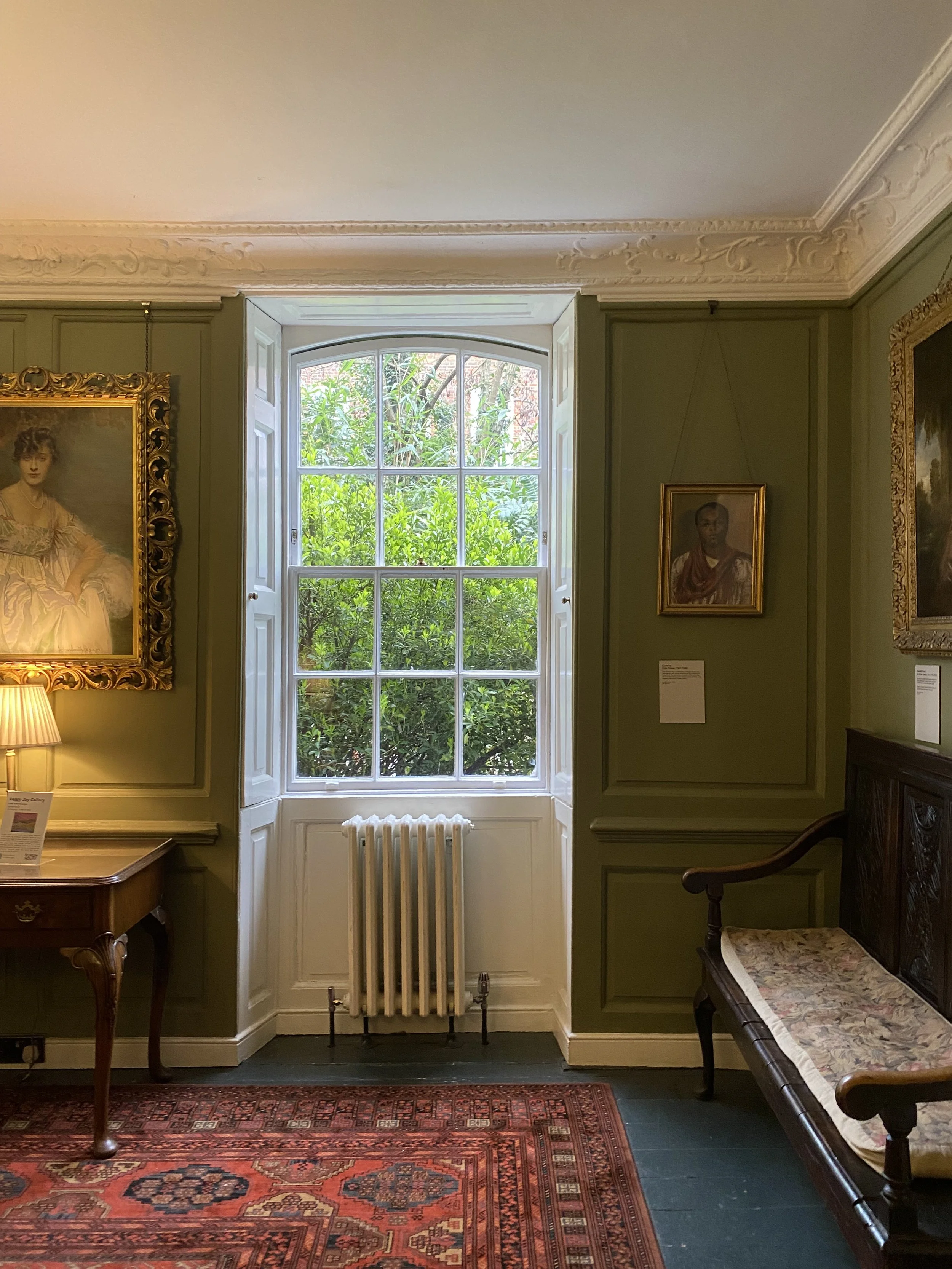
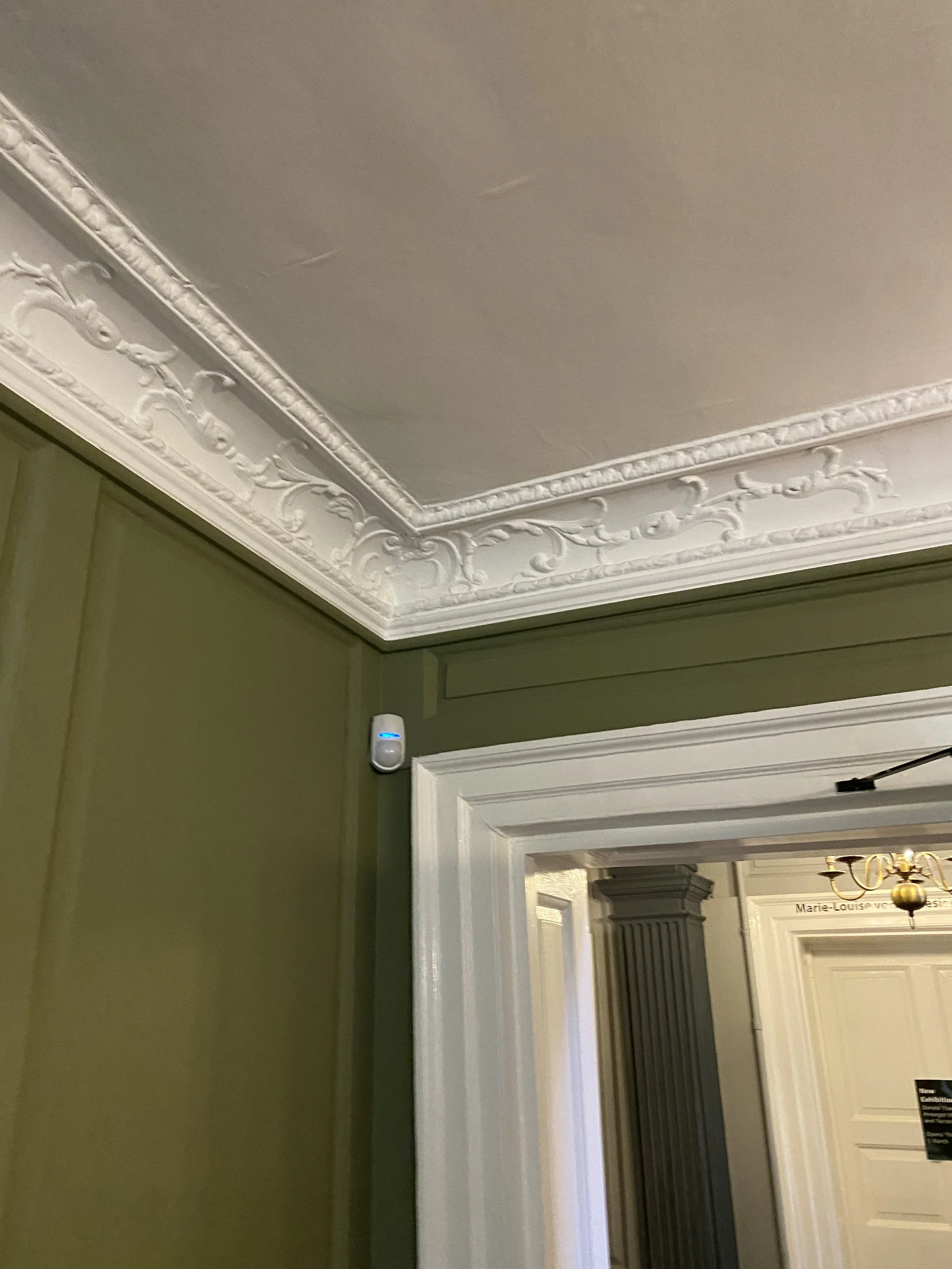
One of the first floor rooms which would have originally been a bedroom
Who owns Burgh House?
Burgh House has a slightly unusual ownership and management structure, which reflects its rescue by the local community. The freehold is owned by London Borough of Camden.
Who runs it & pays for it?
Burgh House Trust is responsible for the whole house and garden including day to day running as well as all restoration works. It manages the museum, exhibitions and events, the café, concerts and talks, venue hire (weddings, filming, private events). The trust covers the running costs largely without government funding. Income typically comes from: Venue hire and also sporadic funding from bodies such as the National Lottery - The house is hired for weddings, concerts, private events, filming and exhibitions, the café and shop, donations and memberships, grants and fundraising, ticketed events and cultural programmes. Because of this model, the house operates more like a self sustaining cultural charity than a publicly funded museum. Camden council however as the Freeholder remain responsible for restoration works.
Why it still matters
Burgh house is quietly representative of how London’s houses and villages evolved.
It began as an ambitious, generous house built by a City family looking for cleaner air and a better quality of life. It was then extended at the height of Hampstead’s brief moment as a spa destination, when confidence and social ambition were at their peak. After that, it simply adapted. Different owners, different uses, small changes over time. No single defining moment, just steady evolution.
Architecturally, that makes it incredibly instructive. It is not a house designed in one go by a single architect with a clear vision. It is layered. You can read those layers in the plan, in the staircase, in the panelled rooms and in the later additions. It is exactly the kind of building many of us are working with in London today.
There is also something quite powerful in the fact that it nearly disappeared. By the 1970s it was in poor condition and no longer seen as particularly valuable. It only survives because local residents decided it was worth saving. That feels especially relevant when working in conservation areas, where the value of buildings is often only recognised once they are under threat.
For me, the most compelling aspect is how well the house has absorbed change. It has moved from private home, to militia headquarters, to community centre, to museum and cultural venue, without losing its essential character. That is not accidental. It is the result of a robust original structure and a series of relatively careful interventions and the care of concerned locals who took on the responsibility to conserve the house for future generations.
As architects, we often talk about flexibility and longevity, but Burgh House demonstrates what that actually looks like over three hundred years.
And perhaps that is why it still feels so relevant. Much of our work today involves adapting and extending houses that were never intended to last this long, yet have done so because they were well proportioned, well built and capable of change.