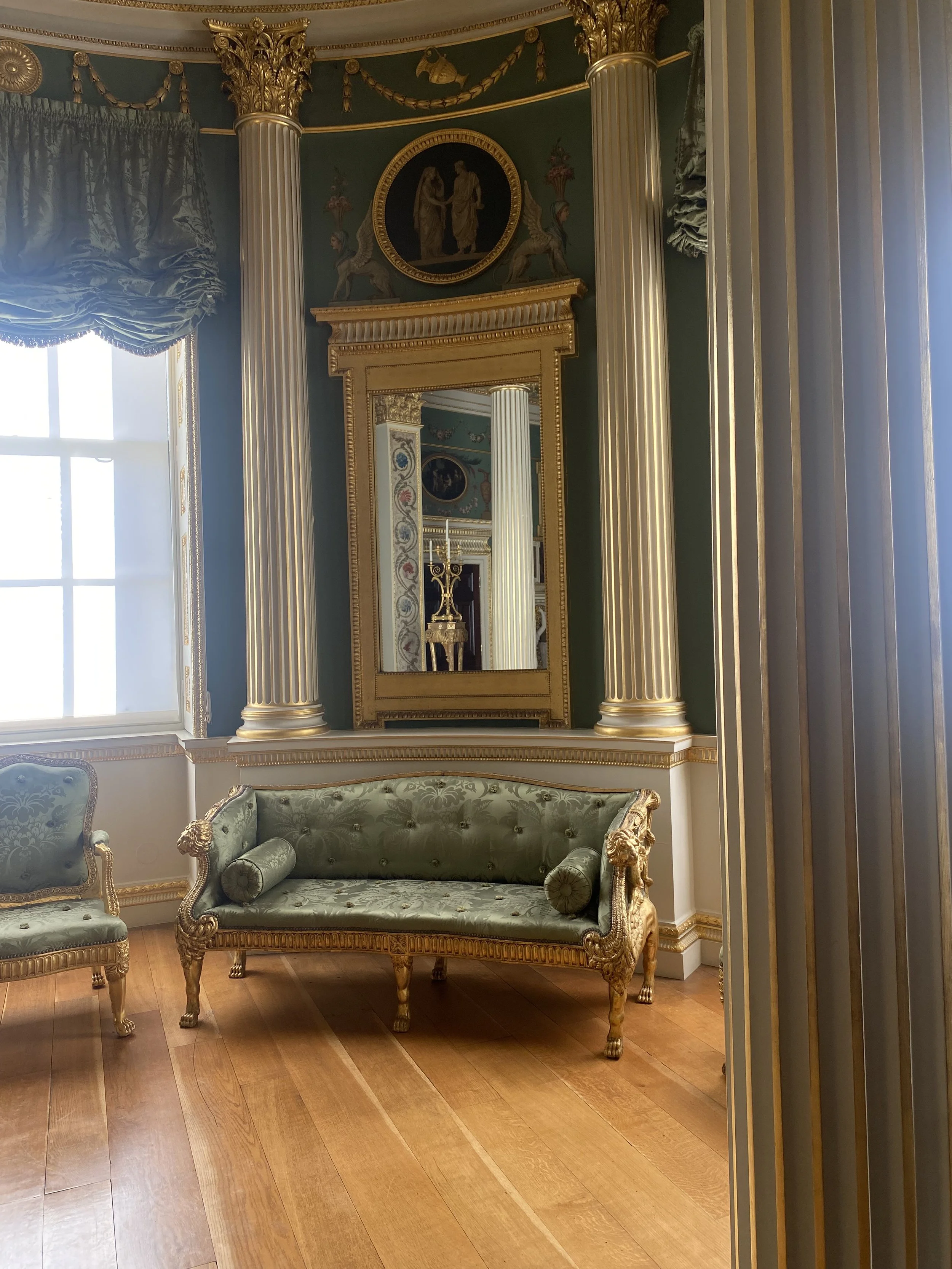
Spencer House
Spencer House, 27 St James's Place, London, SW1A 1NR
Date first built: 1756
Historical period: Georgian
Architectural period: Palladian & Neoclassical
Spencer House is the most spectacular and impressive house we have visited this year. It is a survivor in an area where most of its original neighbours have long since disappeared, and it now stands almost alone as a kind of city palace in both its design and its level of ornamentation. The house is open to the public on Sundays for guided tours. Ours was led by the Blue Badge guide Jenny Mitchell, who delivered a stream of intriguing and often very amusing details that brought the building and its history to life.
Part of our ongoing CPD series into notable historic homes, Spencer House is the sixth one we have visited this year.
Located in St James’, overlooking Green Park, Spencer House still belongs to the Spencer family, an old British family of whom Lady Diana, Prince William and Harry are direct descendants. It has remained in the family’s ownership continuously since its inception.
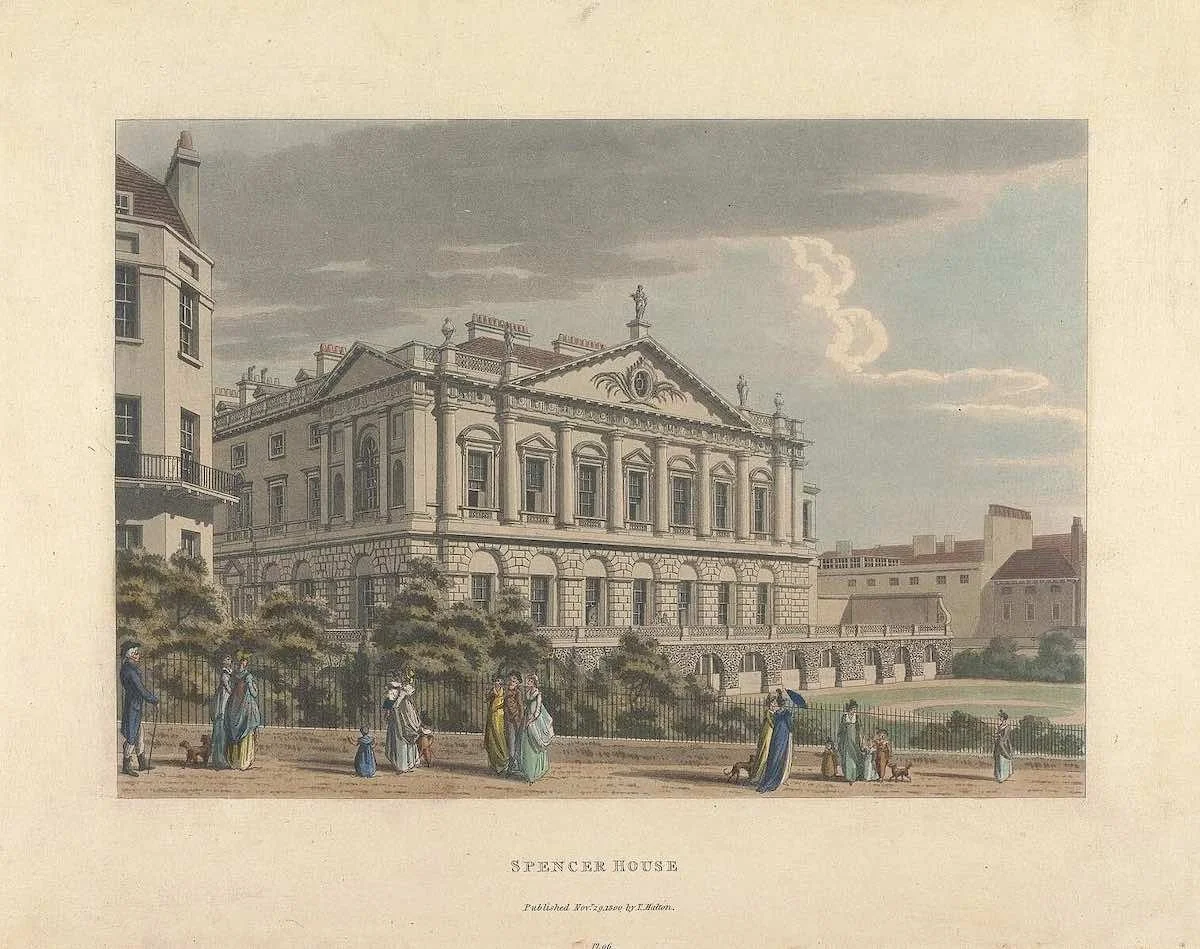
Building began in 1756 for the young Spencer couple - John Spencer then 22, who would later become First Earl, and his wife Georgiana, neé Poyntz. 18, a rare love match in an age of arranged marriages. Their daughter was Georgiana Cavendish of Keira Knightly from The Duchess fame.
Their main family home was the grand Spencer family stately home and estate, Althorp, in Northamptonshire. However, the family wanted an impressive London base, one where they could entertain, host lavish parties and display their growing art collection.
Spencer House once formed part of a remarkable row of aristocratic townhouses along St James’s Place and the edge of Green Park. In the eighteenth and early nineteenth centuries, this stretch was lined with large private homes belonging to families of similar standing to the Spencers.
Almost all of them have vanished. Warwick House, Pembroke House and the earlier Bridgewater House were demolished or rebuilt in the nineteenth and early twentieth centuries.
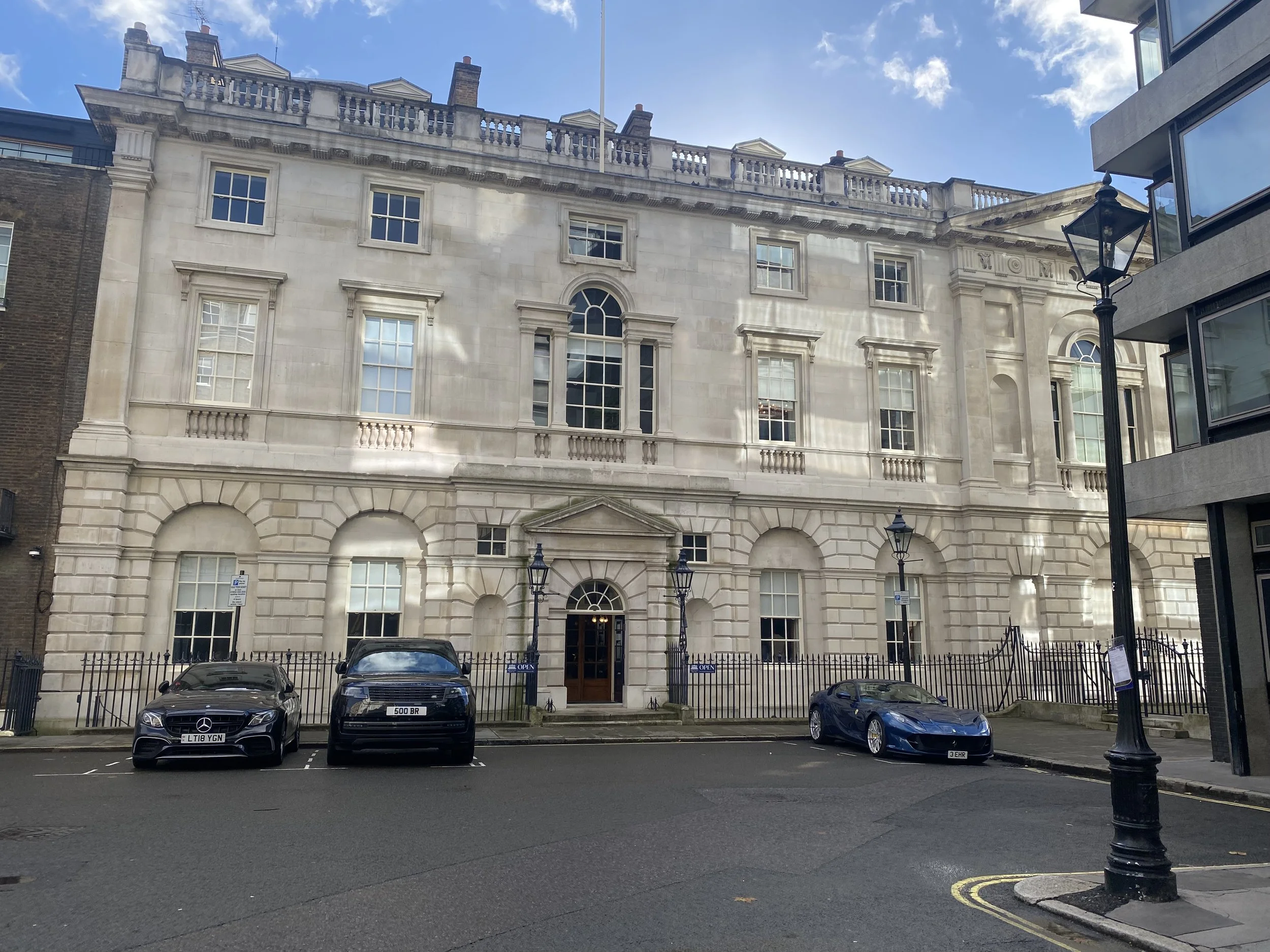
The view from St James’s Place - modest and restrained in Portland stone. An ungainly modern building also listed by Denys Lasdun & Partners architects obstructs its view as you walk towards the entrance
The combination of nineteenth century financial pressures, changing patterns of aristocratic life, and the increasing commercialisation of central London meant that the great houses were gradually sold, subdivided or demolished. Several were replaced by apartment blocks, clubs or speculative developments. Others were altered so heavily for institutional tenants that very little of their original structure survived.
Spencer House is the exception. It avoided demolition, survived wartime damage, and later escaped the kind of piecemeal redevelopment that erased most of its neighbours.
From the outside the house is Palladian design, still dominant when work began in 1756, which drew from the sixteenth century Italian architect Andrea Palladio whose approach to classical architecture emphasised geometry, proportion and clarity.
John Vardy, a proponent of Palladian architecture that was still popular at the time was selected as the first architect of Spencer House, he designed the house itself, the exterior and internal layout. However, tastes were changing and once he had completed (and very efficiently too in less than two years!) the house and the decoration of the ground floor, in 1758, he was let go in favour of the younger, less experienced but more fashionable James ‘Athenian’ Stuart. Stuart had just returned from, like many young men of his time, from his ‘Grand Tour’ a rite of passage for the cultured upper class to Italy, Greece and beyond to study the ancient buildings of the Romans and the Greeks. Brimming with ideas from ancient Greece, Stuart got to work with his ambitious designs for the first floor of the house. While he was very talented he was also slow and rather disorganised, spending much of his time apparently drinking in Gentlemen’s clubs and so just the interiors for these rooms took him another ten years to complete.
The second Earl, in the 1780s, took on the architect Henry Holland’s who adjusted some of the circulation and design details of the house as well as its relationship with the garden.
In the 1840s the Fourth Earl Spencer engaged Philip Hardwick to redecorate the ground floor rooms at Spencer House.
The intention was effectively to “Victorianise” parts of the house: at that time trends had moved on, and updating grand townhouses to reflect contemporary taste was common. Hardwick’s work included updating interior decoration and installing then-modern conveniences such as plate-glass windows in place of older sash windows, patterned carpets and wallpapers on the ground floor, and gas lighting in parts of the house. The changes under Hardwick did not extend to the first-floor neo-classical state rooms: those were left largely as Stuart designed them.
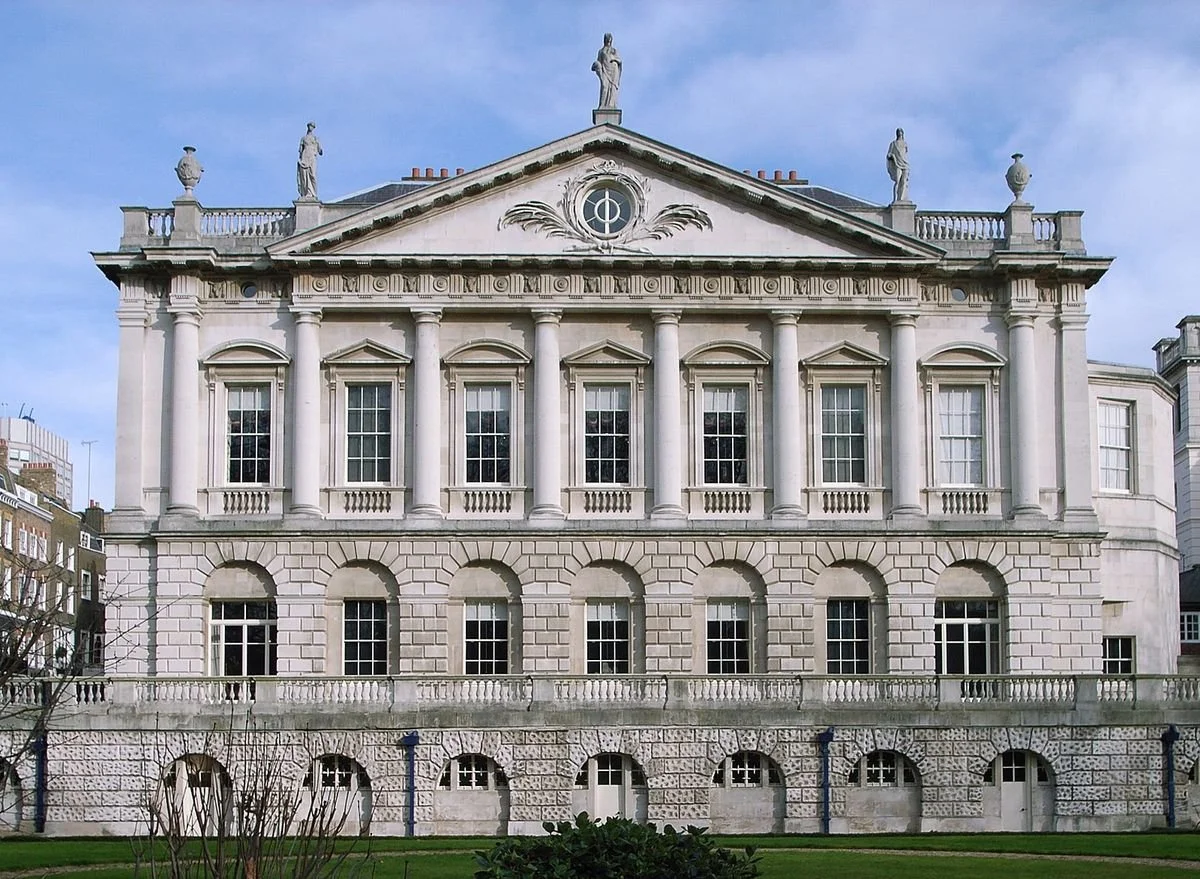
Spencer House Facade facing Green Park - Wikicommons image - In the early 1750s the Society of Dilettanti planned a temple front for Cavendish Square. The project was abandoned but stone had already been cut. That stone was bought by John Spencer and used on the Green Park elevation at Spencer House.
Many happy years were spent by the first Earl of Spencer and his wife and family and by subsequent generations at the house until the late 1800s when new tax laws made it difficult to afford the upkeep of stately homes and mansions.
A century of hard knocks and a very careful rescue
The twentieth century is a story of survival by adaptation. After the First World War the Spencer family could no longer afford to live in the house and began renting it to institutional tenants. In 1927 the house was let to the Ladies Army and Navy Club and this effectively saved Spencer House from the wave of demolition that cleared so many West End mansions. They renamed the Palm Room the Egyptian Dining Room. Later the British Oxygen Company went on to use the extravagantly decorative Palm Room in Spencer House as a typing pool. It is hard not to smile at the thought of typists working beneath gilded palm trees, a very London mix of grandeur and practicality.
From that point on the house slowly declined. During the bombing of London during World War II the contents of the house, including the architectural fittings like the doors, chimney mantles, chandeliers, skirtings and in some cases plaster ceilings were removed to Althorp for safe keeping. Over time most of the items were fixed into Althorp.
In the intervening years, both Althorp and Spencer house were listed, which meant it became impossible to bring back the items to Spencer house.
From 1927 to 1985, a number of companies rented the space. The Sixth Earl Spencer lived for a short period at the house from 1914-1916, before handing it over to the Government for war use. From 1947-1953, Christie’s auctioneers, whose King Street premises had been bombed moved into the house. In 1953, The lease was taken over by the British Oxygen Company who commissioned Robert Atkinson & Partners to convert the house into offices. In 1963, Spencer House became the offices of the Economist Intelligence Unit.
During the war from 1941 - 1944, The house was given to the Government for use as the headquarters of the nation’s nursing services.
In 1985 the Rothschild family company RIT Capital took on a long lease of 96 years and the Spencer house was saved from its decline and new era of restoration began. The restoration was an obsessive project, taking ultimately almost ten years to fully complete.
Due to so much of the house having been stripped away, Lord Rothschild had to put together a huge professional team of architects, historians and specialists to painstakingly restore it. Dick Reid, the master carver from York, directed a team of twenty two craftsmen who recreated lost fireplaces and ornament throughout the house. Our guide informed us that each chimneypiece required around four thousand hours of carving. Moulds and measurements were taken from surviving originals at Althorp and painstakingly and obsessively recreated. A committee of taste guided decisions to ensure each element felt credible to the period.
No expense was spared. Each door our guide told us cost around eight thousand pounds to make (bear in mind this was the 1980s) and all gilding was laid in pure gold leaf. To establish the original paint colours, the paint colours were identified from pigment samples examined under a microscope. Fine grained timber was selected for joinery and the original specification Carrara marble for new chimneypieces was used. Each one of the new beautiful doors cost around eight thousand pounds to make and all gilding was laid in pure gold leaf.
Careful decisions needed to be made regarding which alterations would be removed and which retained. Henry Holland’s work done in the 1780s was retained. However the alterations made by the Victorian architect, Philip Hardwick were not reinstated. Unsympathetic extensions of the 1920s were taken down. A 1950s lift core was removed and the original entrance hall window was reinstated. In the Great Room the team strengthened the structure by hoisting eight beams nine metres long to roof level and lowering them through a skylight to set them in place. It is a reminder that a good restoration is as much engineering as it is art.
The twentieth century restoration brought these layers together piece by piece deciding on the most sensitve and authentic restoration. The result is one of the finest remaining Neo-classical aristocratic townhouses in the UK.
The majority of the project was ready in 1991 when Diana, Princess of Wales officially marked its re-opening.
The state rooms are all visited as part of the tour and I couldn’t help but take lots and lots of photos…
The Ante Room
Ground floor
Designed by the architect, John Vardy, it was once the breakfast room, on the ground floor, looking on to St James’s place. Its architecture was rearranged by Henry Holland in the 1780’s.
I love the scalloped gilded detail to the skirting board. This was recreated by Dick Reid and his team of master craftmen appointed by Lord Rothschild in the 1980s. The chairs are reproductions of the original dining chairs.
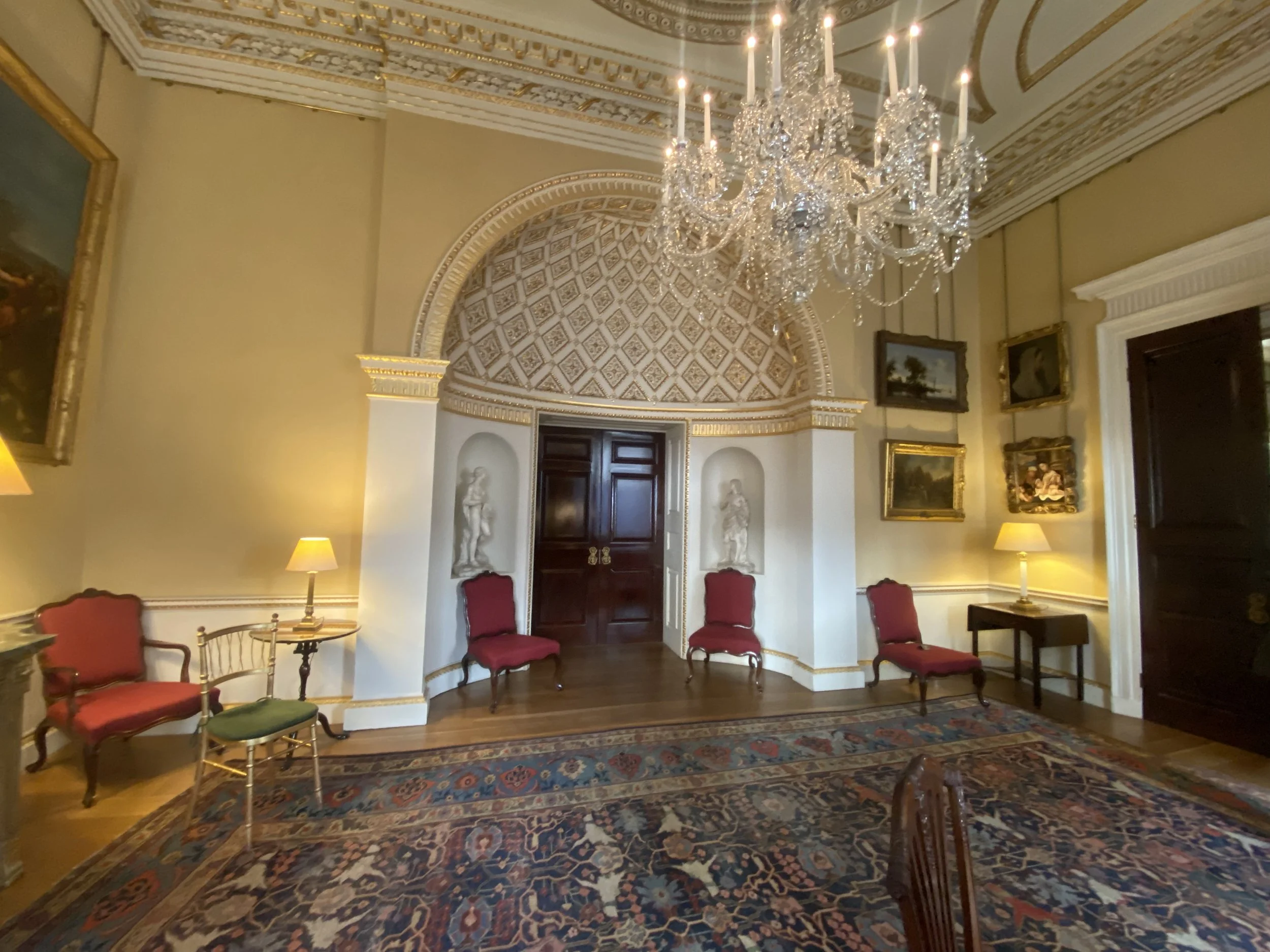
The Ante Room: The alcove is based on the Roman Temple of Venus. Vardy’s original design had doors on either side of the alcove to enter the room symetrically. Later in in the 1780s, the room was reconfigured by the architect Henry Holland who added the doorway into the library - door to the right handside of this photo
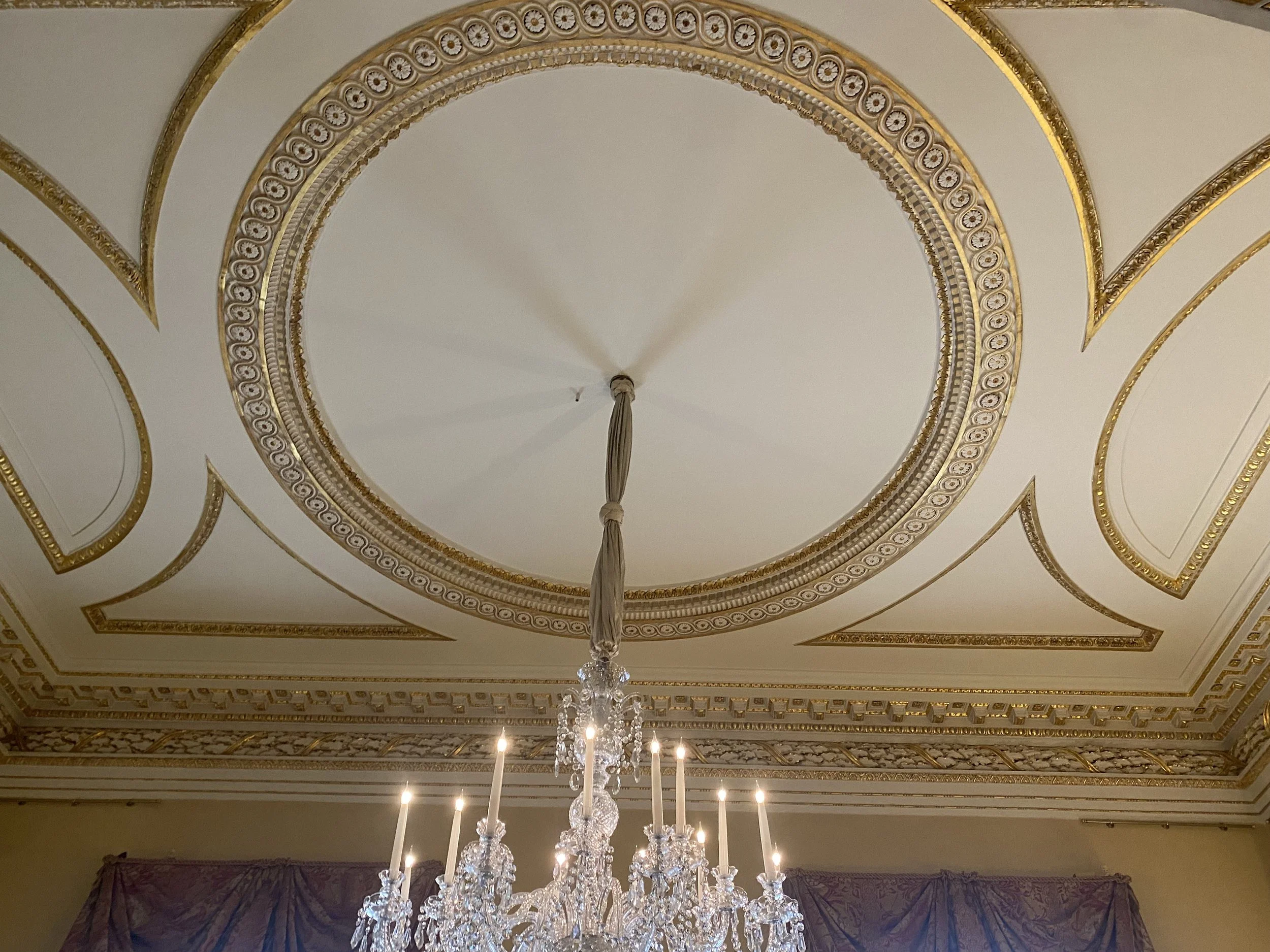
Gilded plasterwork detail in the Ante Room
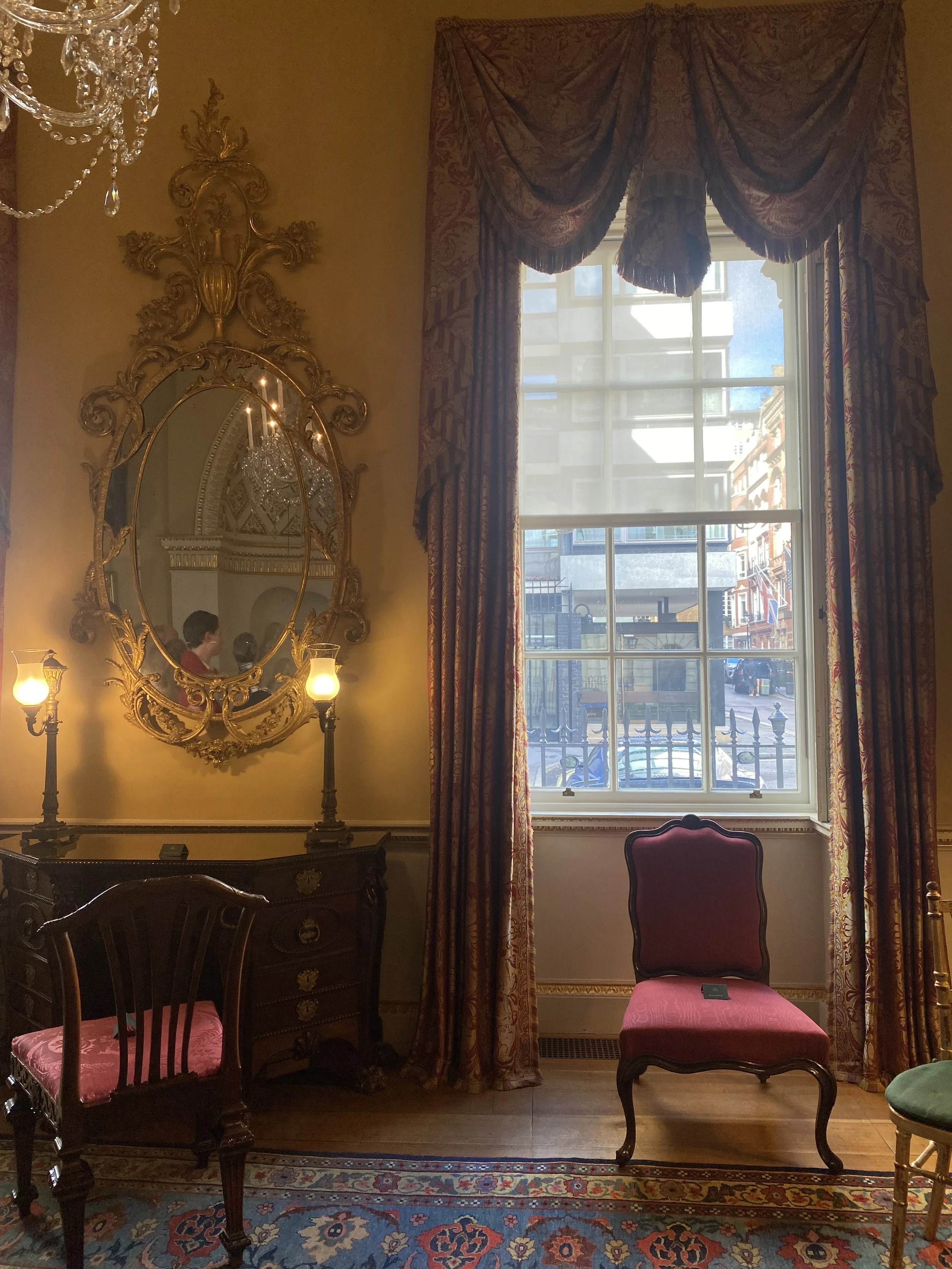
The Ante Room
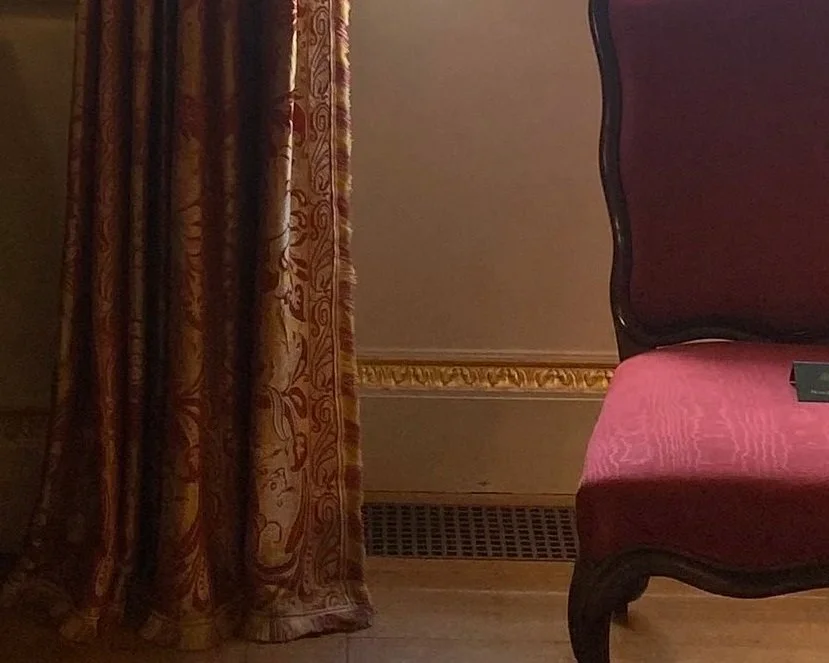
The Ante Room: Scalloped gilded detail on the skirting board
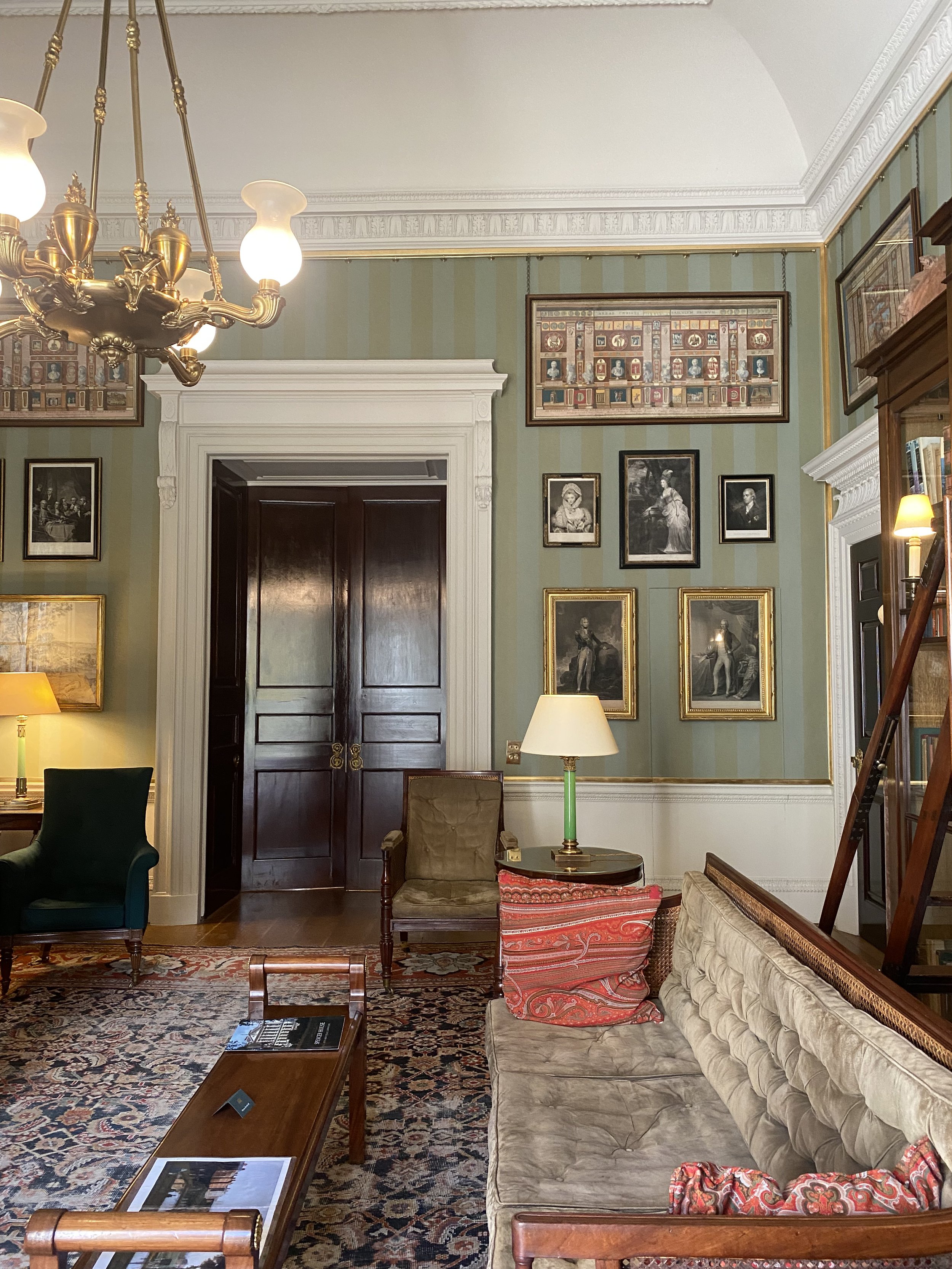
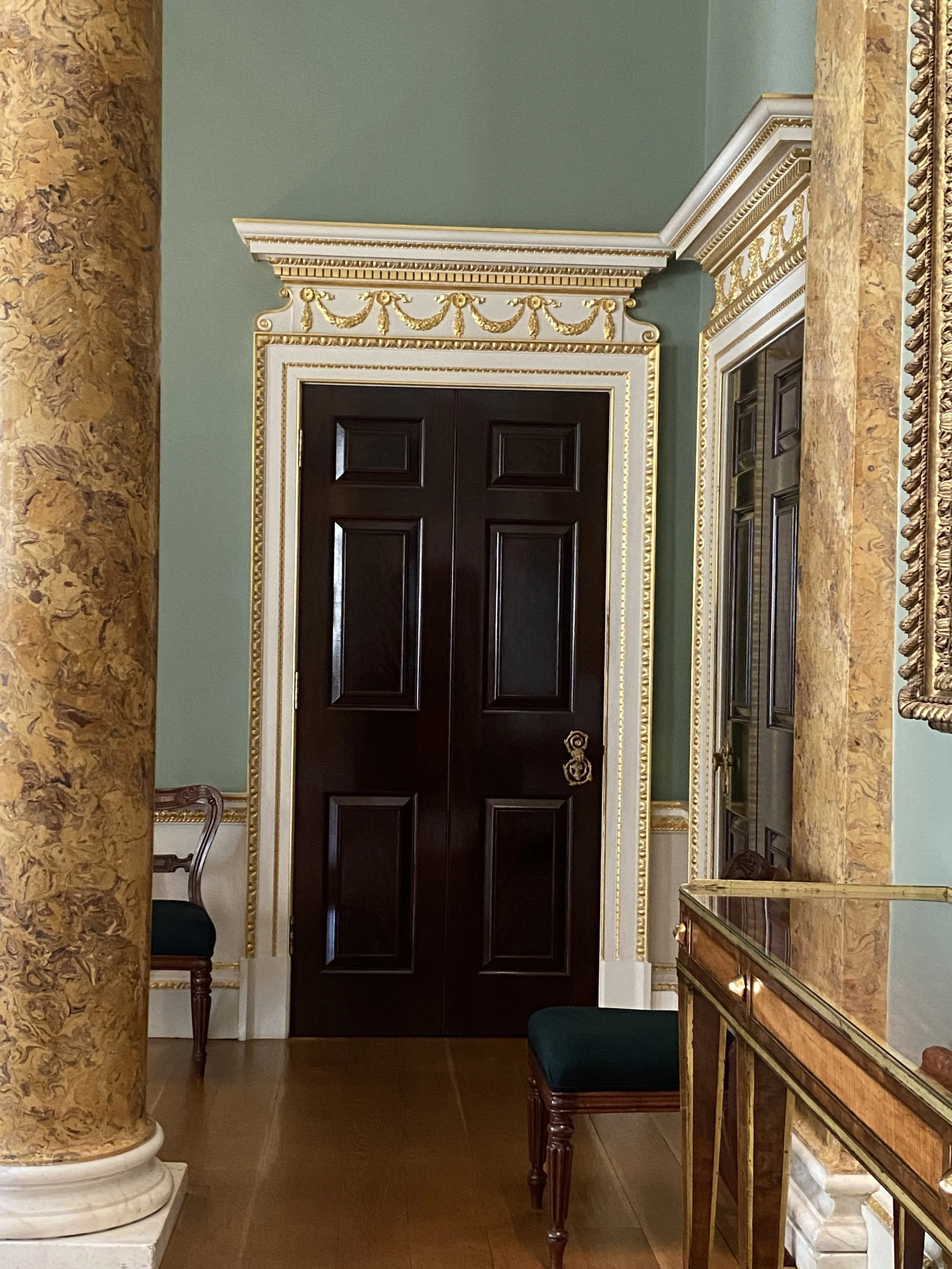
A comfortable richly coloured room - can you spot the secret door?
The Library
Ground floor
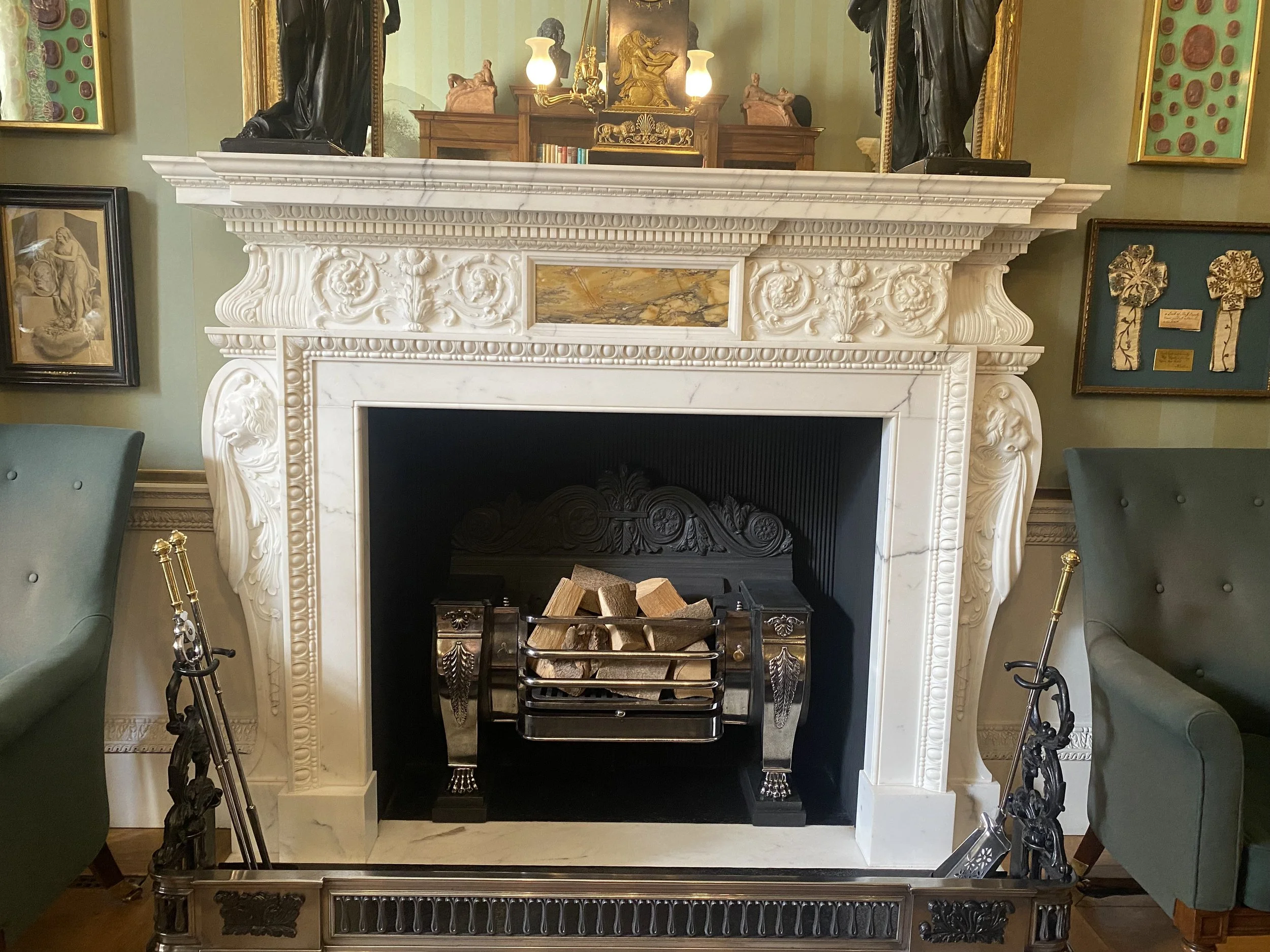
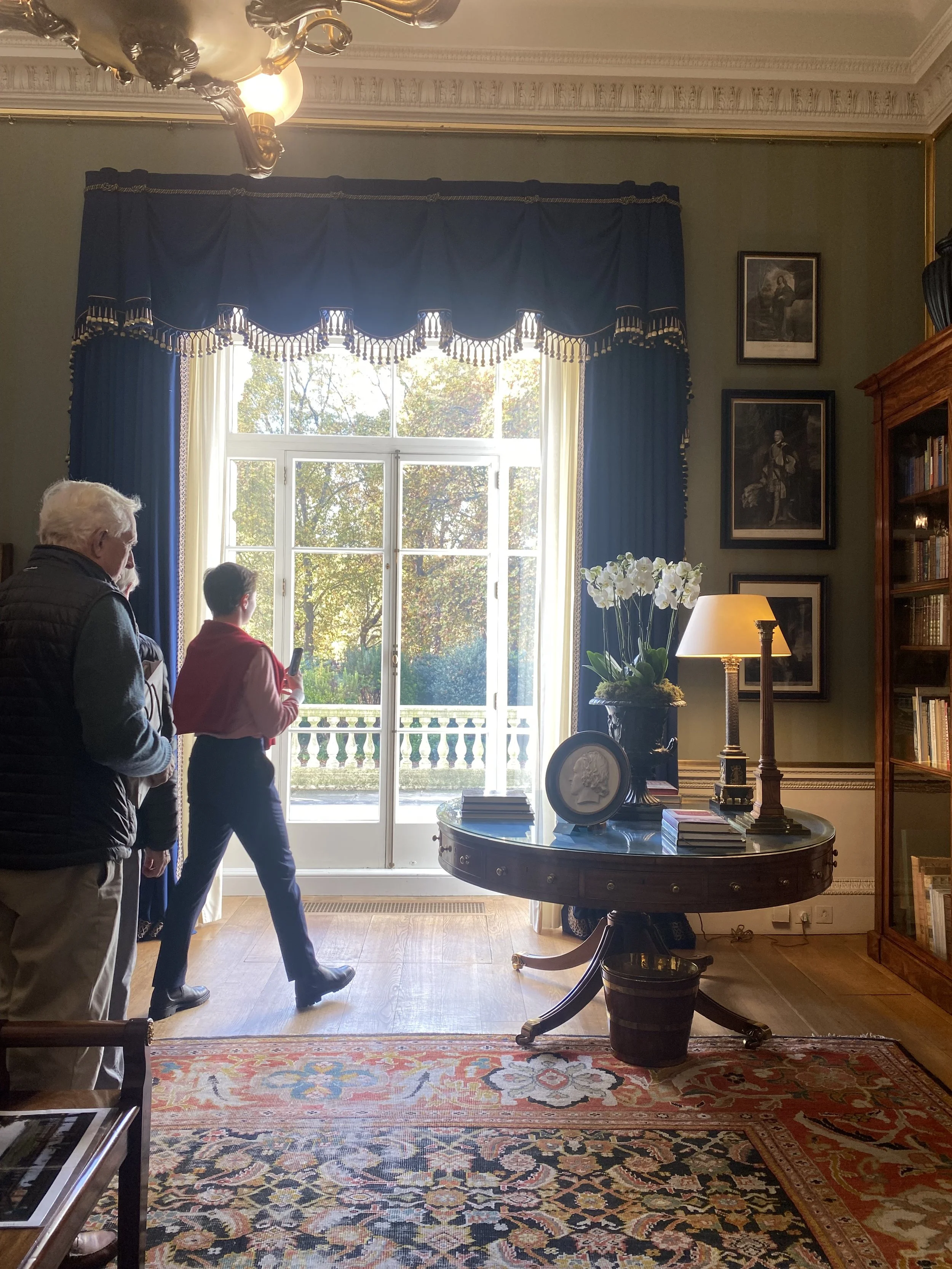
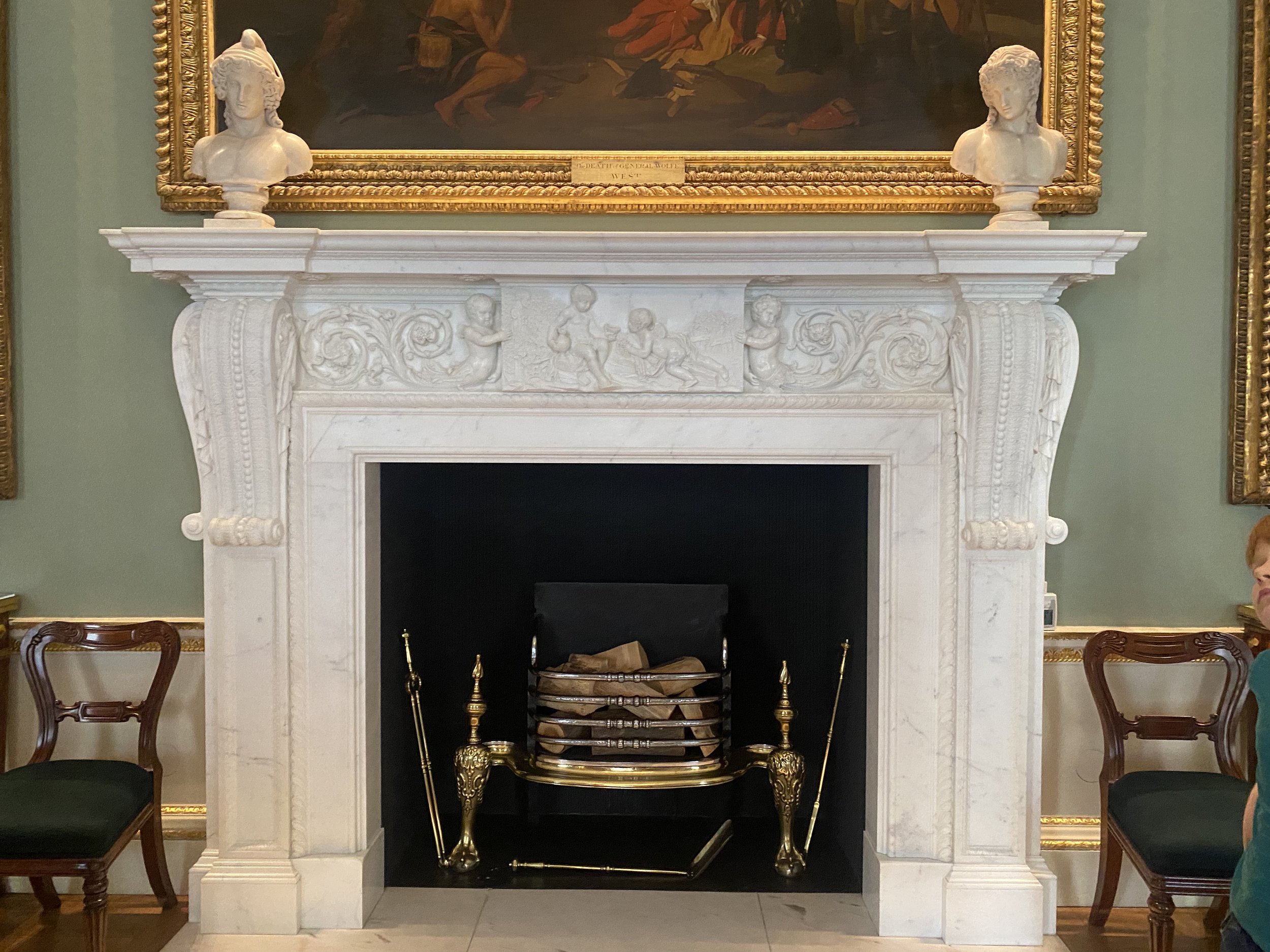
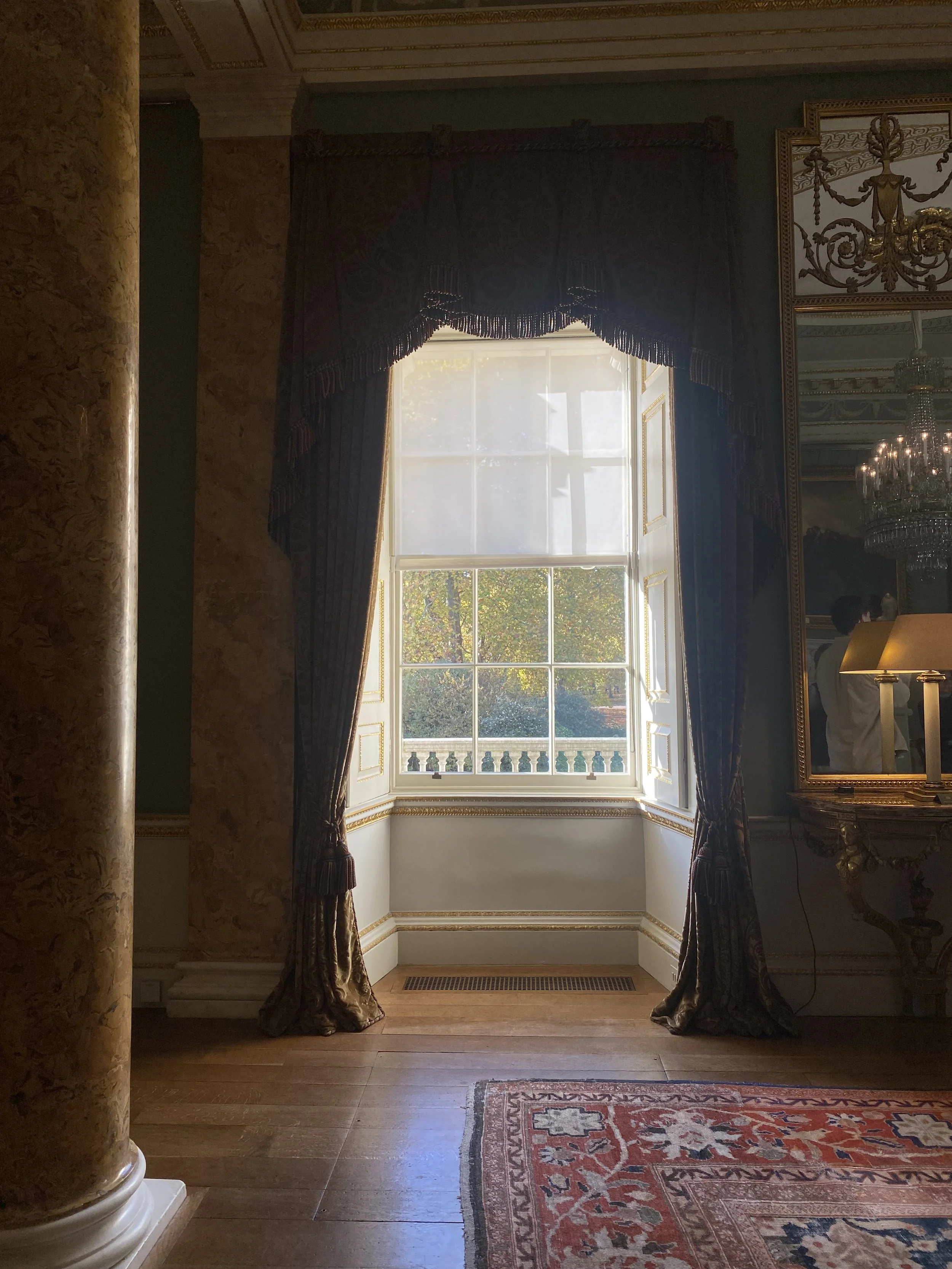
John Vardy & later Henry Holland were the architects who designed this room. Looking over Green Park, the library is a comfotable richly coloured room. Apparently there wasn’t much evidence of the original design so the Henry Holland designs were reinstated. The fireplace described by the guide as one of the smallest in the house is still pretty enormous.
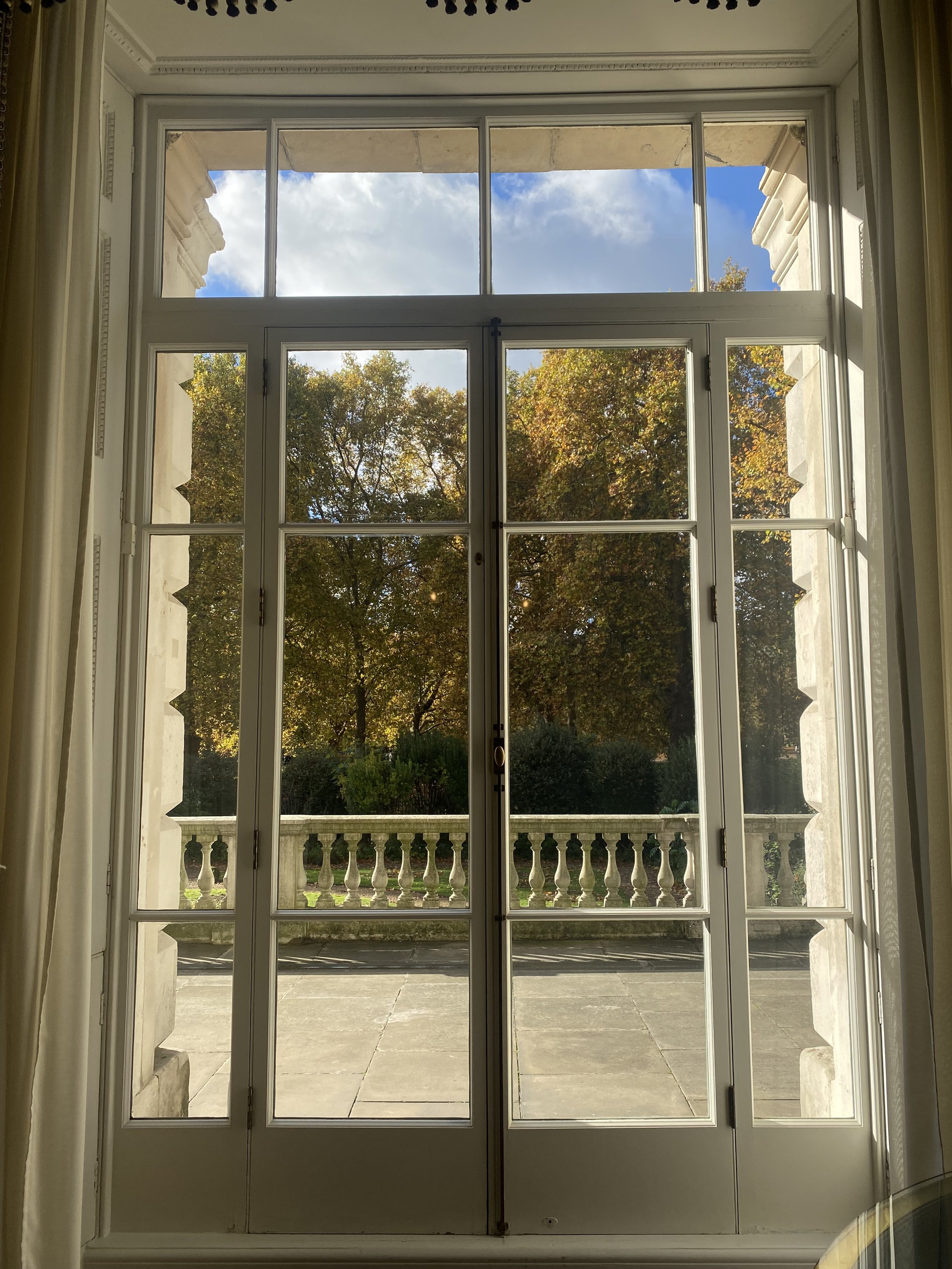
When the house was first built it was positioned directly next to and facing onto Green Park, interfacing directly with the general public. In time a more private design was created; , the house leased land from Green Park from the Crown forming a stone terrace that projected over what used to be a public walkway. The French doors in the Library open onto a terrace , shielding the Spencers from the public in Green Park. These were added in the 1780s by the second Earl of Spencer.

The Dining Room
Ground floor
The ground floor dining room is one of the most substantial rooms of Vardy’s original scheme, although it was later altered by Henry Holland in the seventeen eighties. Vardy designed it with twelve pilasters and two wall niches, but Holland simplified the layout, reducing the pilasters to four and covering the niches. He also introduced scagliola on the columns and pilasters, giving them the appearance of marble. This finish was painted over in the nineteen twenties and rediscovered during the nineteen eighties restoration.
The ceiling remains Vardy’s and is closely related to the ceiling of Inigo Joness Banqueting House at Whitehall. The frieze below takes its pattern from engravings of the Temple of Fortuna Virilis in Rome. The gilt side tables at either end, designed by Vardy, refer to Bacchus, as does the Carrara marble chimneypiece, now a nineteenth century copy made by Dick Reid’s team. The painting on the north wall, Agrippina Landing at Brindisium with the ashes of Germanicus by Gavin Hamilton, was commissioned by the Spencers in 1765 and contains the same Roman temple in its background.
Once used as Christies sale room and later divided into three offices, the room has regained its eighteenth century clarity and is still used for formal events, including those hosted by Prince William.
What brings the history of this room vividly to life, however, is imagining how it was experienced during the grand dinners of the late eighteenth century. Our guide described a humourous account of the contrast between the wealth and status of the women at the events with the discomfort and the revolting and sometimes comic things they did to keep up with the fashions of the day. Dental care being almost non existent, many people would have been missing teeth which hollowed out their faces, so they would have placed small wads inside the mouth to give the face a fuller shape which would have been very uncomfortable. Fashion also demanded dramatic dark brows, so natural eyebrows were often shaved off and replaced with mouse skin cut into shape and glued on. Hairstyles were elaborate structures of natural and false hair bound with lard, which meant they had to be preserved overnight with cage light metal covers to deter mice who wished to nibble on the lard. In the heat of a crowded gathering the lard could soften and begin to run, as could the glue holding the eyebrows in place. Lice were universal and women kept tiny scratching tools tucked discreetly behind the ear. Adding to their discomfort it - their dresses were supported by wide pannier hoops which would have filled the room and made moving awkward and uncomfortable.
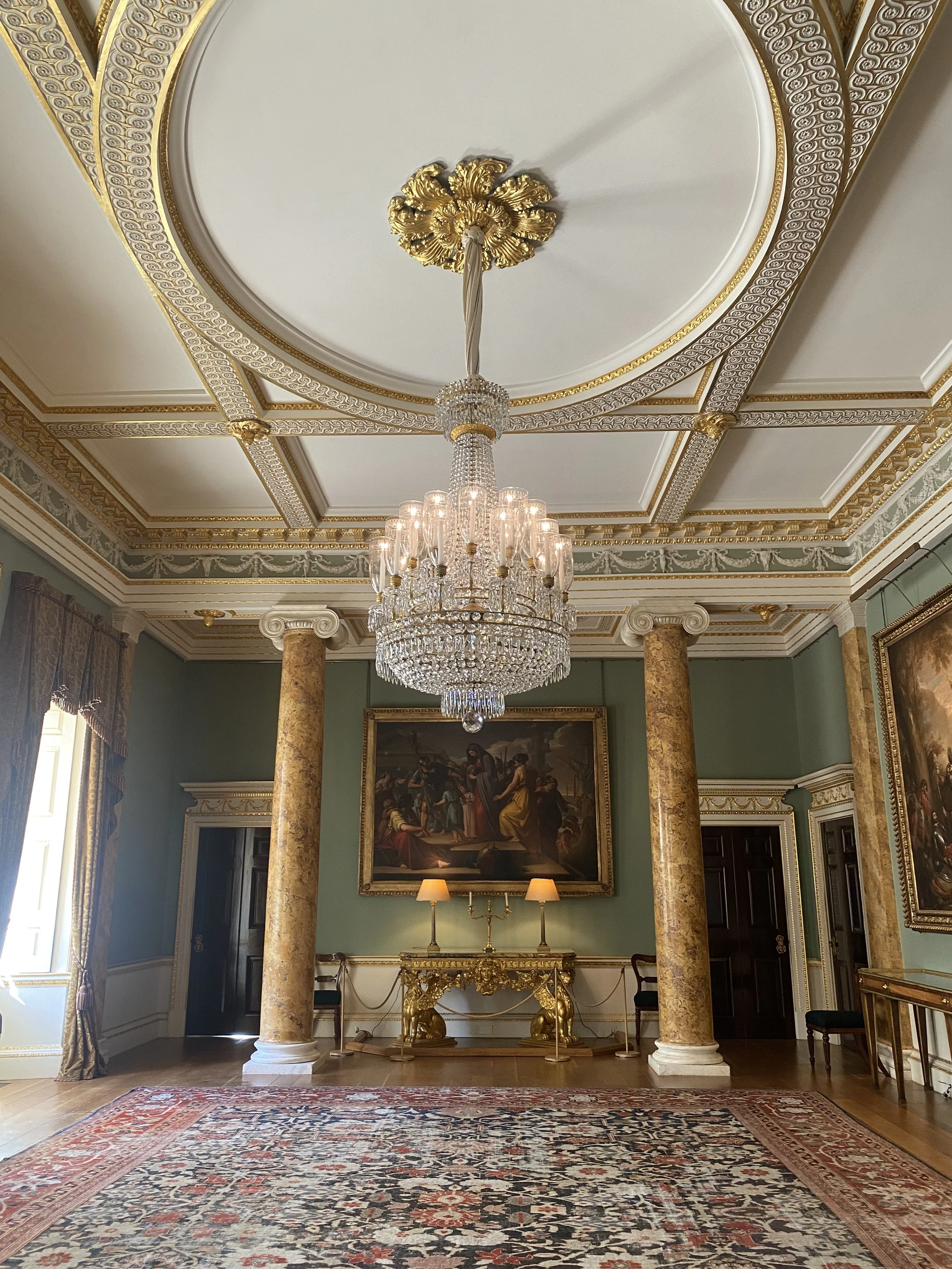
The Dining Room would originally have had a permanent dining table in it. The was unusual for the time. At that time it was normal for staff to carry tables to rooms and set them specifically for events and then remove them once more after the event.

The Palm Room
Ground floor
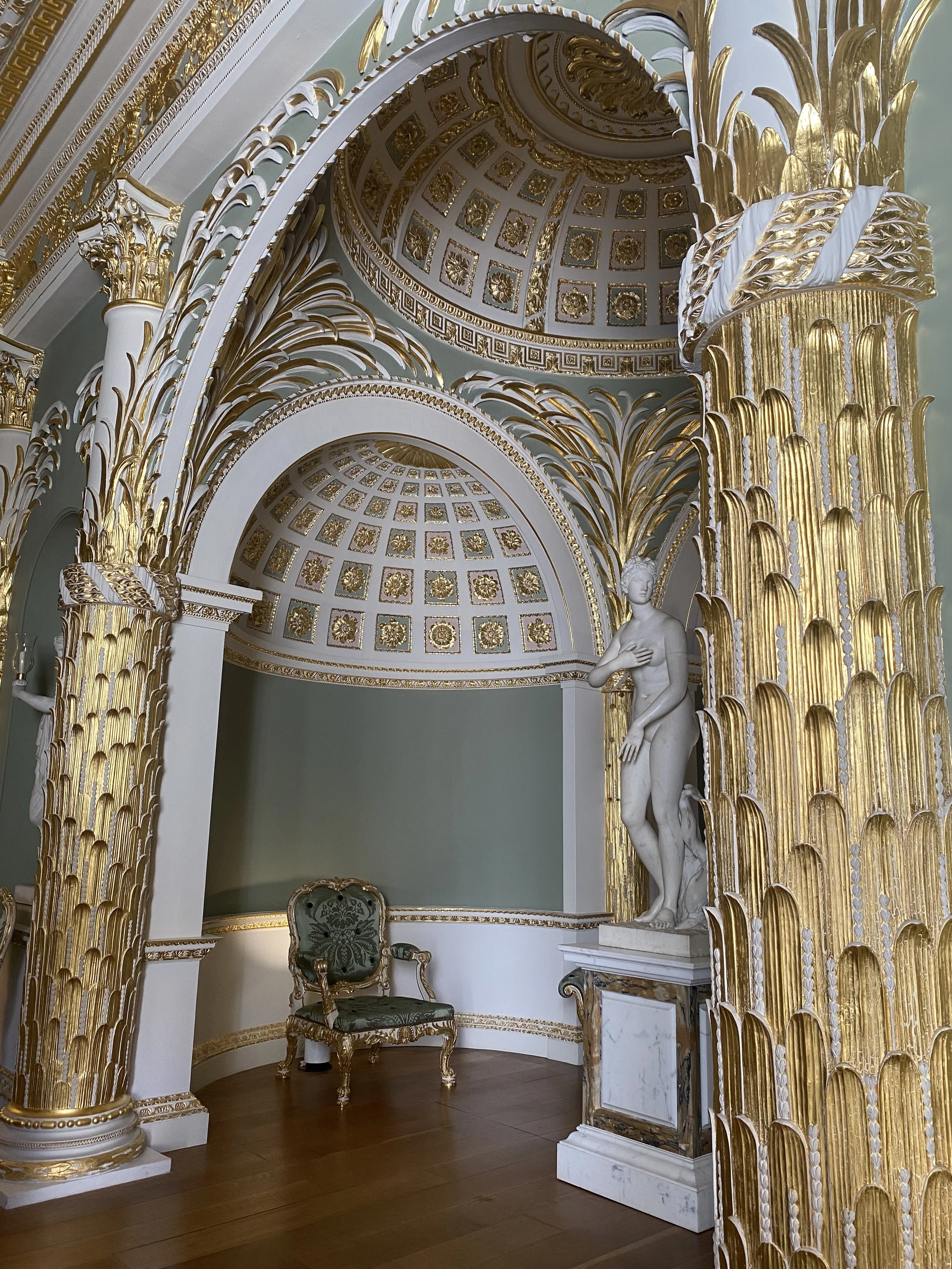
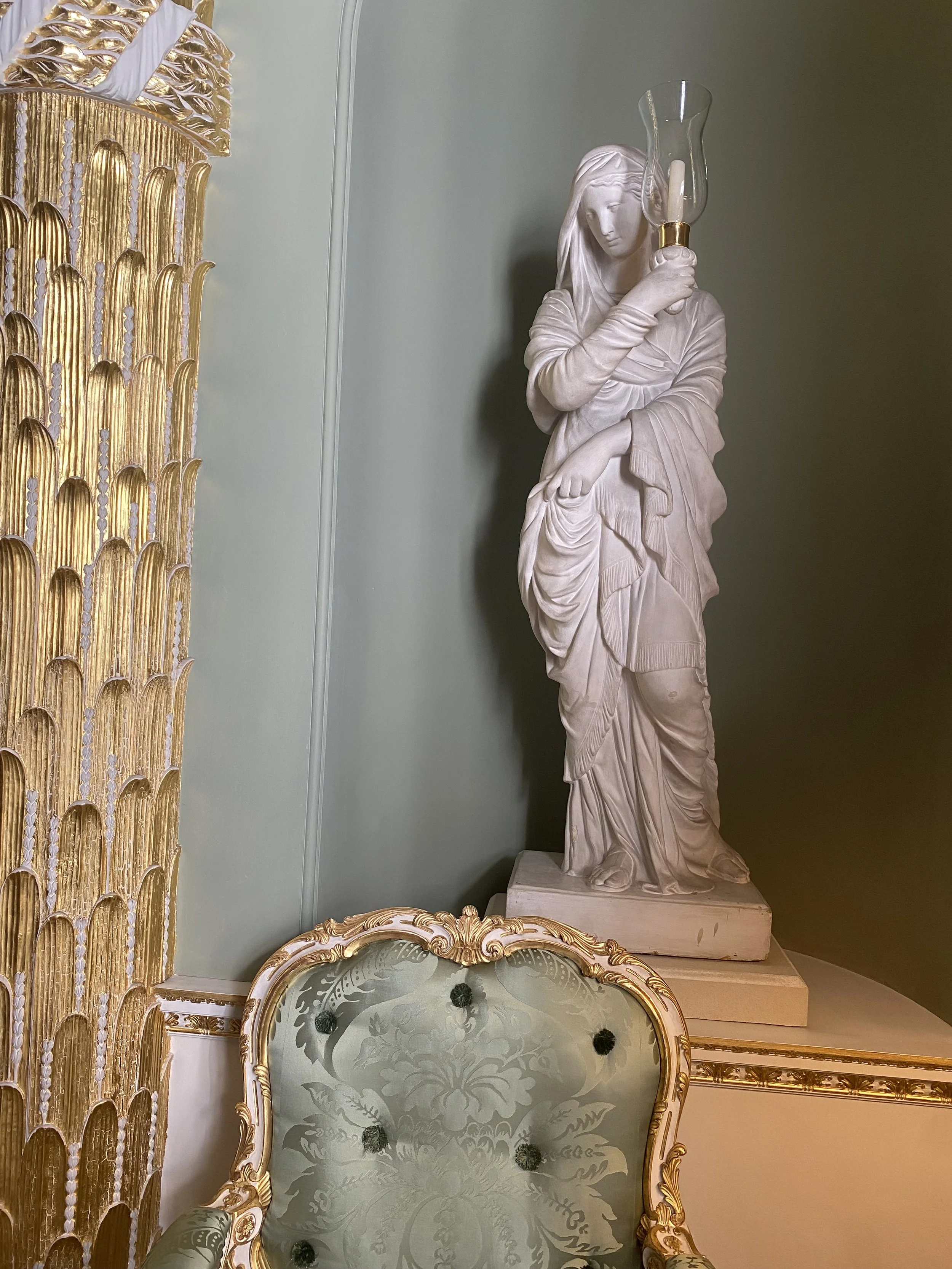
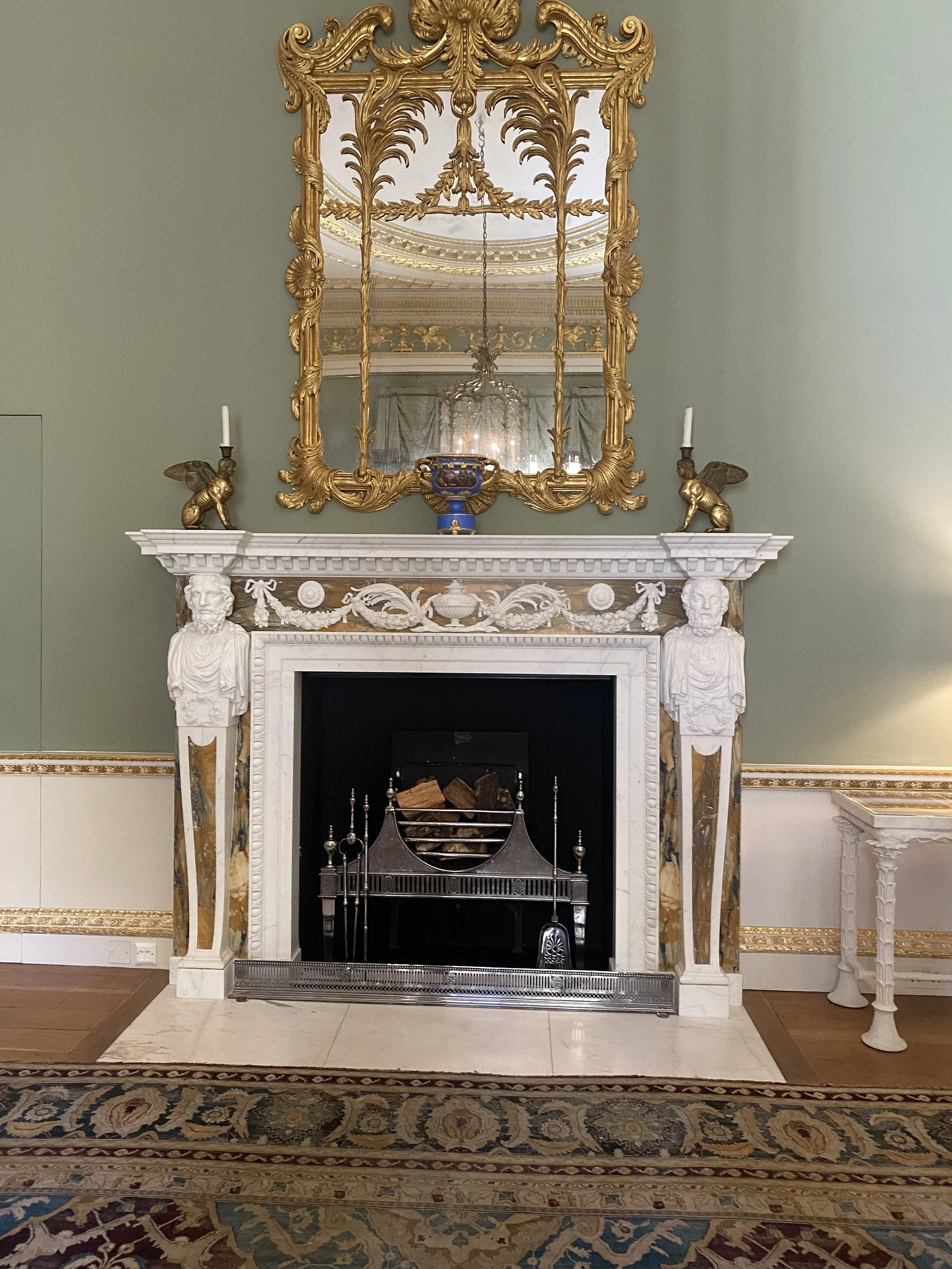
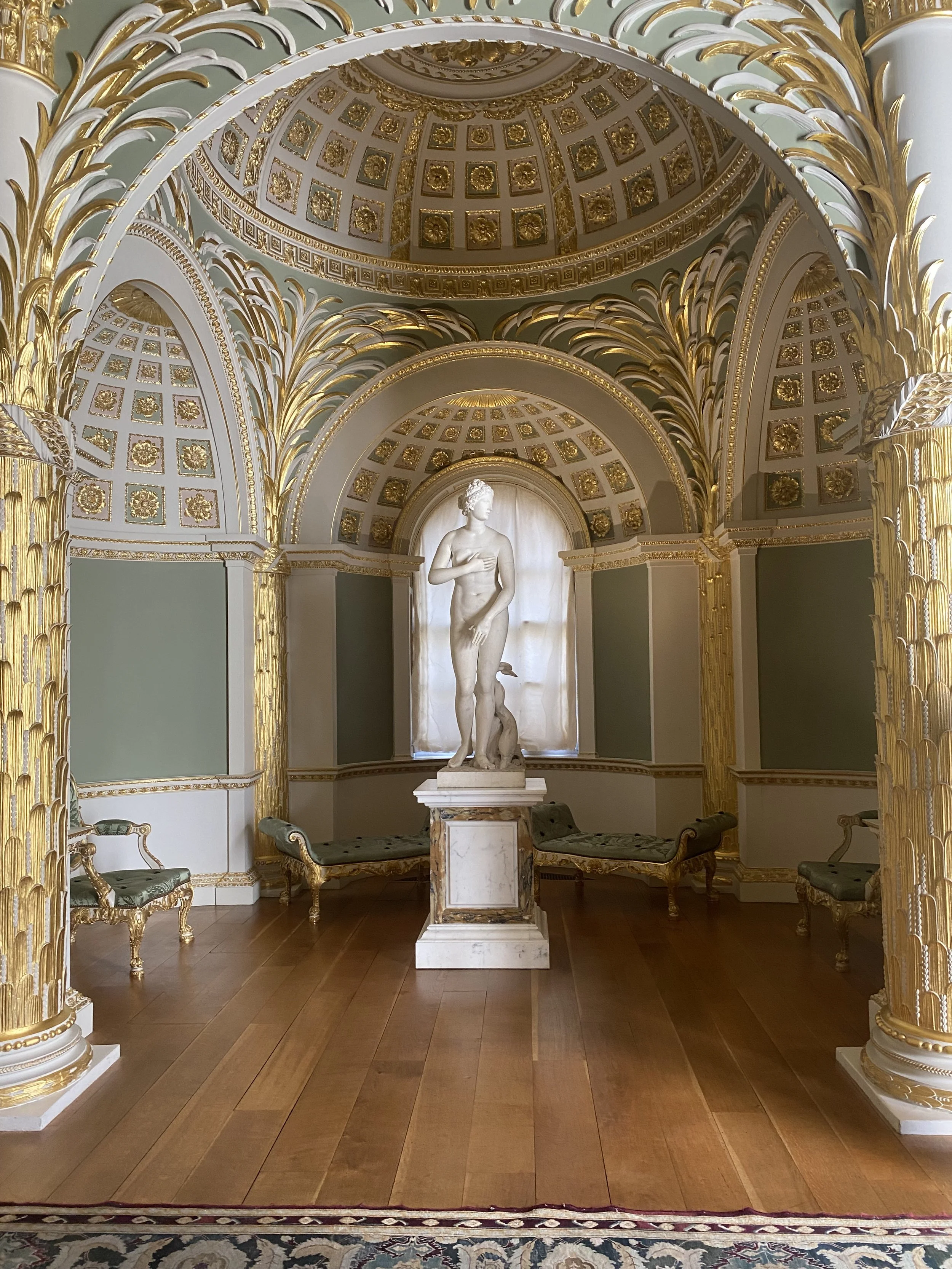
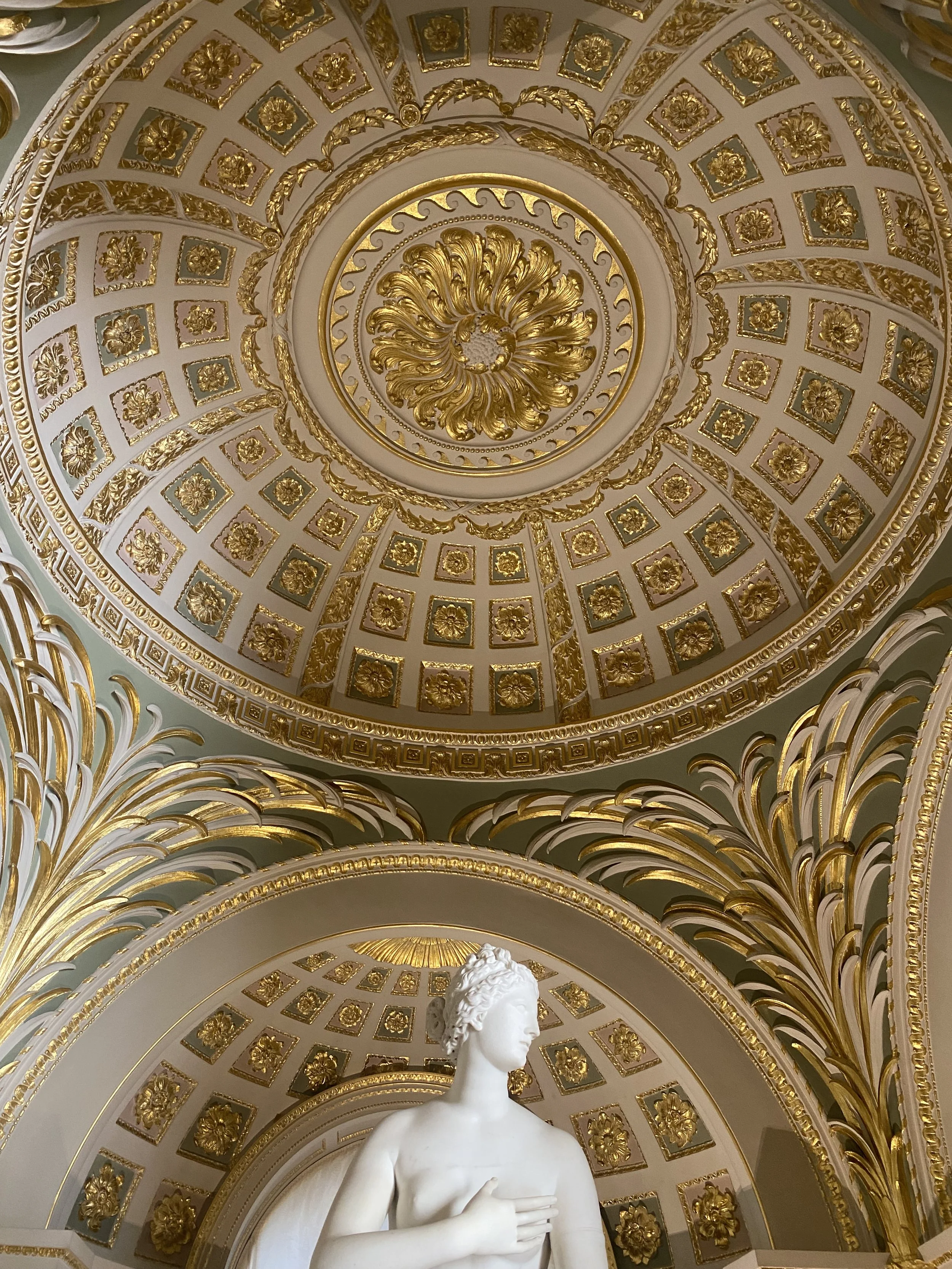
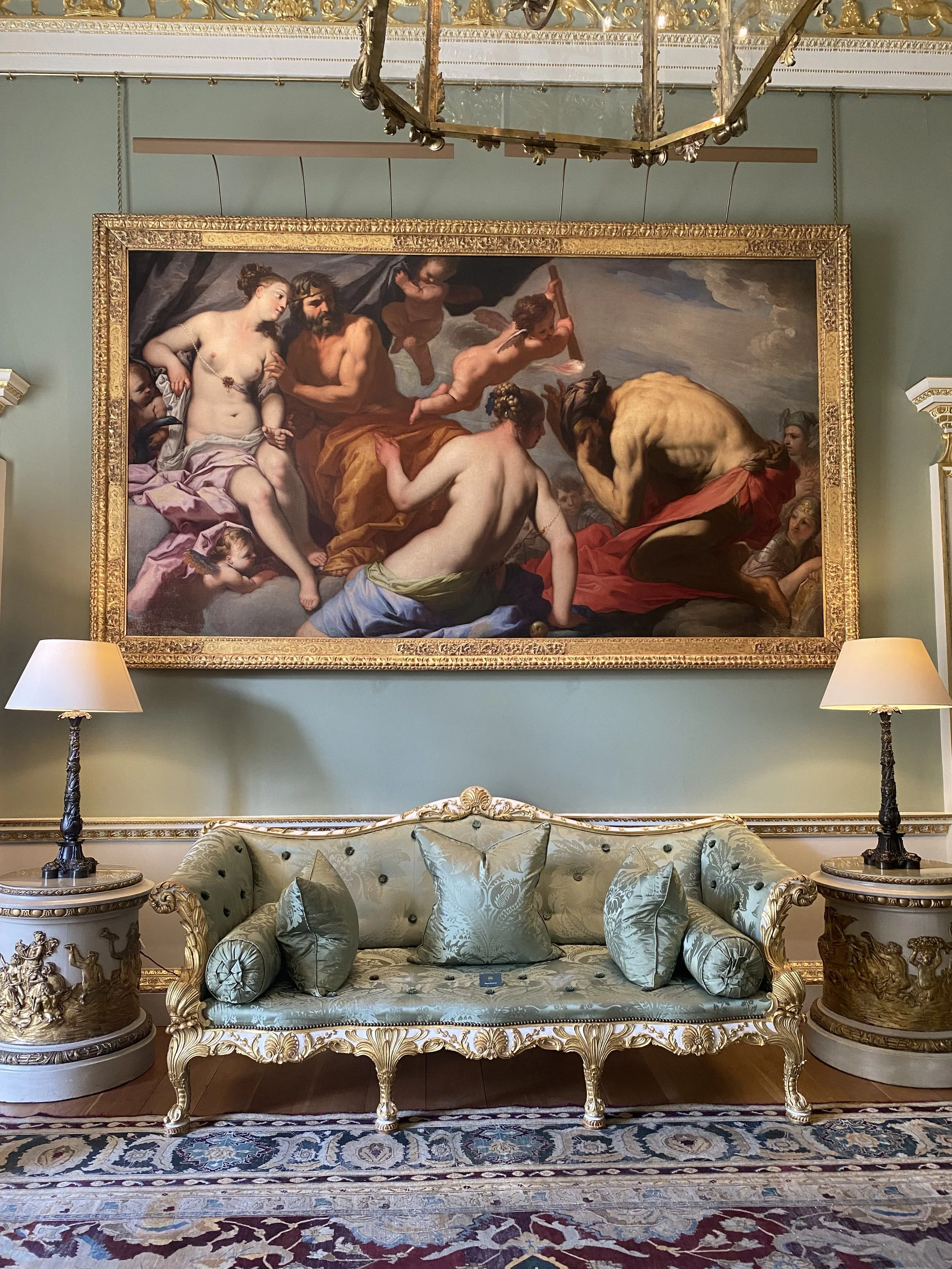
The Palm room is supremely theatrical, it has lavish gilding, a domed ceiling, and natural motifs primarily palm leaves in abundance. An interesting fact was that the design for the room was actually originallly meant for bedchamber for King Charles II at Greenwish. The niche to house the bed and the palms a symbol of fertility were apt. Vardy designed is as a formal drawing room but it was used by the Earl as a study. It feels a alive and dynamic and completely over the top in the best possible way

The Staircase Hall
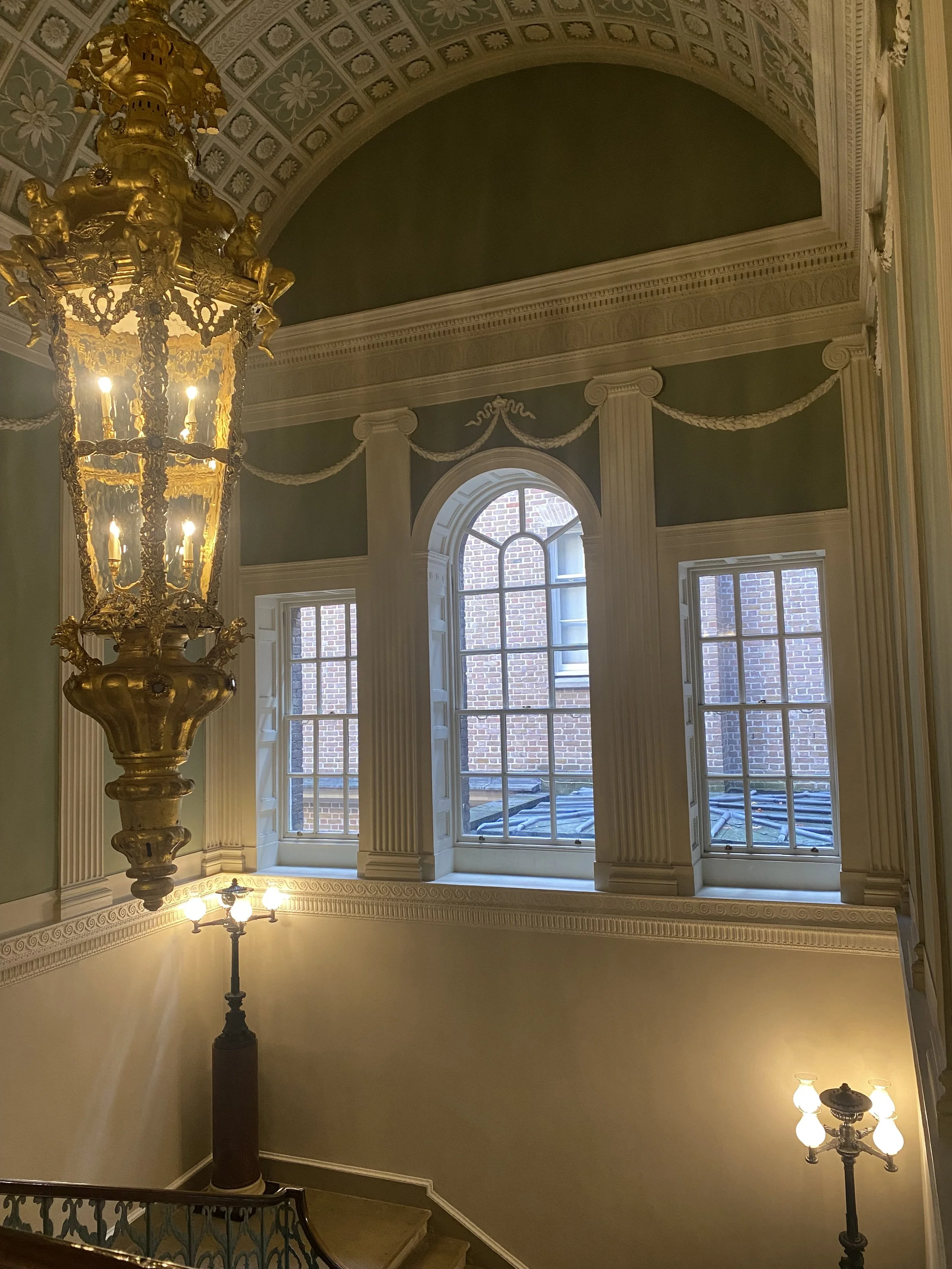
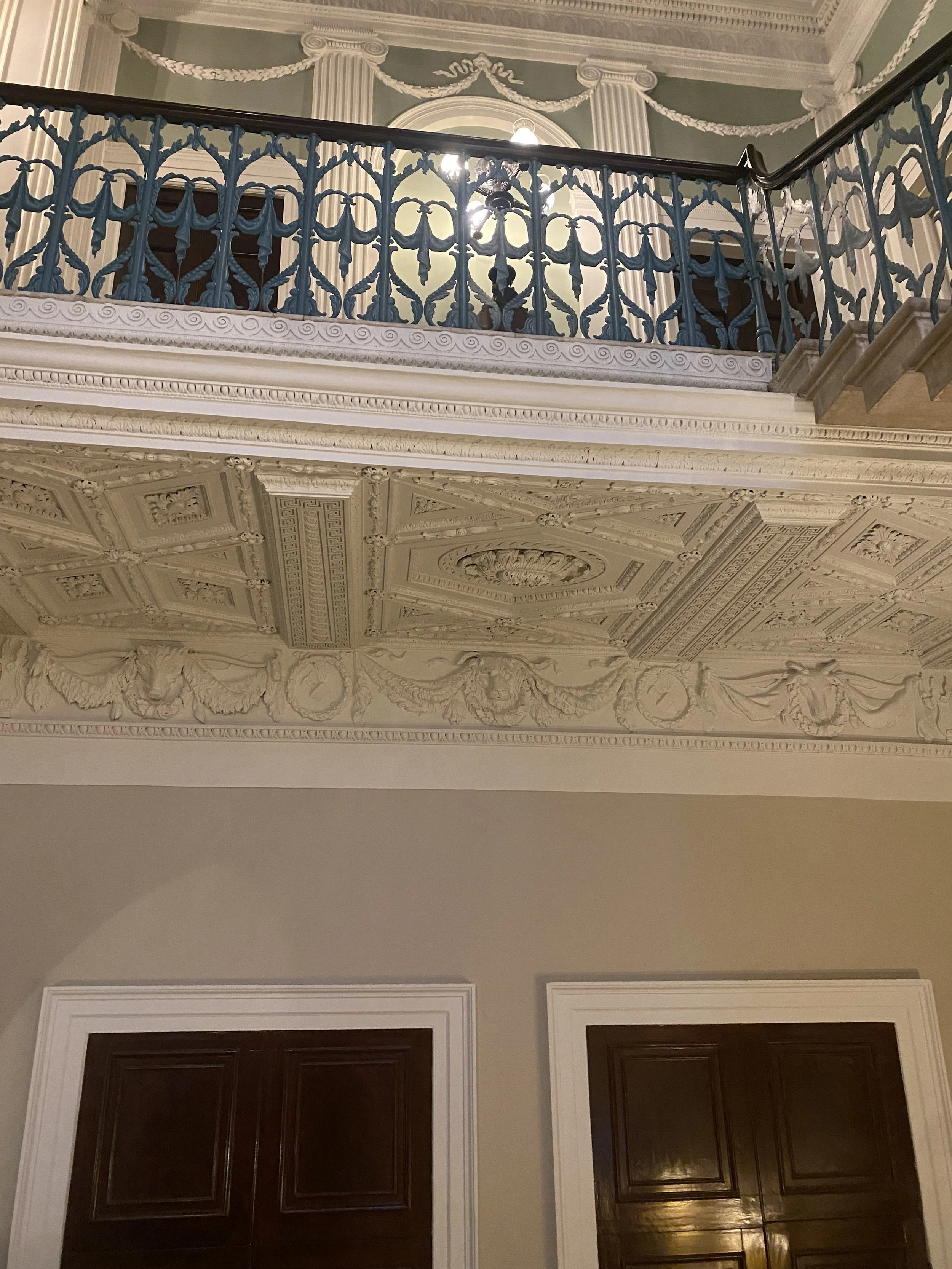
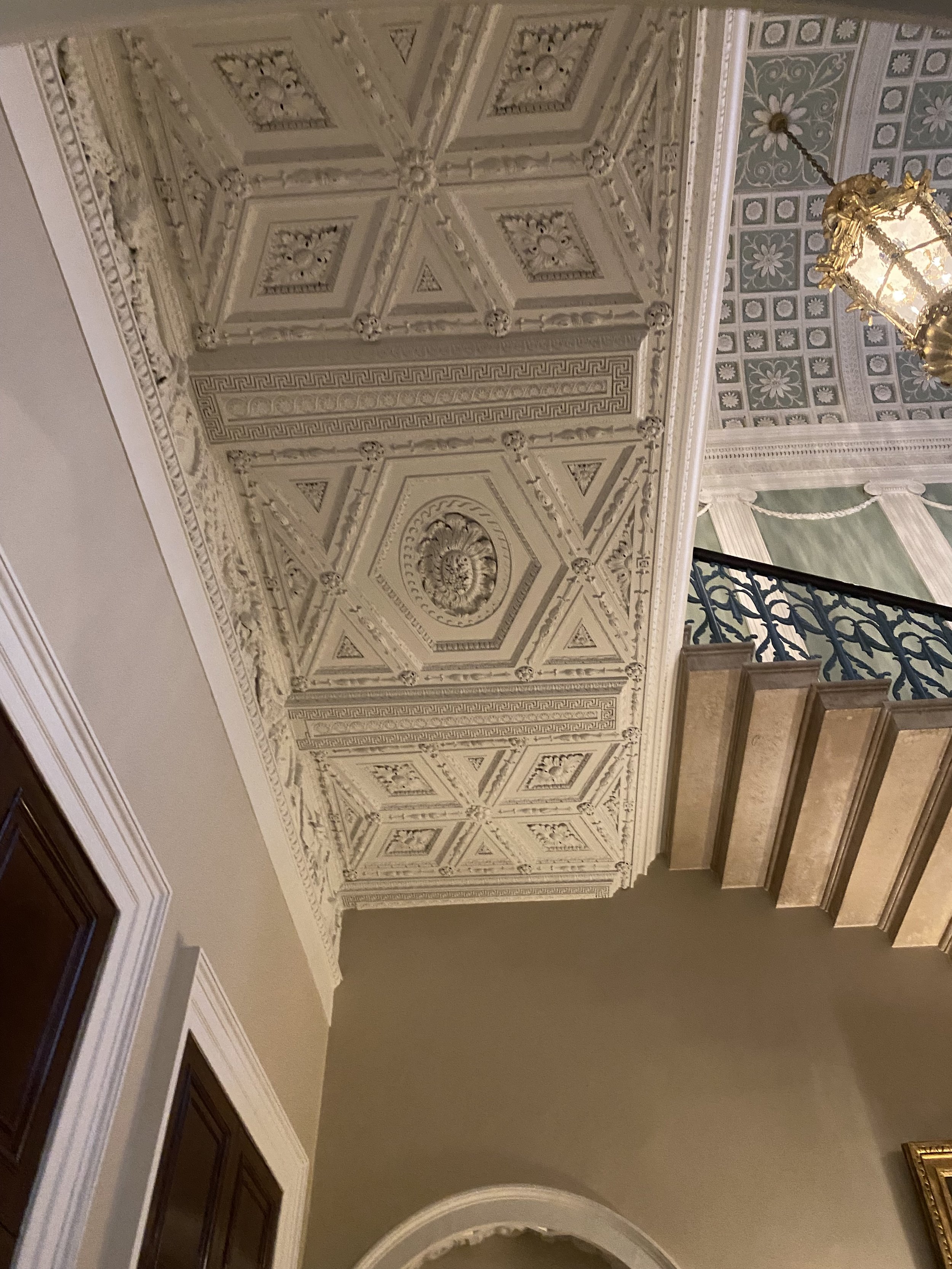
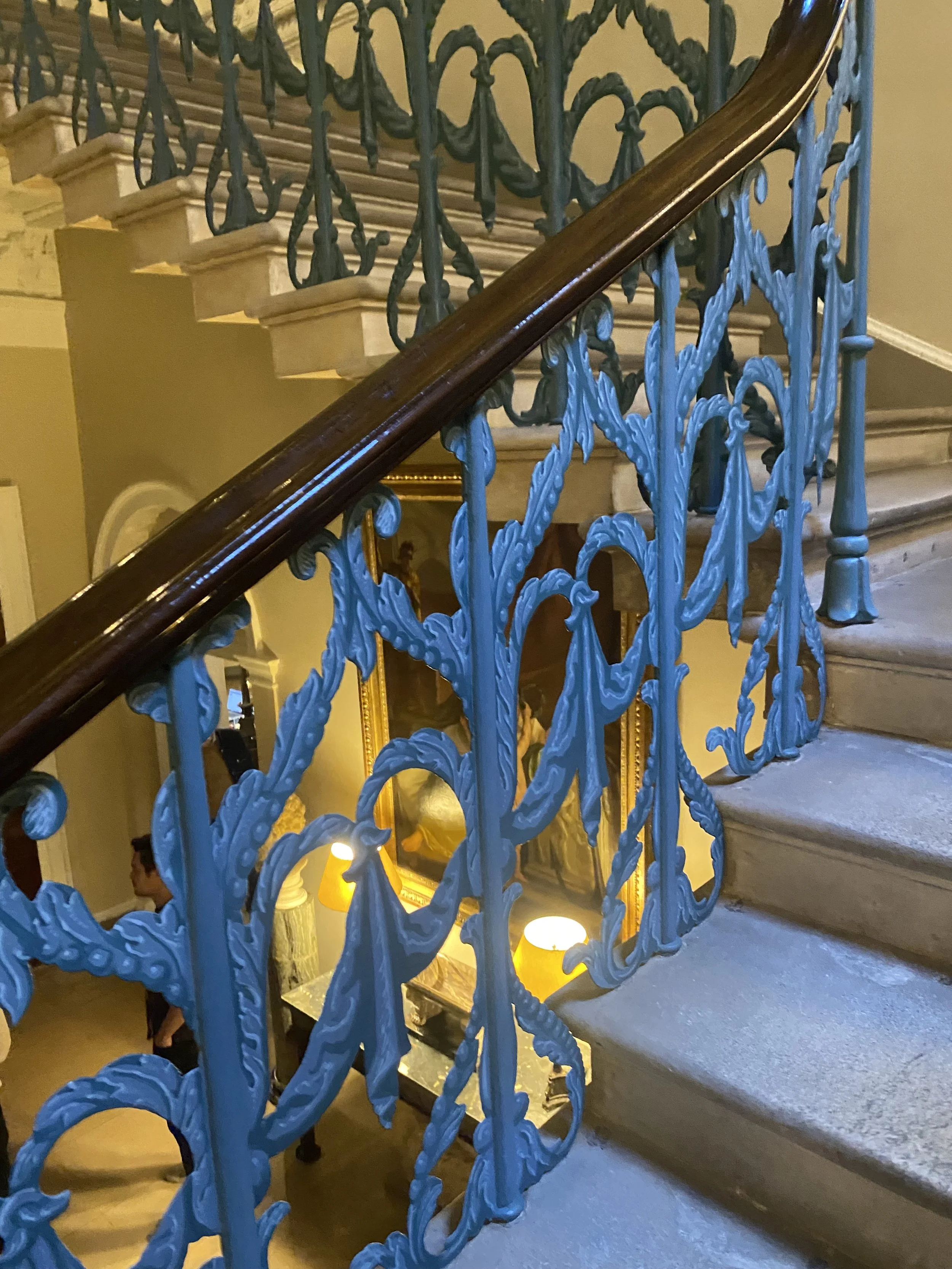
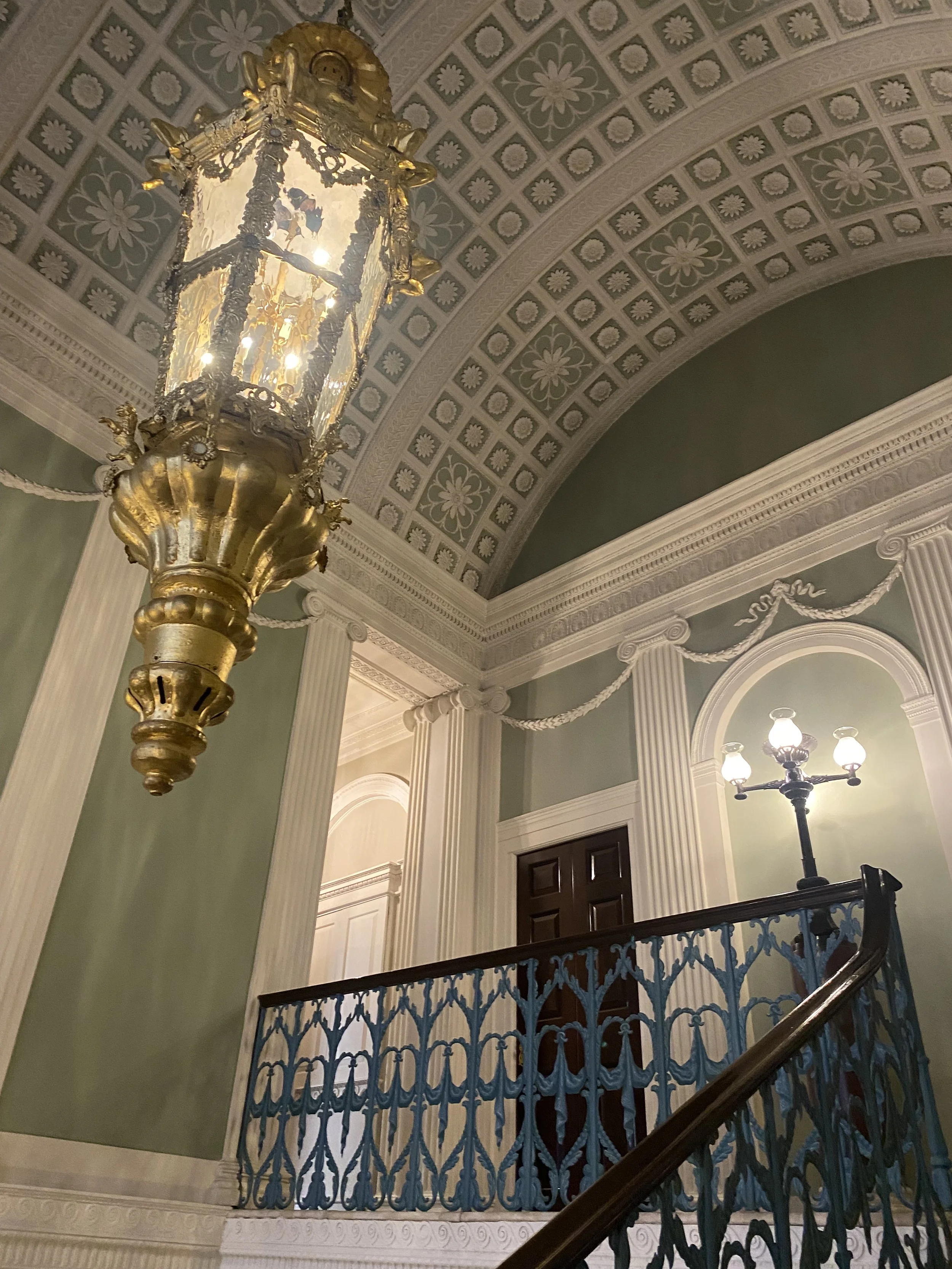
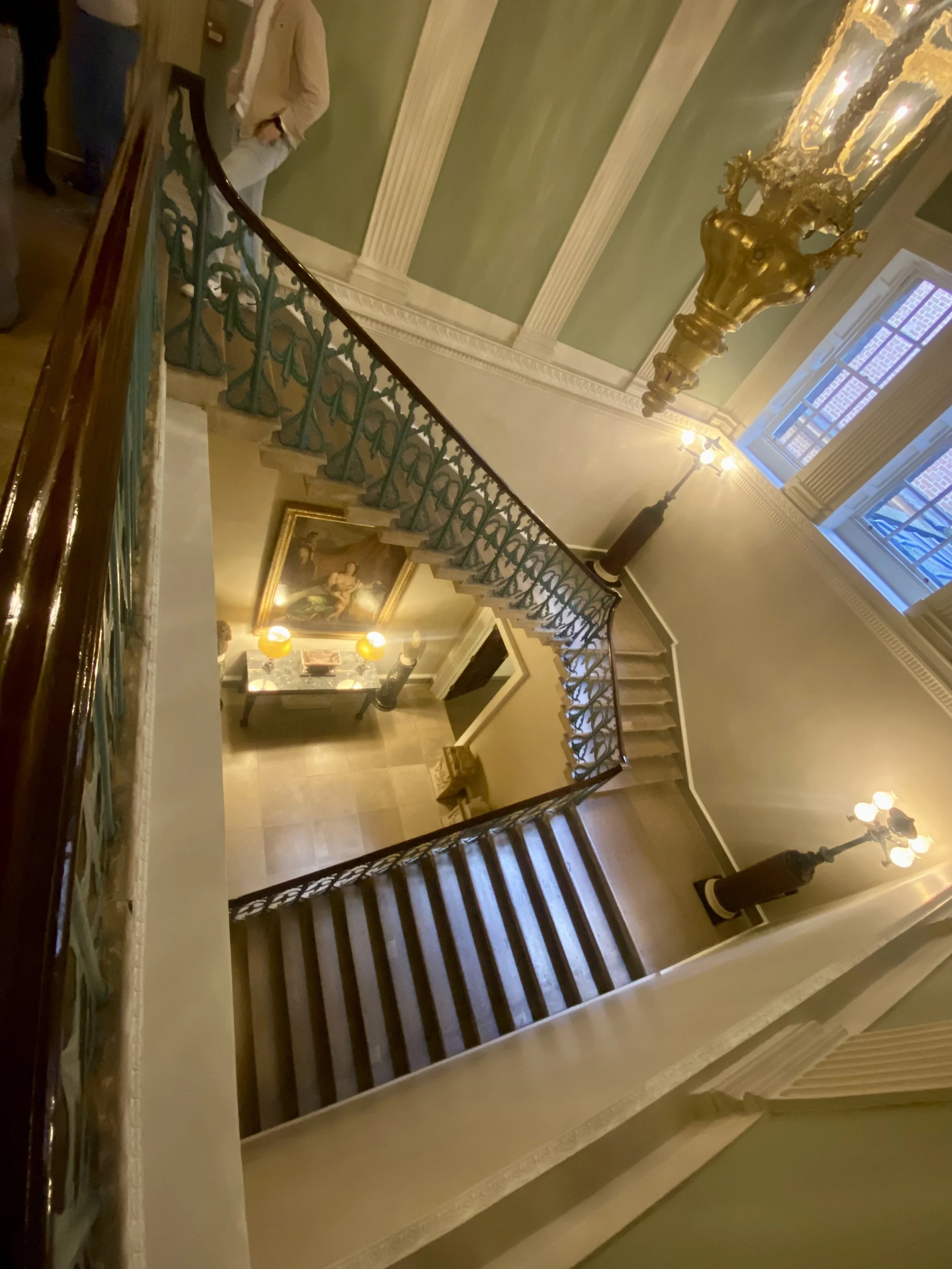
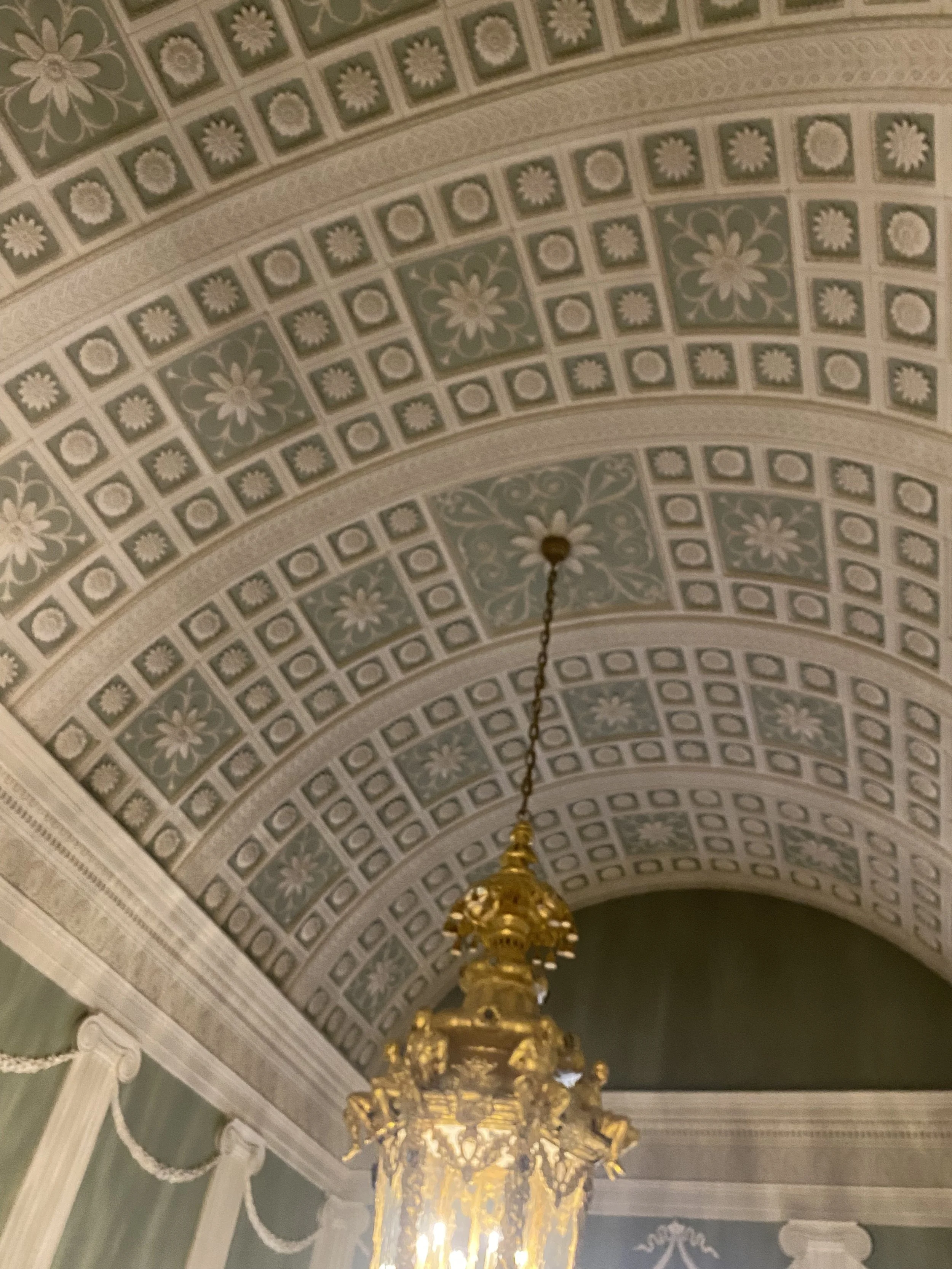
The staircase hall marks the point where Vardy’s work ends and Stuart’s begins, and the meeting of the two architects is unusually visible. The soffit beneath the landing was Vardy’s final effort on the project, sometimes described as his swan song. He knew the family were considering replacing him and produced an exceptionally detailed design carved in timber from published drawings of the ruins at Palmyra in Syria. It did not save his position. In 1758 the younger James Stuart was brought in and made several changes to Vardy’s completed work, including replacing the original Roman style scroll brackets with the flat Greek fret supports that are there now. The upper part of the hall is entirely Stuart, conceived as the interior of a Greek temple with garlands hung between the columns as if prepared for a festival. He also introduced the barrel vaulted ceiling but kept Vardy’s large Palladian window. The staircase balustrade is one of the more unusual features of the house. It is made from fretted metal painted to resemble draped fabric, a carefully judged trompe l’oeil effect that was recreated in the 1980s by Alan Dodd and Richard de Baer.
Lady Spencer’s Room
First floor
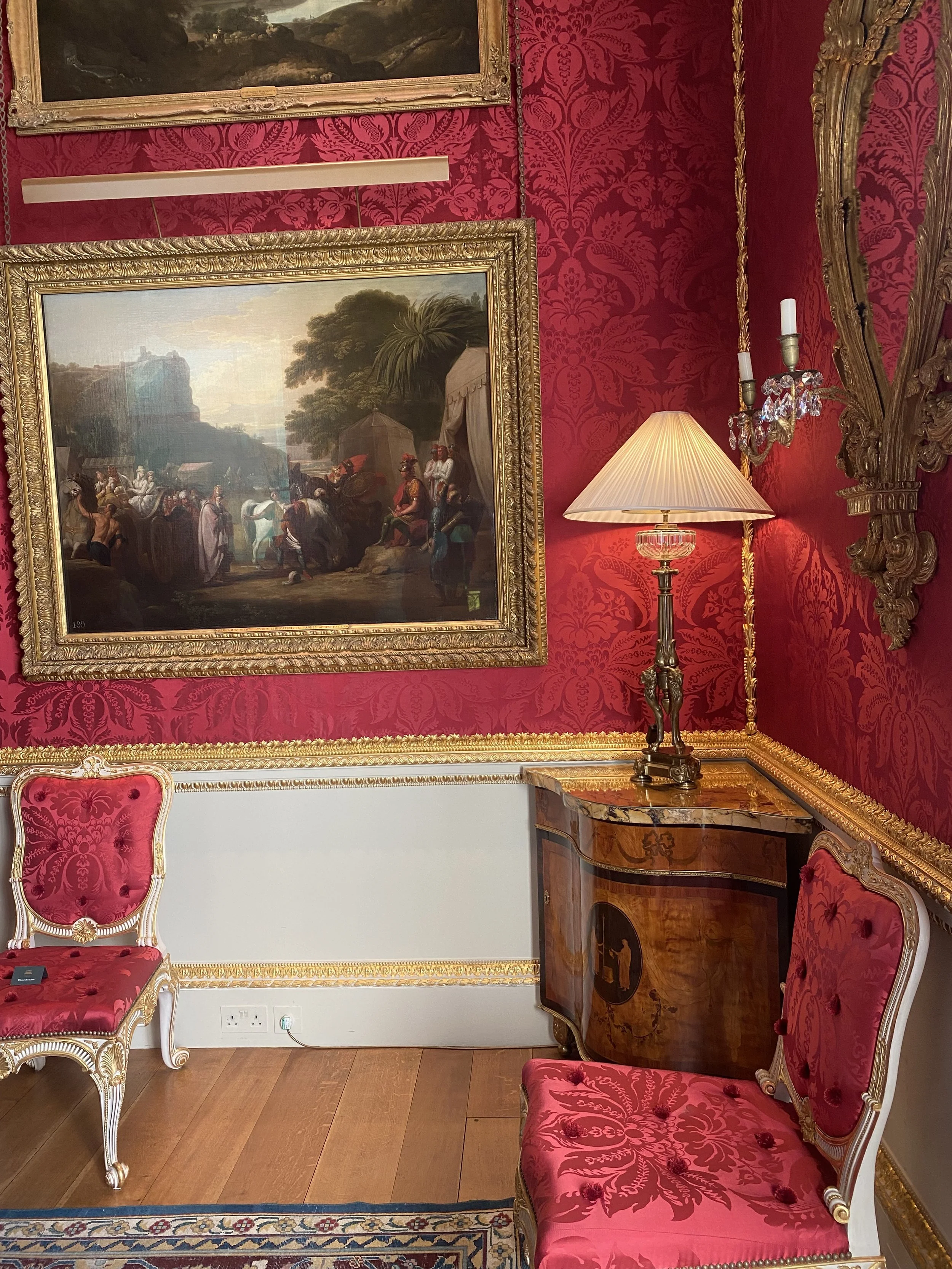
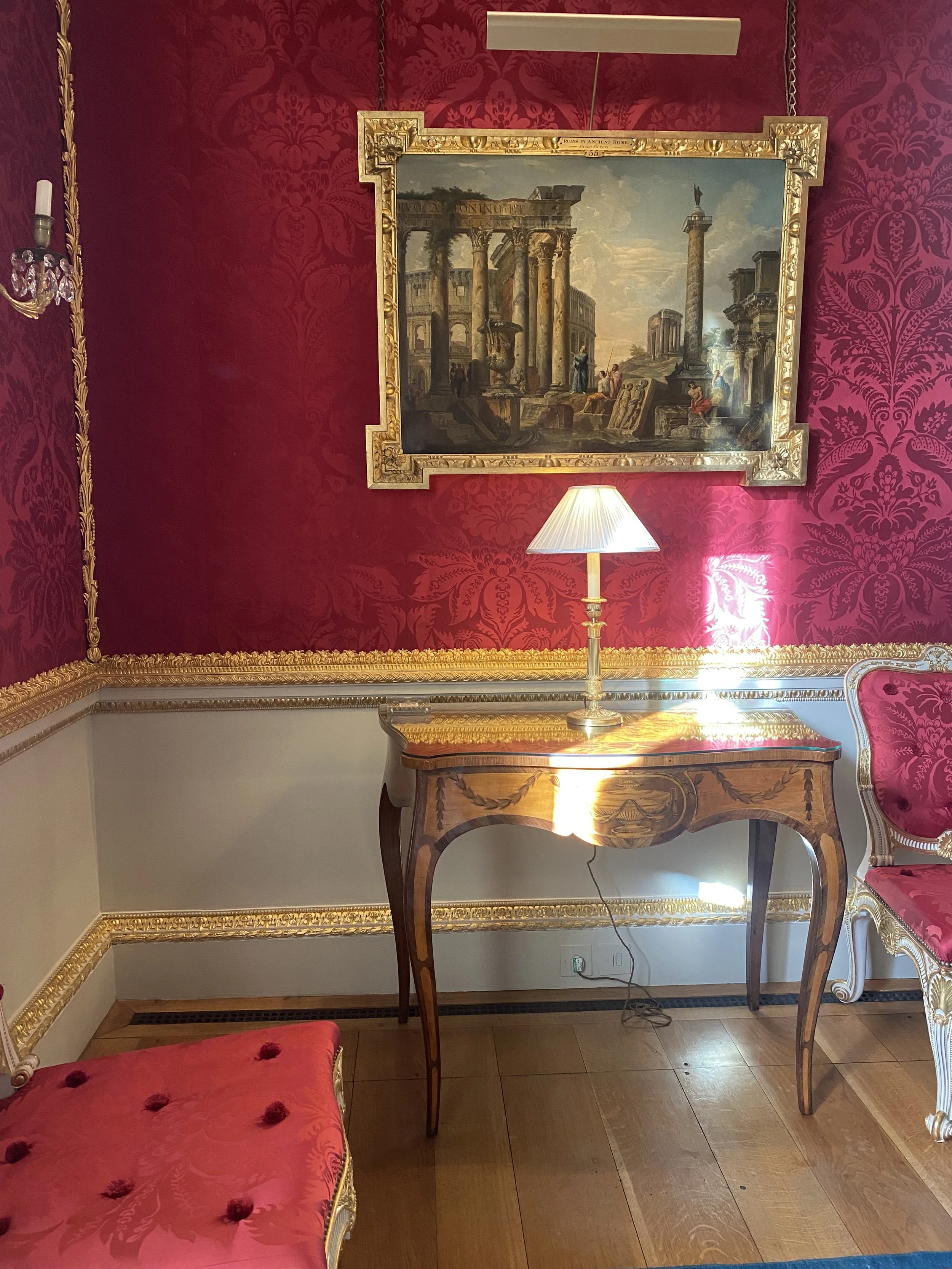
Lady Spencer’s Room is a small but richly finished space that she used as a private salon rather than a dressing room. It acted as her place for conversation and for showing paintings to friends, and it also prepares you for the scale of the Great Room next door. Stuart designed the ceiling using a Roman precedent and adjusted the geometry to suit the proportions of the room.
The red silk wall coverings are an exact recreation of the eighteenth century originals, but reproducing them turned out to be more complicated than expected. When the restoration team approached the weavers, they discovered that modern looms produce a different width of fabric. Lord Rothschild insisted on complete authenticity, so new looms were commissioned specifically to match the eighteenth century dimensions, adding a surprisingly technical layer to the restoration.
Much of the joinery had to be remade during the twentieth century works, and the chimneypiece now in place is a carefully carved modern version of the original at Althorp, attributed to Peter Scheemakers.


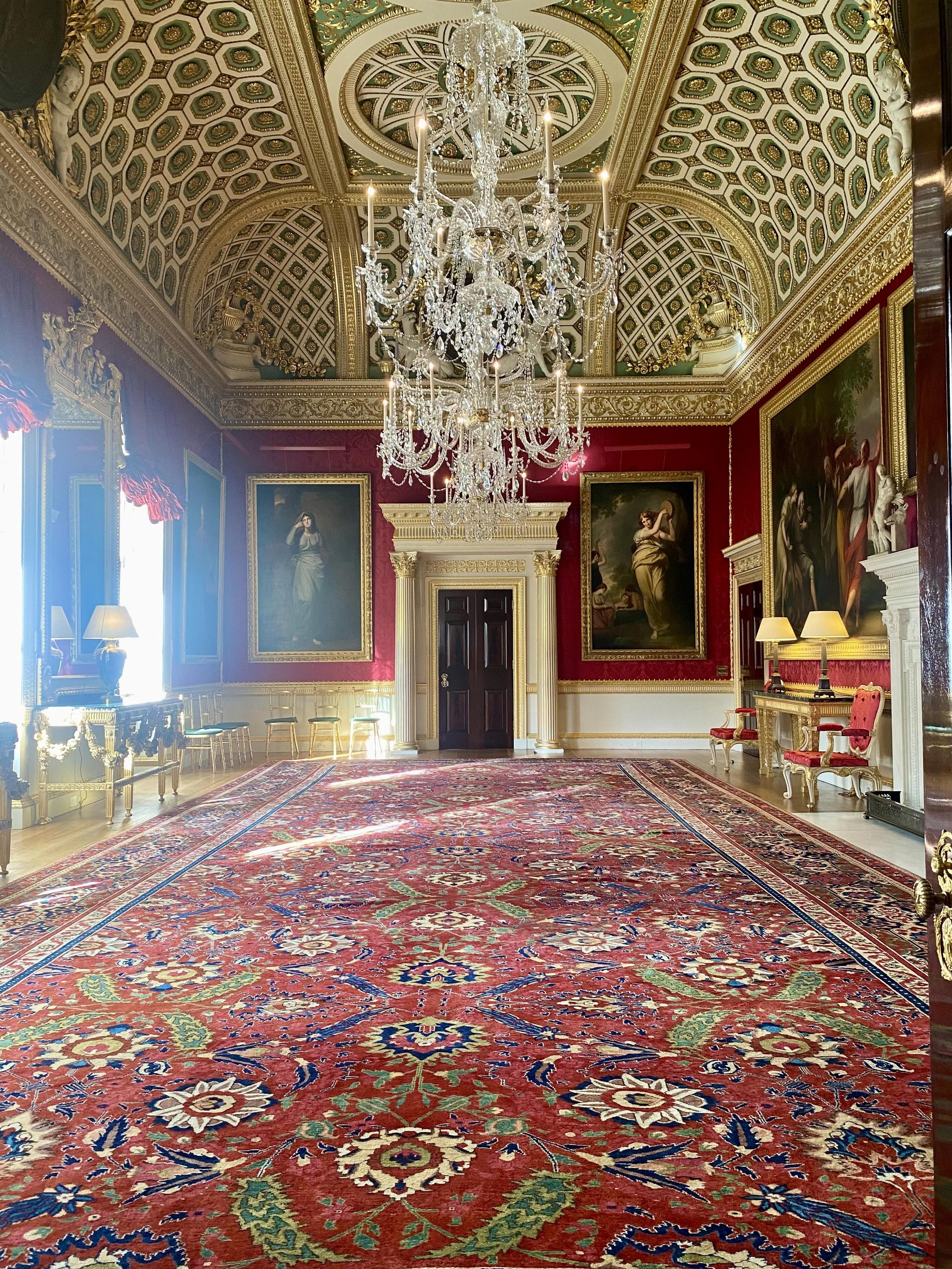
The Great Room
First floor


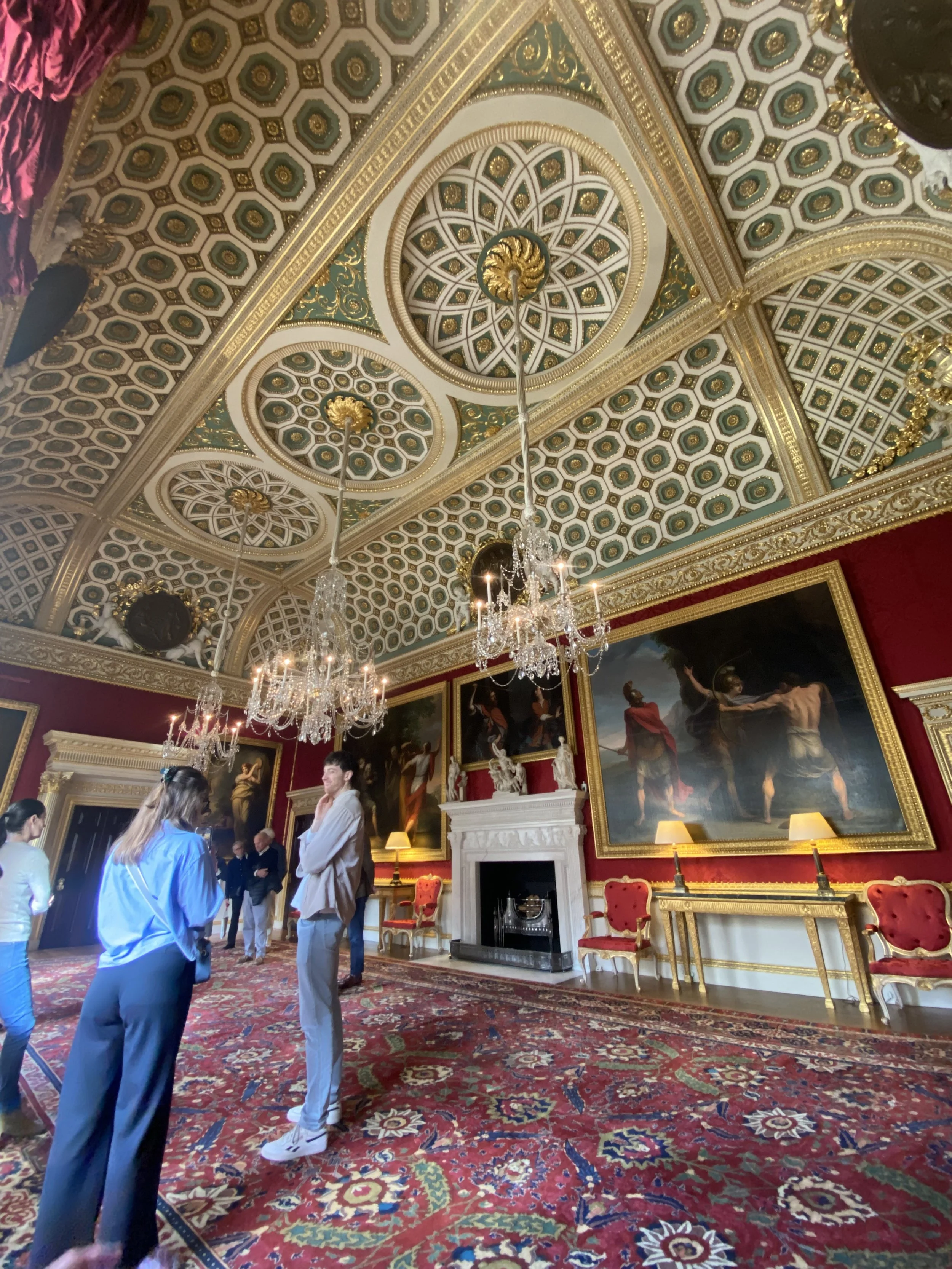
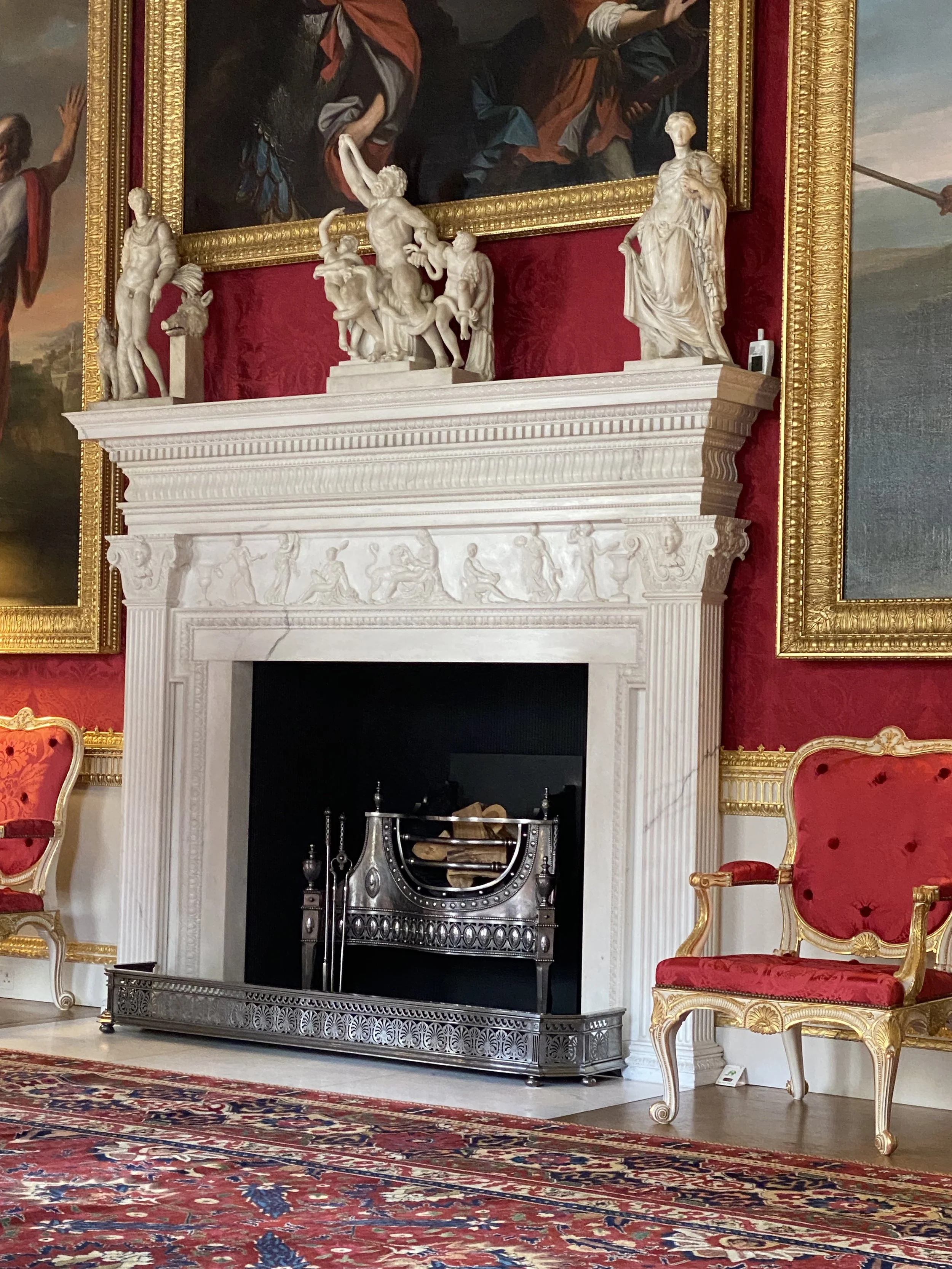
The Painted Room
First floor
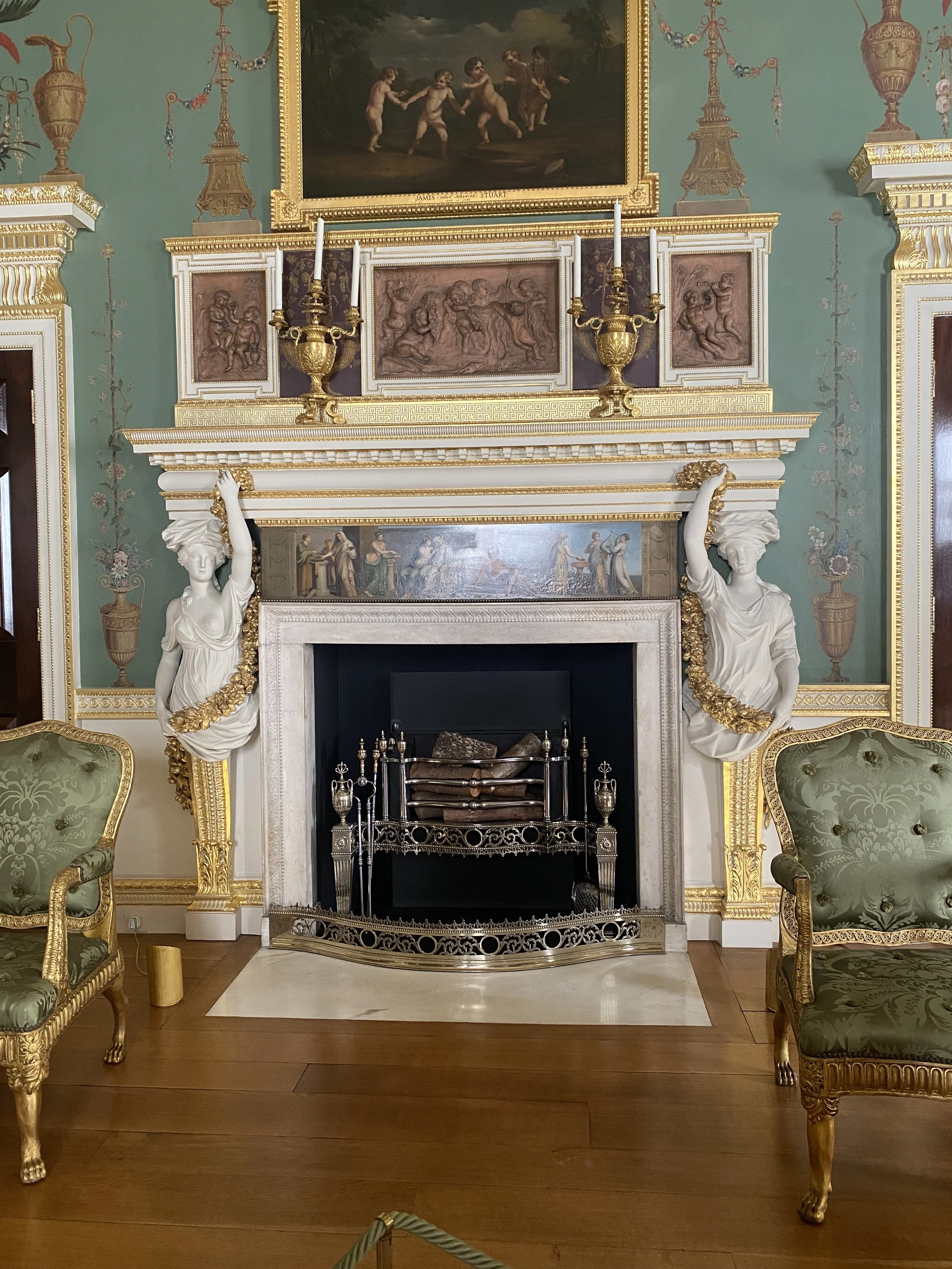
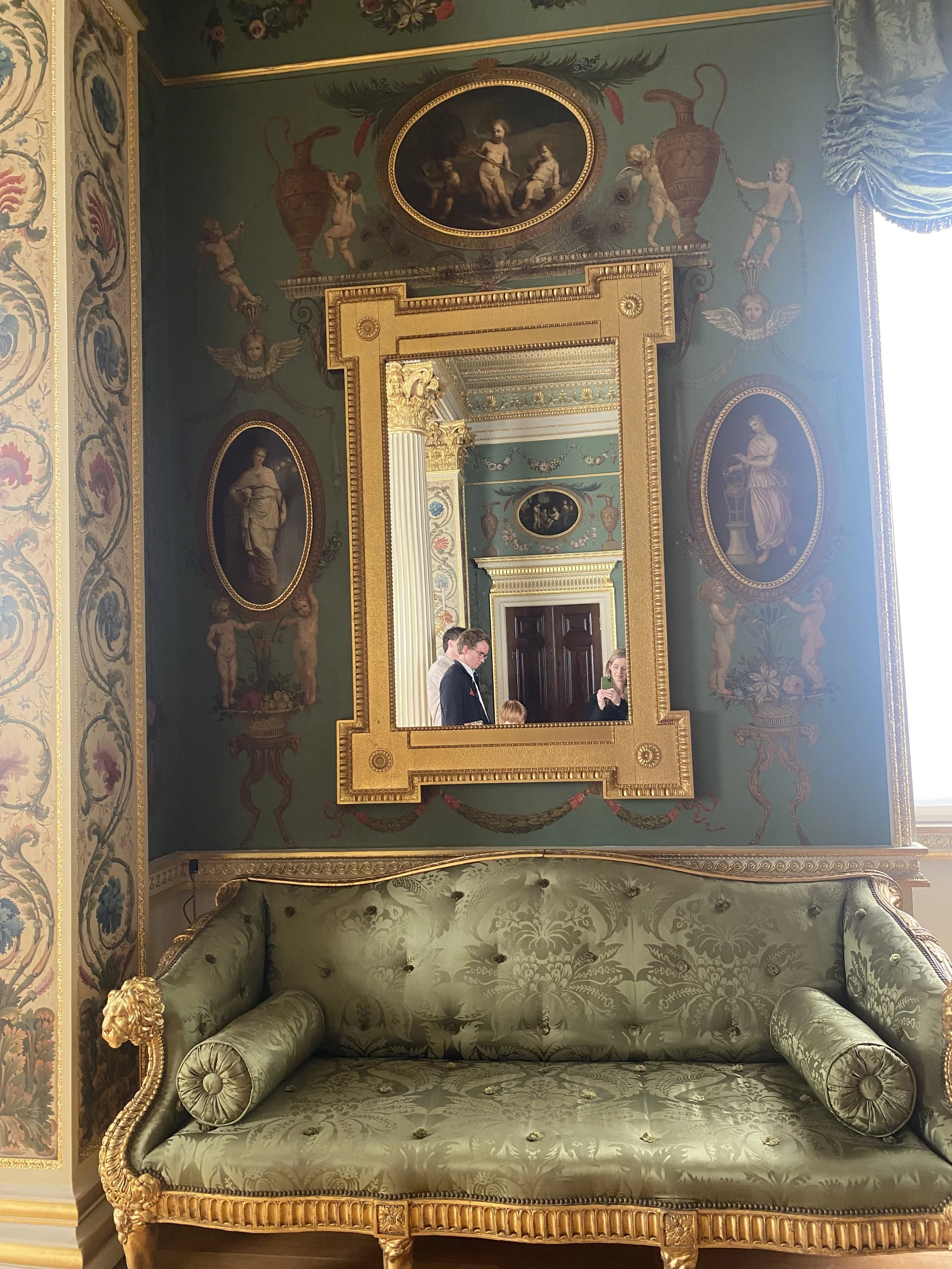
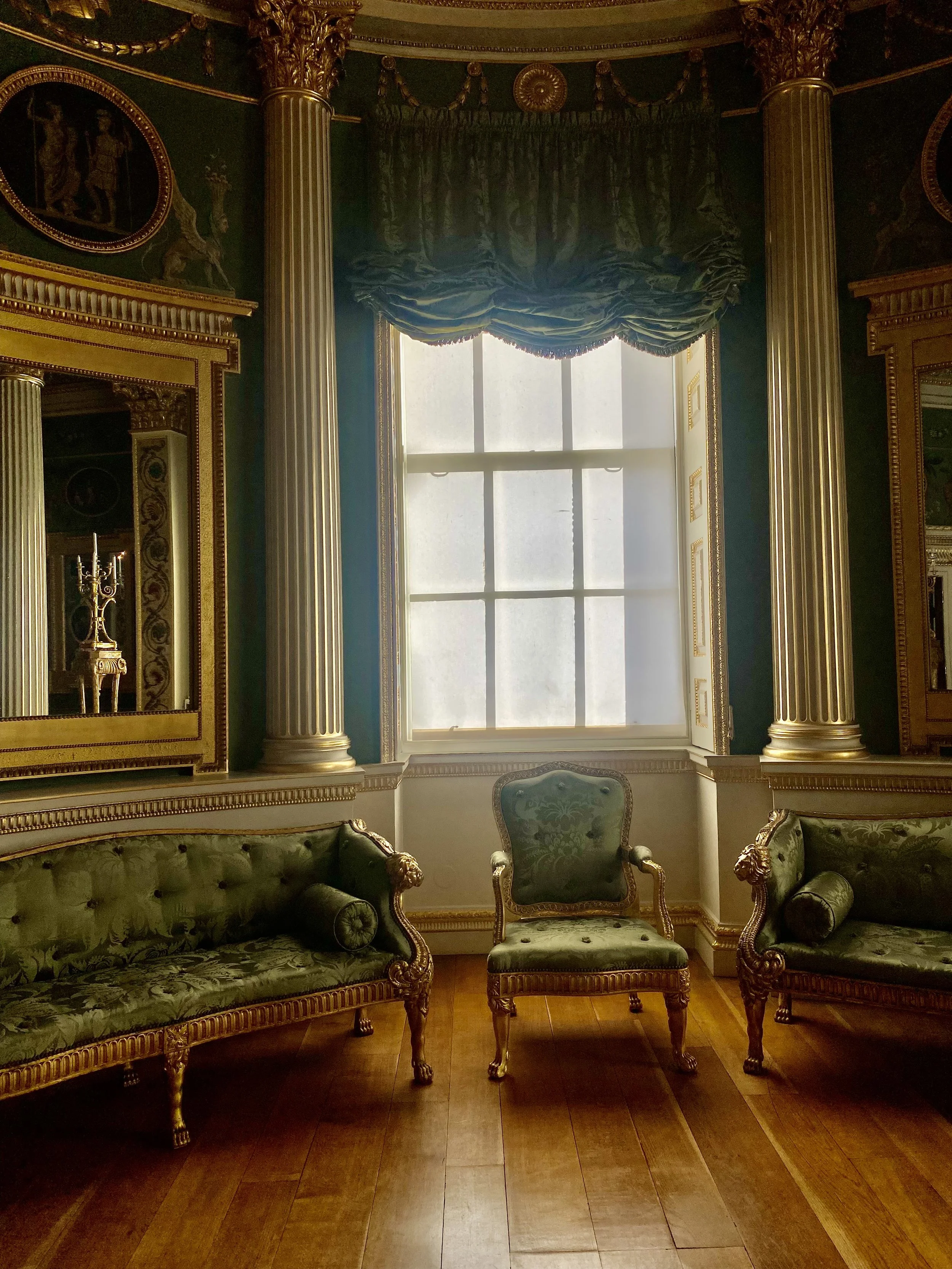
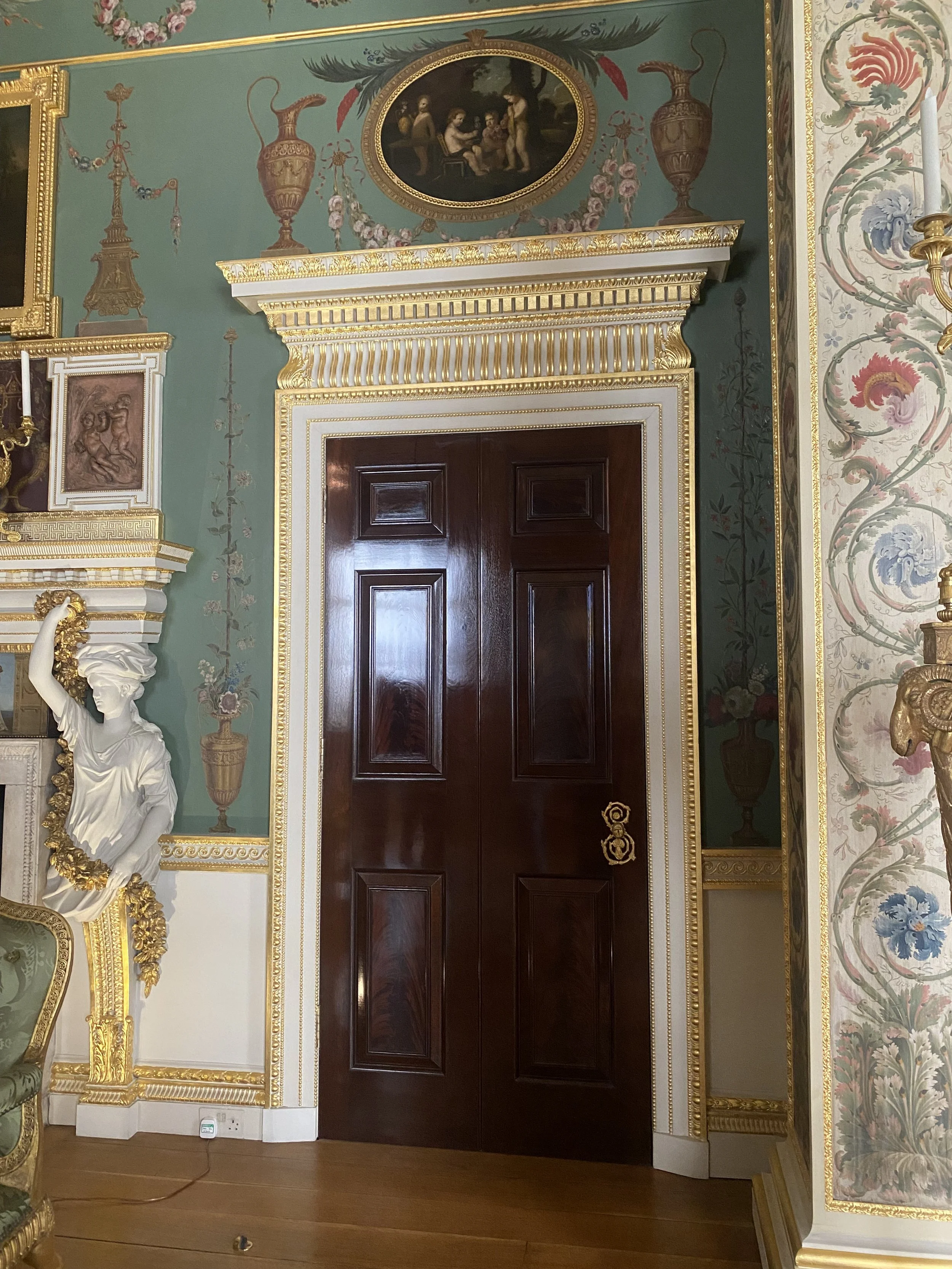
The Painted Room is exquisite and unbelievably decorative, it was conceived around 1759 and was largely completed by around November 1765. It served as a drawing room and was probably also used for ‘sitting out’ during large receptions in the adjoining Great Room. - it is apparently one of the earliest fully developed neoclassical rooms in Europe. Stuart designed it in the late seventeen fifties, drawing directly from the Roman wall paintings being uncovered at Pompeii and Herculaneum, and he combined those references with Greek details and elements taken from Renaissance and northern European sources. The scheme centres on marriage, a quiet reference to the Spencers’ own secret wedding shortly before their formal ceremony. The Aldobrandini Wedding appears above the chimneypiece, and other panels show Venus unveiled by Hymen and a series of female figures representing the expected virtues of a wife. The original suite of seat furniture, designed by Stuart for this room, is now on long term loan from the Victoria and Albert Museum, and their conservators we heard from the guide, keep a beady eye on the collection and return periodically to check that all of the items are being treated properly.
The room was badly damaged during the Second World War when a bomb hit neighbouring Bridgewater House. The shock of the impact brought most of the ceiling down and what is seen today is the result of restoration in the 1950s. Fortunately, the original painted panels had been put into storage for safekeeping and those at least could be reinstated.