
Sir John Soane’s Museum
Sir John Soane’s Museum, 13 Lincoln’s Inn Fields, London, WC2A 3BP
Date house first built on the site: 1682
New Soane houses built: 1792 - 1824
• No. 12 was built 1792 to 1794.
• No. 13 was built 1807to 1813.
• No. 14 was built in 1824, with only its rear retained as part of the museum complex.
Historical period: Georgian / Regency
Architectural period: Neoclassical
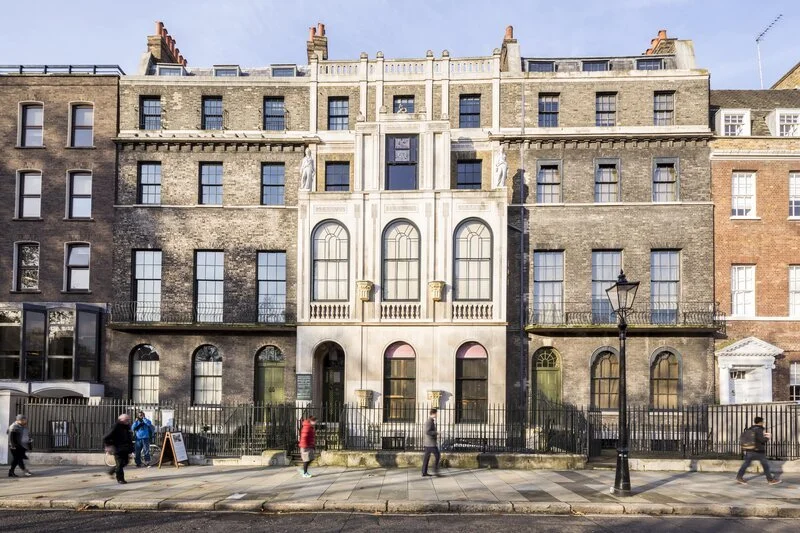
I’ve visited this extraordinary museum every few years since I moved to London for university in 2003. The rules in the museum have changed over the years. Photography used to be banned, a friend for his diploma needed to get a letter from the head of his architecture school to be allowed to photograph it for this thesis. Whereas now photography is encouraged, however videos are still not permitted. Unlike grand city palaces designed for public display, this is very much a home, the home of an inventor, where carefully over the years he used it as a test bed for his favourite and experimental architectural ideas. It is at once a home, an architectural manifesto, a teaching tool and a cabinet of curiosities. Soane used it to live in with this family but also as his office, a place to entertain and as a showroom to prospective clients.
The museum occupies what were originally three separate terraced houses, which Soane knocked down and rebuilt over several decades. Light is manipulated with extraordinary precision through roof lanterns, mirrors and concealed openings, creating constantly shifting atmospheres as you move through the building. Rooms expand and compress unexpectedly, and views are carefully choreographed so that spaces are revealed in sequence rather than all at once.
Part of our ongoing CPD series into notable historic homes, Sir John Soane’s Museum is the next in our sequence of visits and our first one this year.
Located on Lincoln’s Inn Fields, most of the house was bequeathed to the nation by Sir John Soane under a private Act of Parliament, a deliberate intervention by Soane to cut out his two sons from their inheritance with whom he was desperately disappointed by. The bequeath included the condition that it be kept as closely as possible to how it was at the time of his death. As a result, the museum remains an unusually authentic record of a house of the time and particular, preserving not just in the architecture of the building but all of its contents - drawings, objects and furniture.
Following Soane’s death in 1837, as per the bequest,no’12 and 13 and some of 14 house did not pass to a private heir but to appointed Trustees, who still oversee the museum today. It has always been state funded - from 1837 onwards, the museum was supported by the state, originally through parliamentary funding. Over time this developed into formal government grant in aid. Today operates as an independent charity with Trustees. They are responsible for protecting the building, its collection and Soane’s vision. As a result, it has remained in continuous public ownership for nearly two centuries.
Who was Sir John Soane?
Sir John Soane was born in 1753 in Goring on Thames, South Oxfordshire, the son of a bricklayer. His background was modest, and his rise was driven by talent, discipline, luck and patronage rather than inheritance. He built one of the most distinctive architectural careers of the late Georgian period and became one of the most important public architects of his time in Britain.
He was articled (he began his apprenticeship) at the age of fifteen to the architect George Dance the Younger. In 1778 he won the Royal Academy Gold Medal and shortly afterwards received a travelling scholarship that allowed him to study in Italy. This Grand Tour profoundly shaped his architectural thinking, deepening his engagement with classical antiquity, Roman space and the manipulation of light.
In 1784 he married Eliza Smith, a niece and ward of a prominent and wealthy builder named George Wyatt. They had four sons but only two who survived infancy - John and George. Soane had hoped to built an architectural legacy with his sons following him into the profession, however neither of them did. One son, John went into the civil service and the other George, became a writer and journalist. George in particular was profligate with the family money — he would spend, go into debt and rely on his parents to repeatedly settle his debts. Finally, Sir John Soane refused to settle his debts and George was sent to a debtor’s prison in1814 for a few months. Afterwards, still furious with his father, he wrote an anonymous hit piece on him in 1815 in the The Champion mocking his lack of originality and even saying he plagiarised some of his work. The drove a schism through the family and his mother died shortly after, from gall stones but John Soane attributed and blamed her death to George’s behaviour and never forgave him. After this incident he set in motion the steps to disinherit his sons and leave everything to the state.
Early works
His early independent works included country houses such as Letton Hall in Norfolk and Tyringham Hall in Buckinghamshire, where his stripped classical language and interest in light and geometry began to emerge.
Bank of England Architect & Surveyor
His major breakthrough came with his appointment in 1788 as Architect and Surveyor to the Bank of England. Over more than forty years he remodelled and expanded the complex almost entirely, creating a sequence of top lit halls, domed spaces and abstracted classical interiors. Tragically, and very surprisingly The Bank of England that he desined was demolished in the 1920s and rebuilt.
He also designed the Dulwich Picture Gallery in 1811 to 1817, often described as the first purpose built public art gallery in England. Its restrained brick exterior conceals a carefully orchestrated sequence of top lit exhibition spaces.
Closer to home, he rebuilt and extended his own house at Lincoln’s Inn Fields, now Sir John Soane's Museum, as a working laboratory of ideas.
Another important project was Pitzhanger Manor in Ealing, remodelled for himself as a suburban villa.
In 1806 he became Professor of Architecture at the Royal Academy, where he lectured for nearly three decades.
Act of Parliament
In 1833 Soane negotiated an Act of Parliament to settle and preserve the house and collection for the benefit of ‘amateurs and students’ in architecture, painting and sculpture.
Death
He died in 1837 and was buried in St Pancras Old Church. The distinctive, classical design of his tomb later inspired the iconic red telephone box.
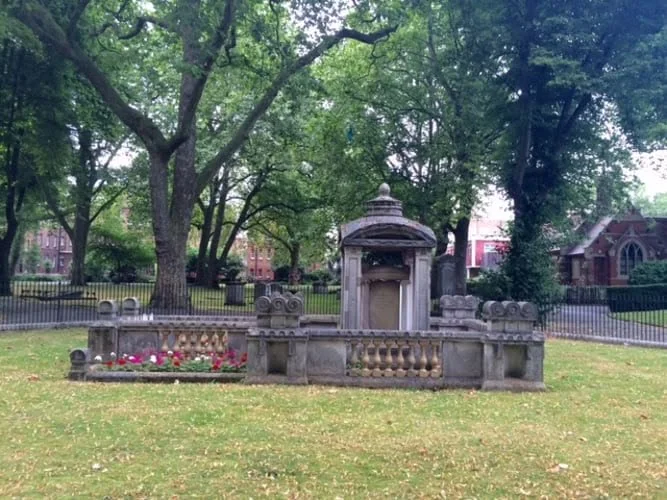
Sir John Soane’s tomb - Image from Historic England, inspired the iconic British phone box design
Sir John Soane’s education
Soane started his architectural training and career as a teenager. Today by contrast, the path to becoming an architects starts much later - students finish secondary school at eighteen or ninetee, then if accepted undertake a three year degree at architecture school, followed by a year of working while still studying, followed by a further two years masters (used to be called diploma) followed by the final architectural qualification Part III which takes another year, done alongside practicing as an architectural assistant on an applicable case study live project on site. It is very common for current architects to not fully qualify until they are nearly thirty. Not leaving so long to develop a career as earlier generations of architects. In stark contrast, Sir John Soane’s training like his contemporaries in Georgian Britain started aged fifteen. From 1768 he was articled (meaning he became an apprentice) to George Dance the Younger, this would have meant that a relative would have had to have paid a fee for this training but after a few years once he became useful, he would likely have started to be have been paid. Interesting article here on architectural education in the Georgian era. working At Dance’s office he would have learned surveying, measured drawing and the practical realities of construction. In 1771, aged eighteen, he enrolled at the newly created Royal Academy Schools, attending evening classes in drawing from the antique and from life, listening to formal lectures delivered by Academicians, and preparing competition designs in his own time. The Academy was not a full time daytime institution, but a professional school layered onto apprenticeship. This dual system allowed Soane to absorb classical theory while working and practically learning how to be an architect. In 1778 he won the Royal Academy Gold Medal for his design of a Triumphal Bridge, a success that made him eligible for the Travelling Scholarship and led directly to him being able to undertake his own Grand Tour, allowing for formative years of study in Italy.
Architectural history of Sir John Soane’s Lincoln’s Inn Fields houses
Building at Lincoln’s Inn Fields began between 1682 and 1684 as part of the late seventeenth century development of the square. Lincoln’s Inn Fields in the late eighteenth century was one of London’s most distinguished squares, lined with substantial townhouses occupied by lawyers, professionals and members of the cultural elite.
More than a century later, in 1792, Soane purchased No. 12 so that he could use the land as a site for a home of his own design. He quickly set about demolishing the original house and rebuilding it to his own designs. Sixteen years later he had purchased number 13 and after many years of working around the sitting tenant who came with the house, he managed and also demolished the building and rebuilt it as an extension to his original home at no. 12. Eventually, No. 14 was acquired and added to his home allowing him to rent out parts as a way of earning extra income, as well as opening a museum and creating a particularly inventive picture gallery. He never occupied 12 himself and unlike numbers 12 and 13, most of 14 was left as inheritance to his family.
Lincoln’s Inn Fields square itself has largely survived in its historic form, although not every house remains untouched. Many of the façades are still intact, creating one of the most complete historic squares in London.
Inside the House
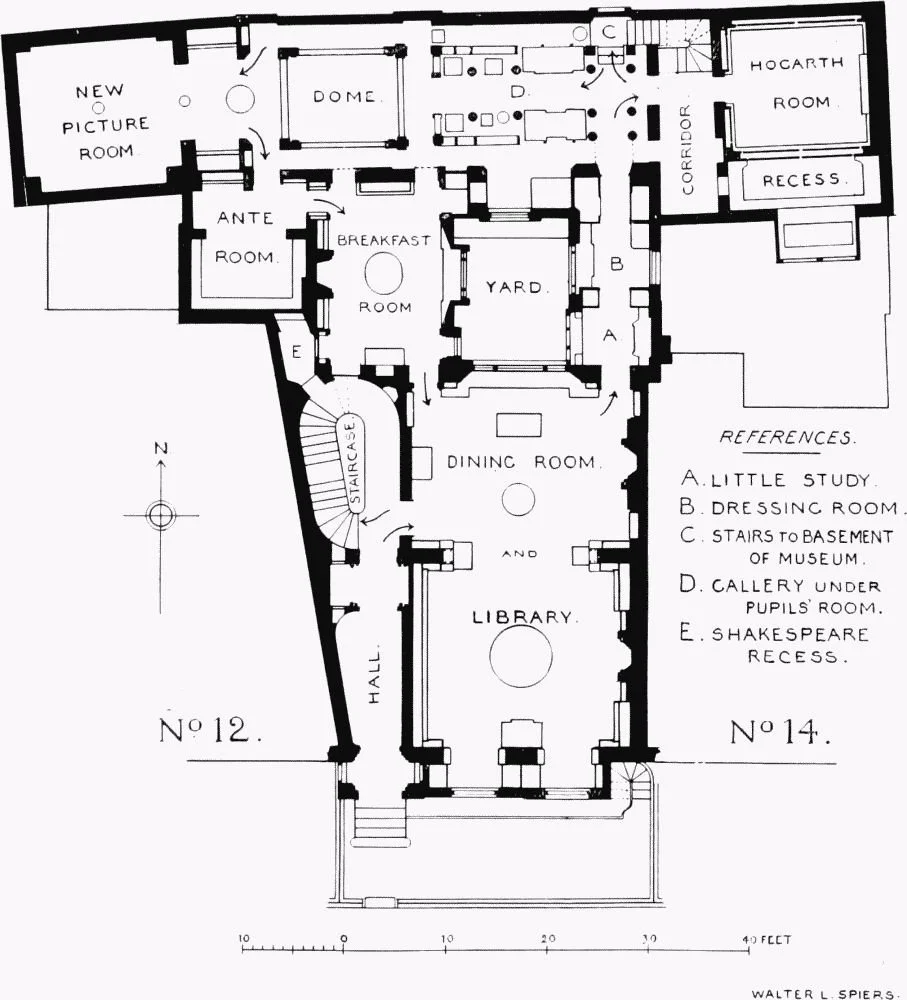
Drawing by Walter Lewis Spiers Curator of the raised ground floor of the Sir John Soane museum from 1904 - 1917
The Entrance Hallway
Raised Ground Floor, No 13 Lincoln’s Inn Fields
You enter the museum at no. 13, the central portion of the building via a moody and low lit front hall, with walls in Scagliola finish to look like porphyry. You then enter an inner hall door filled with stained and coloured glass before coming into the stairwell hallway - the staircase lies on your left handside with a view through the stairwell void down to the lower ground floor and the entrance to the Dining and Library rooms on your right handside, before turning to enter the much larger space of the Pompeiian red Library Dining Room.
The Dining Room & Library
Raised Ground Floor, No 13 Lincoln’s Inn Fields
We went for a Soane’s Lates earlier this month and the opening talk was given in this room. The room is relatively modest in scale, yet feels richly layered. Shelves are densely packed with books on architecture, antiquity, history and the arts, forming a working reference collection rather than decorative backdrop. Busts and fragments are set within niches and on brackets, integrating sculpture into the architecture itself.
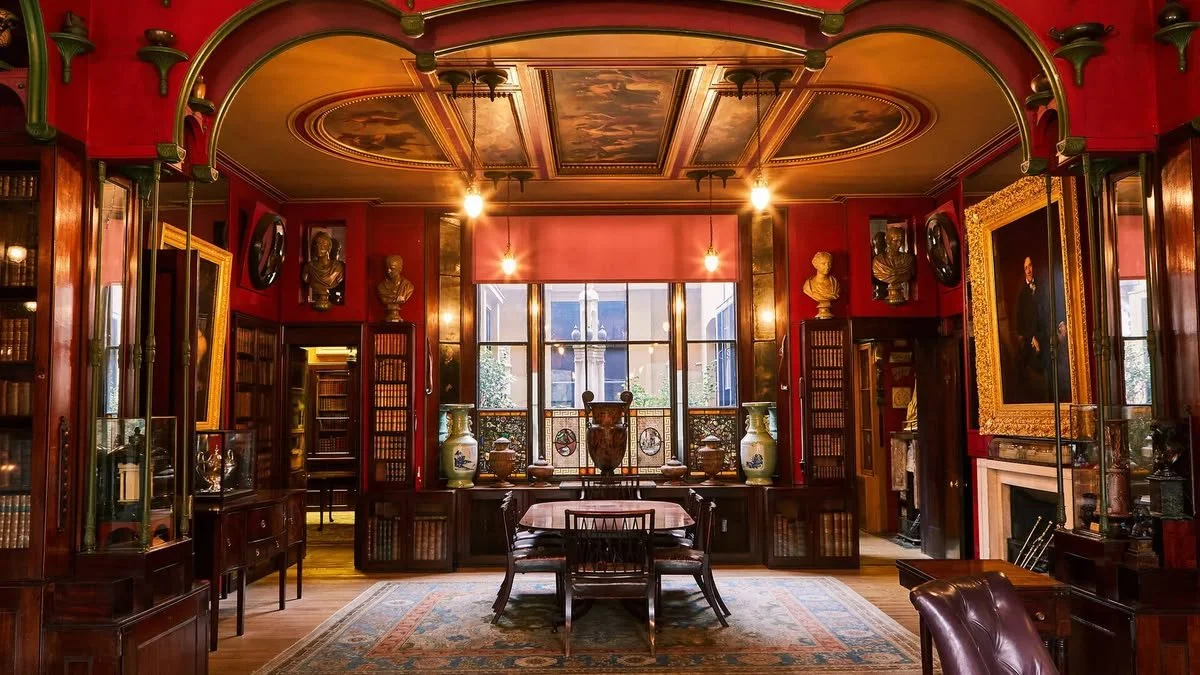
Sir John Soane’s Museum - The Dining Room
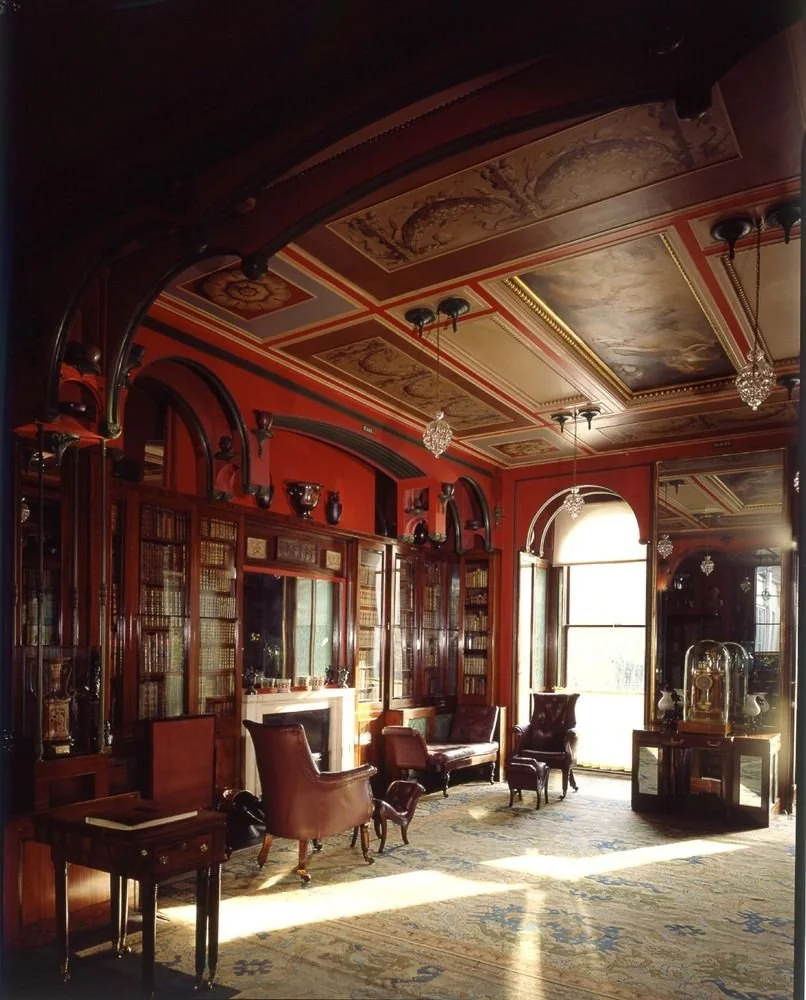
Sir John Soane’s Museum - The Library
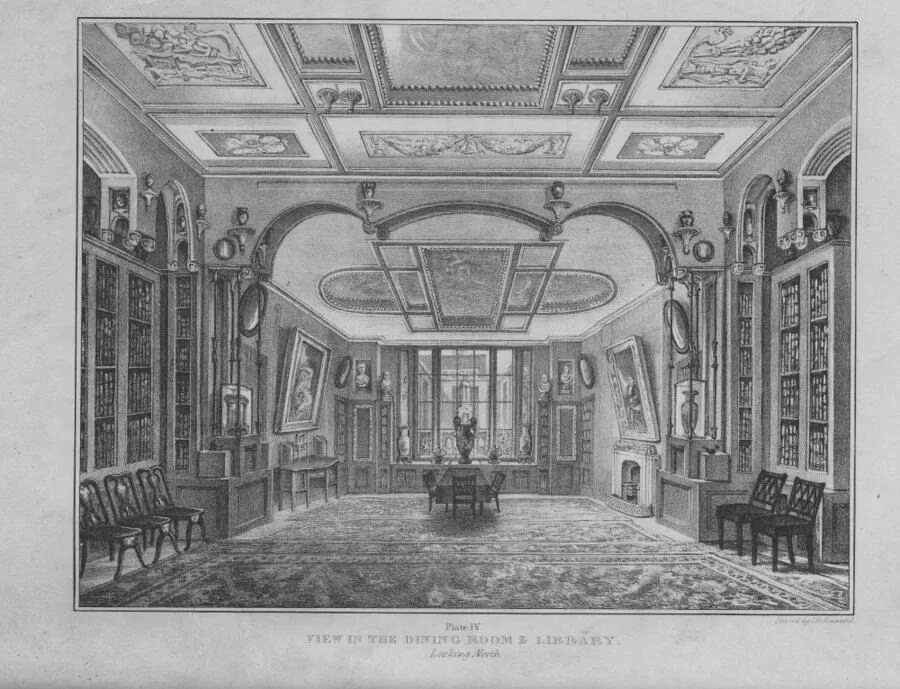
The Dining Room & Library looking back to the internal lightwell - note the innovative open plan arrangement - faciliated by a robust structural engineering scheme. While the norm today, this was very unusual in a domestic setting in Georgian Britain
Light is manipulated through concealed glazing and mirrors. A shallow coved ceiling and carefully positioned openings draw daylight from above, while mirrors extend perceived depth. The result is a room that feels both intimate and intellectually expansive.
The long dining table could be cleared to allow drawings and books to be examined, turning the room into a teaching environment for students from the Royal Academy.
The walls are book lined allowing for easy reference while studying but also as an impressive backdrop when entertaining.
“The convex mirrors installed at high level in the Dining Room capture, focus and frame views in the same way as the hand-held circular portable convex mirrors, which eighteenth century artists used to obtain a wide-angle simplified view with a high degree of contrast to help them develop picturesque compositions.”
The Breakfast Room
Raised Ground Floor, No 13 Lincoln’s Inn Fields
The Breakfast room is likely to be many people’s favourite room in the museum and it is my personal favourite. It is a comforting and domestic in scale but hugely ambitious in its architectural scope and implementation. With over one hundred mirrors, and light sources from above and on all four walls, the room collapses space and is full of detail and intrigue. Soane apparently used this as one of his main rooms to work from.
Like all of Soane’s work, principles of the ‘Picturesque’ inform its design. The Picturesque principles dictate that a building be treated with movement and the views created by the movement through the space at the forefront. It needs to be as Horace Walpole, the amateur designer of Strawberry Hill wrote ‘a journey through a succession of Pictures’. The transitions and relationships between spaces are as important as the spaces themselves.
Soane himself described the room as “a succession of fanciful effects, which constitute the poetry of architecture.”
A domed vaulted ceiling with an octagonal rooflight to the centre with stained glass to each octagonal vertical element, provides controlled and diffused light to the room.
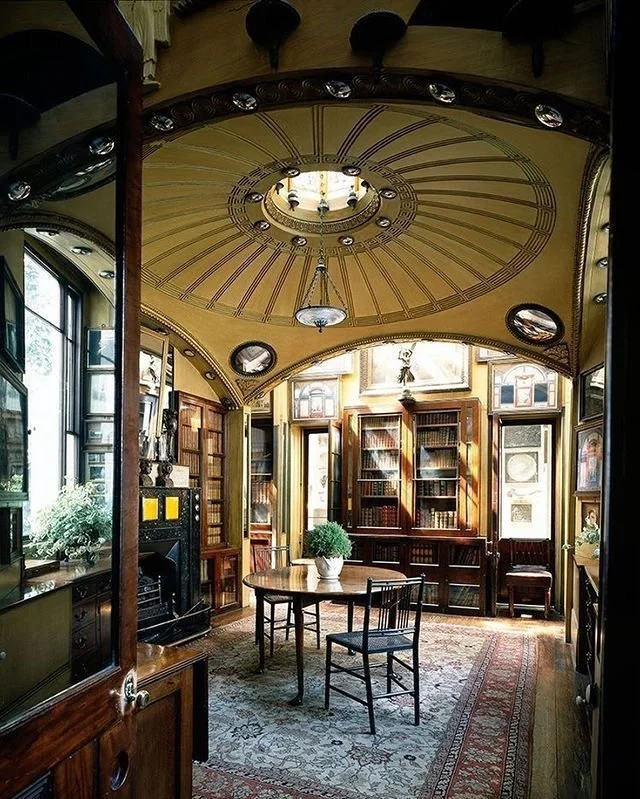
Sir John Soane’s Breakfast Room
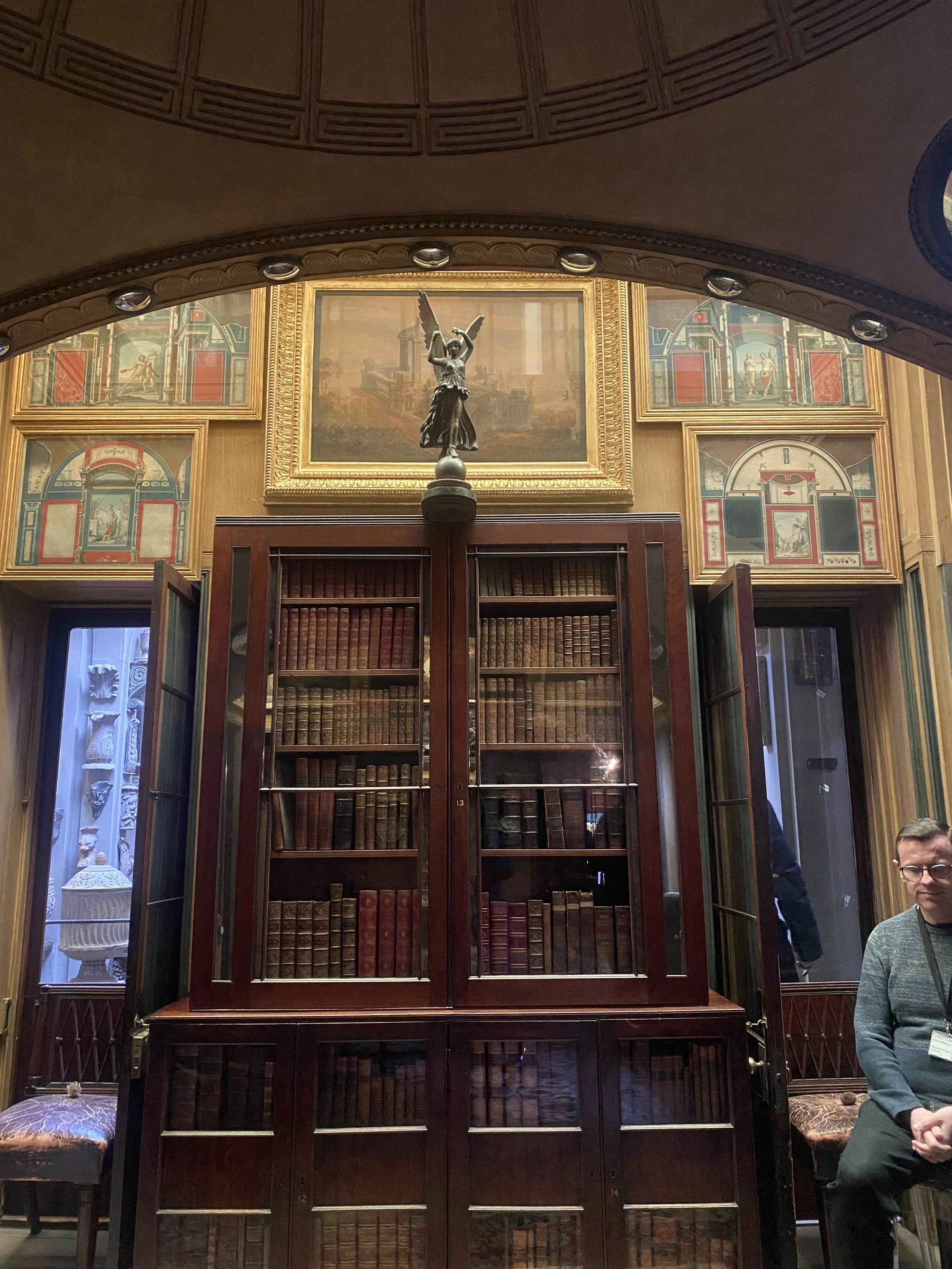
Sir John Soane’s Breakfast Room no. 13 - photo taken January 2024
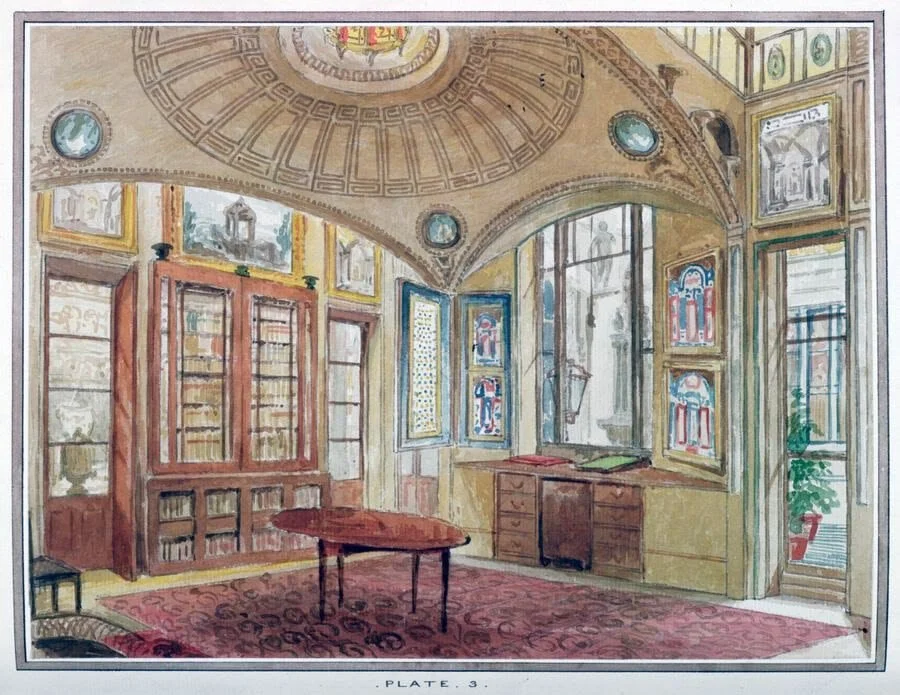
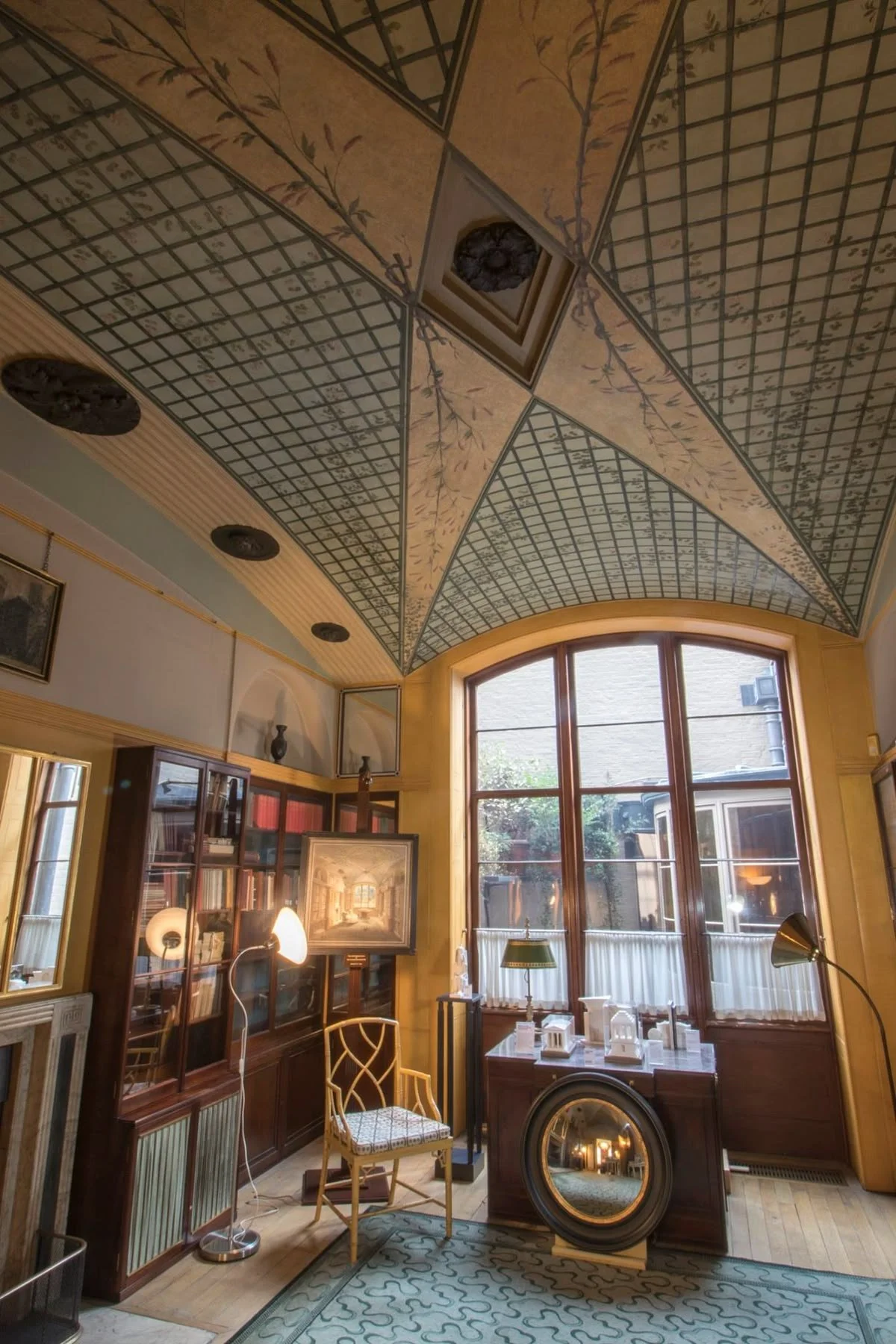
The Breakfast Room (no. 12)
Raised Ground Floor, No 12 Lincoln’s Inn Fields
Before Soane purchased and developed no. 13, he lived at no. 12 with his family. The breakfast room's most striking feature is the decorative 'starfish' ceiling, a favourite motif of Soane's. The ceiling is painted to imitate an Italian canopy, overgrown with branches and vines.
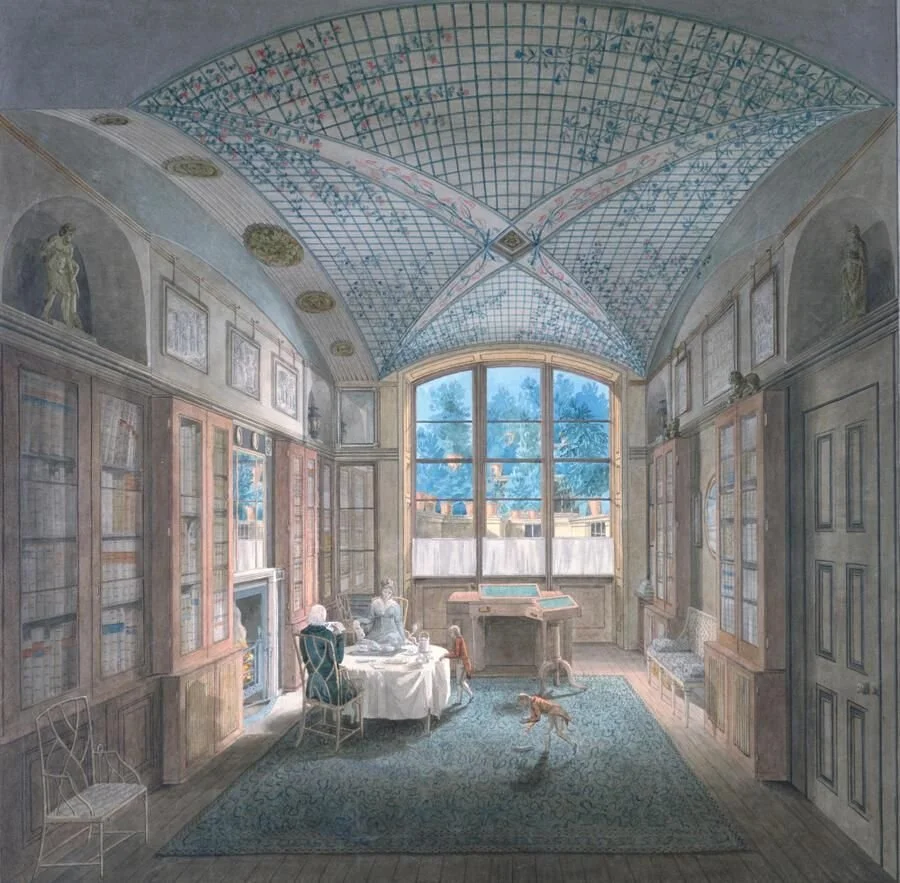
The Breakfast room at no. 12 would have been used by the family - painting by Joseph Michael Gandy
The Dome
Lower Ground Floor, Raised Ground Floor, First floor No 13 Lincoln’s Inn Fields
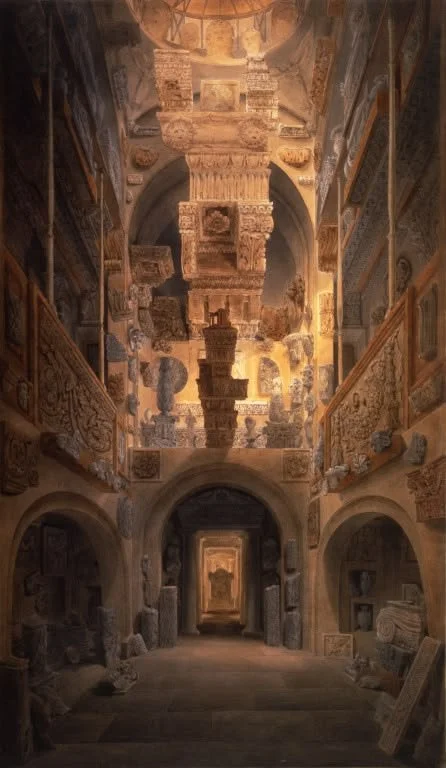
View of the Dome area at 13 Lincoln's Inn Fields by night, looking east.1811 - Joseph Michael Gandy
Conceived as a triple height museum space to the rear of the building in a space that would once have been horse stables, the Dome is a spectacular and richly detailed museum space, originally designed for Soane’s students and employees to learn from. At a time when the Napoleonic Wars made travel to continental Europe difficult for British students, Soane’s house became a substitute Grand Tour. The Dome Area in particular operates as a concentrated lesson in classical space, light and antiquity, allowing pupils to study Rome without leaving London. Over a lifetime, Sir John Soane was said to collect artefacts with current values running into tens of millions of pounds. The centrepiece, the 1290 BC Sarcophagus of Seti I, was purchased in 1824 for £2,000, roughly £222,000 today.
The Dome Area forms the heart of the Museum sequence in No. 13 at Sir John Soane's Museum and was created as part of Soane’s expansion of the house after 1807. Top lit from above, it draws natural light deep into the interior of the plot, animating the dense arrangement of architectural fragments, casts and antiquities that line its walls. The manipulation of light is deliberate and highly controlled, reinforcing Soane’s fascination with light as an architectural material.
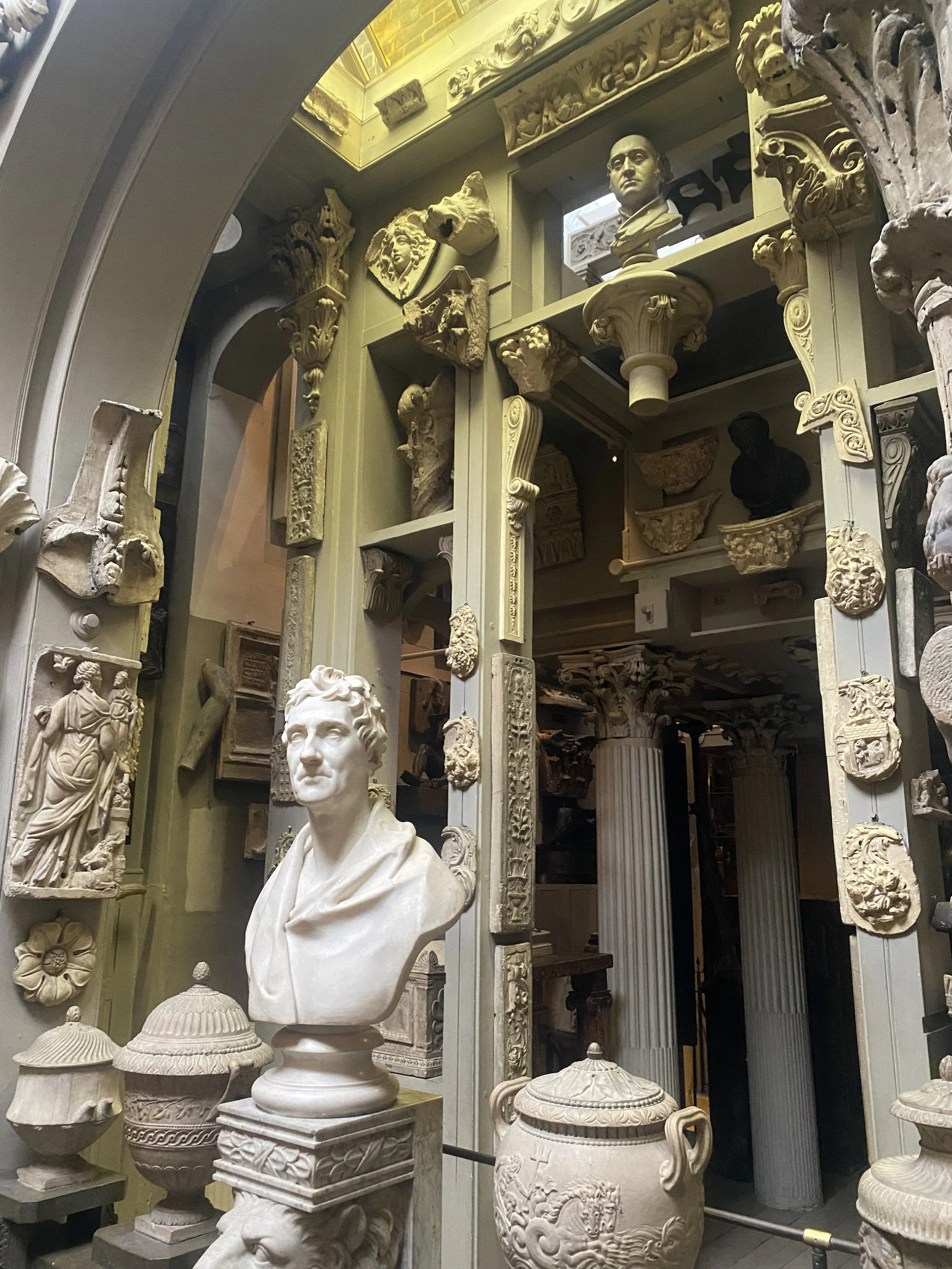
A bust of Sir John Soane in the dome taken in January 2024
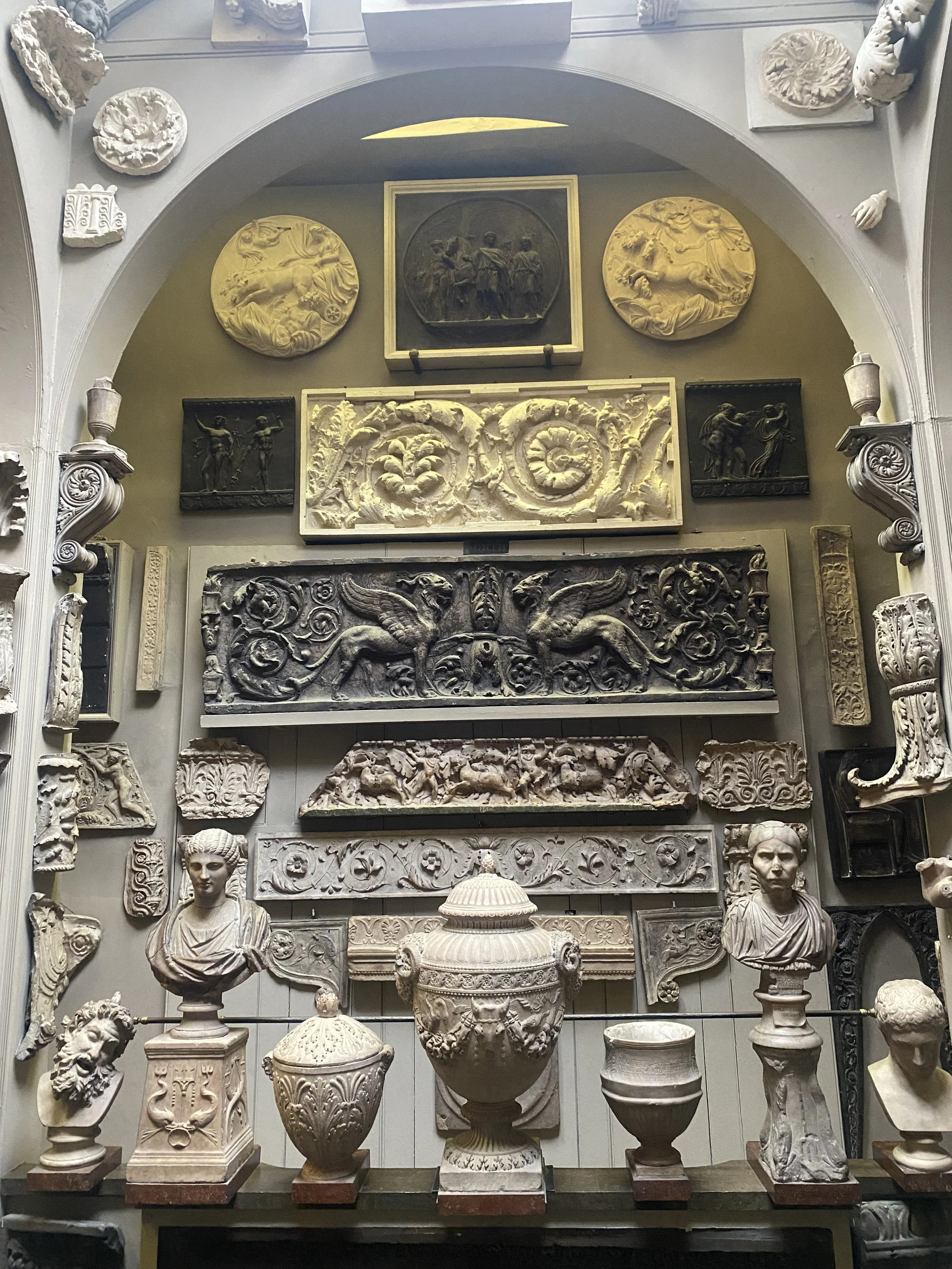
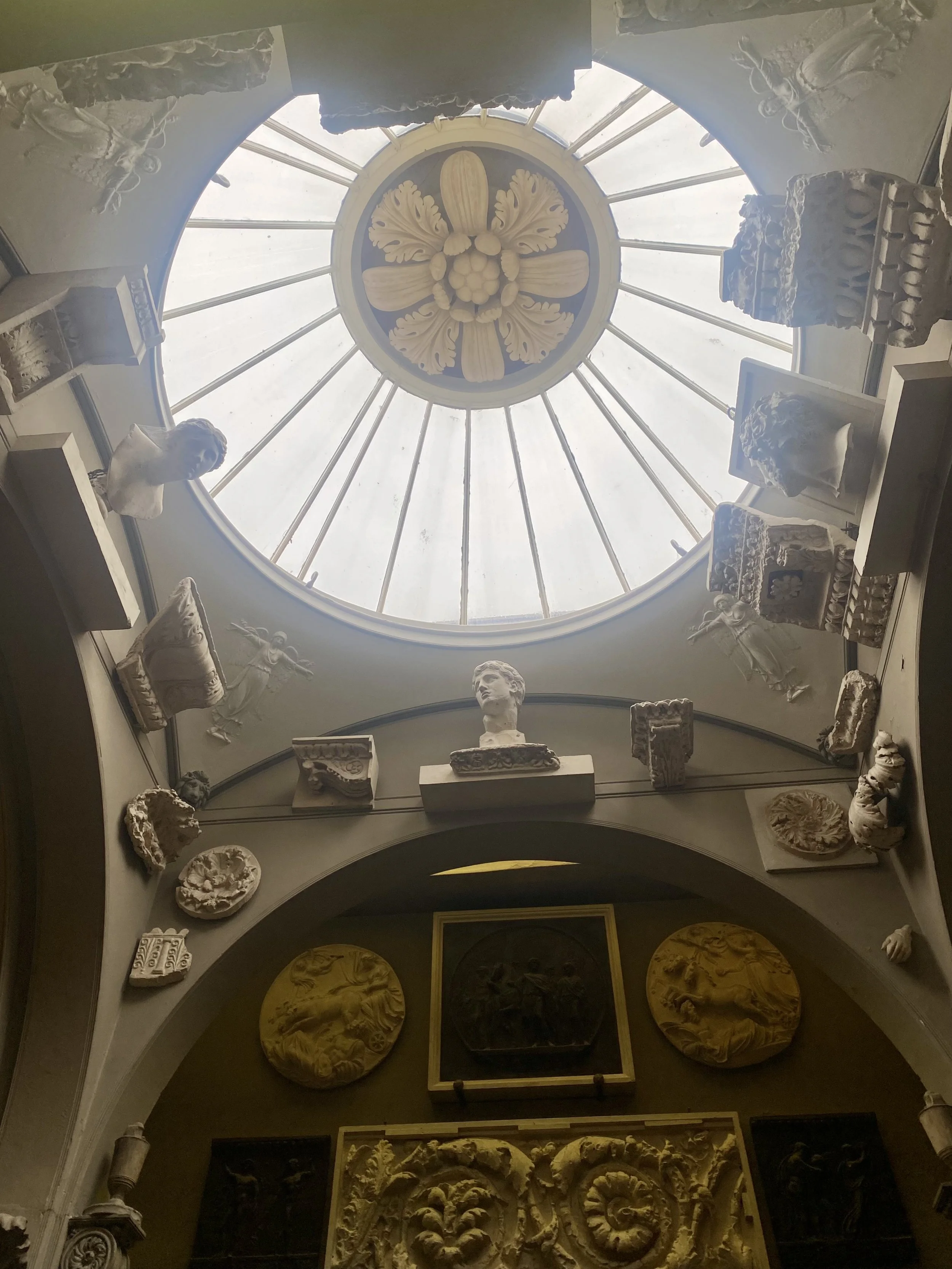
Sir John Soane’s museum - The Dome - photo taken January 2024
The Staircase
No 13 Lincoln’s Inn Fields
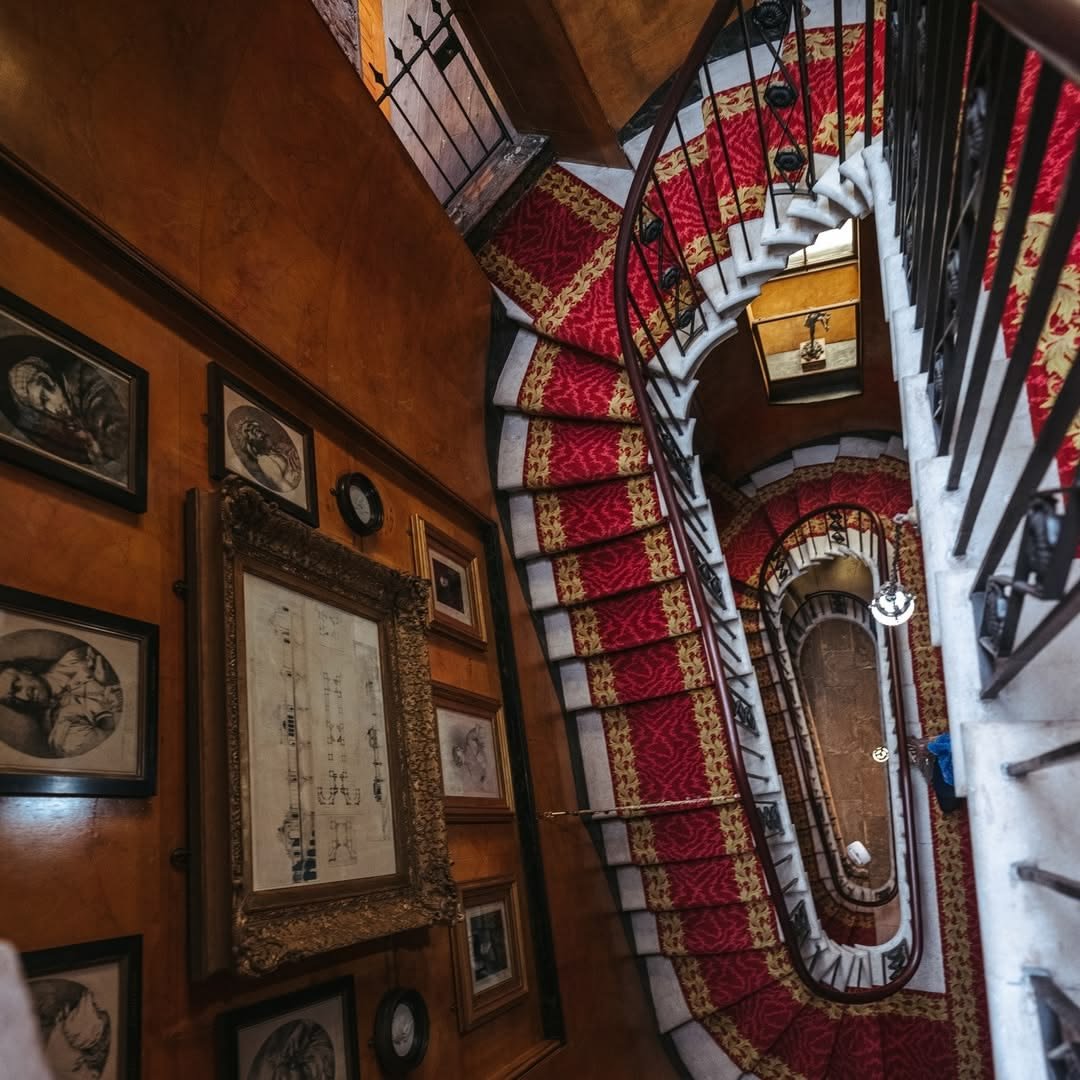
The main staircase at no.13, note the sarcophagus shaped centre of the stairwell
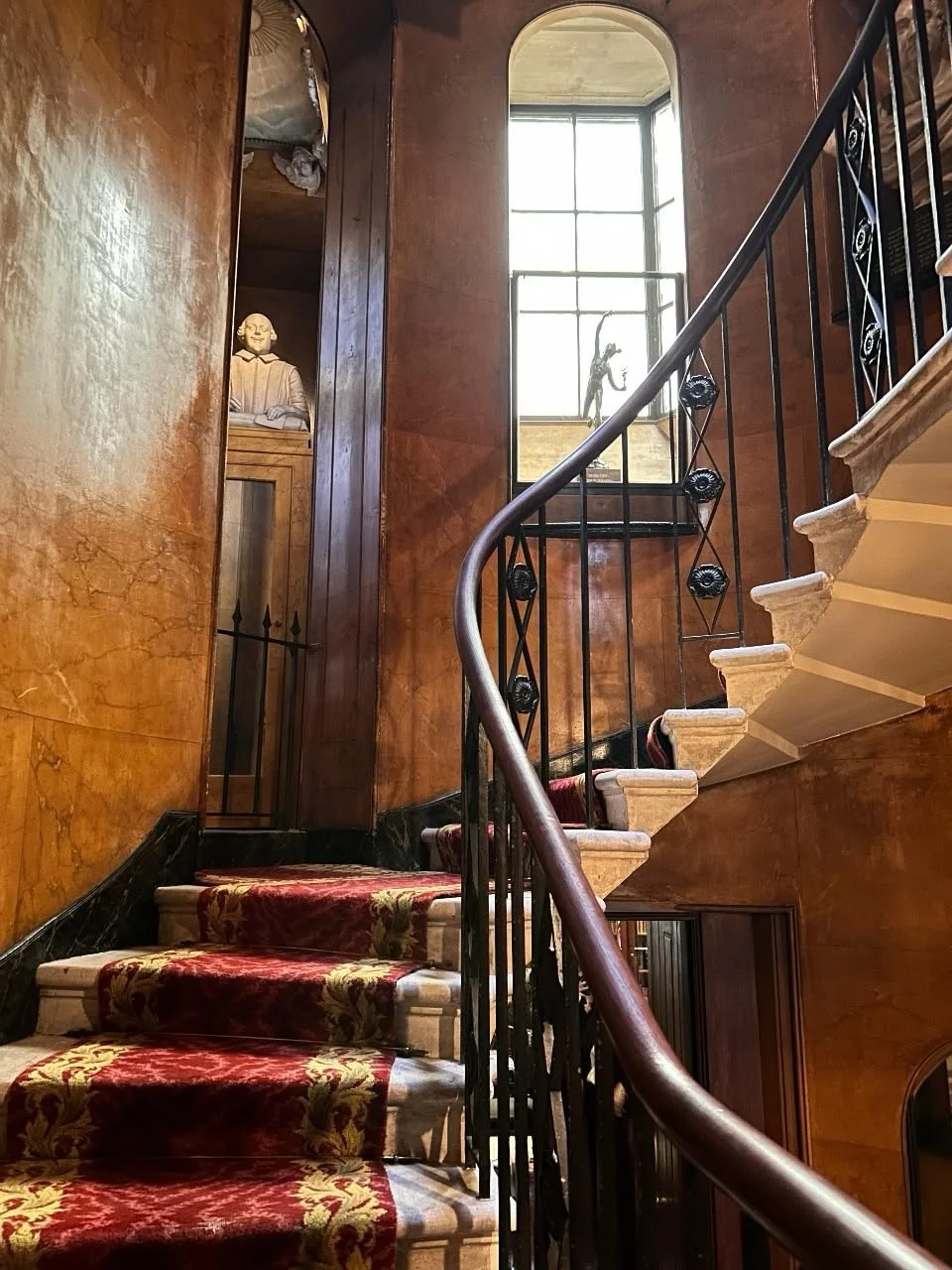
Sir John Soane’s museum - The Staircase at no. 13 with the Shakespeare niche (the niche was created from what would have been a broom cupboard)
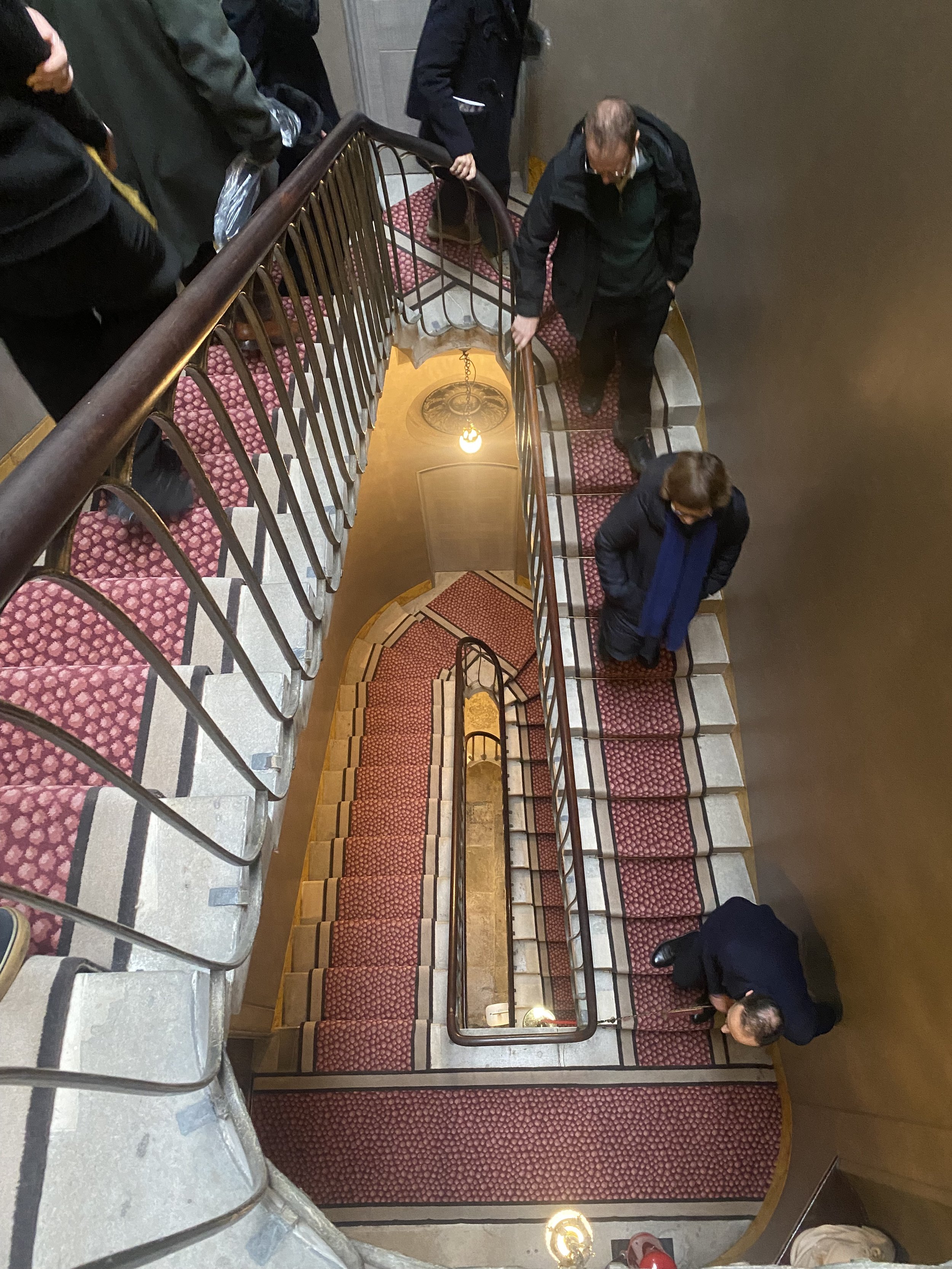
Egyptology was very fashionable when no. 13 was rebuilt by Soane in 1807 - 1813. The staircase at no. 13 contains a subtle reference and its central void is shaped like a sarcophagus. Soane would have been able to point out this tastefully subtle reference to prospective clients. The stone staircase is a feat of engineering as much as architecture with its careful cantilevered spiral design.
The Staircase at no. 12
No 12 Lincoln’s Inn Fields
Like the slightly more grand staircase at no.13, no. 12 is also formed in stone and cantilevered.
The Picture Room (The Hogarth Room)
Raised Ground Floor, No 14 Lincoln’s Inn Fields
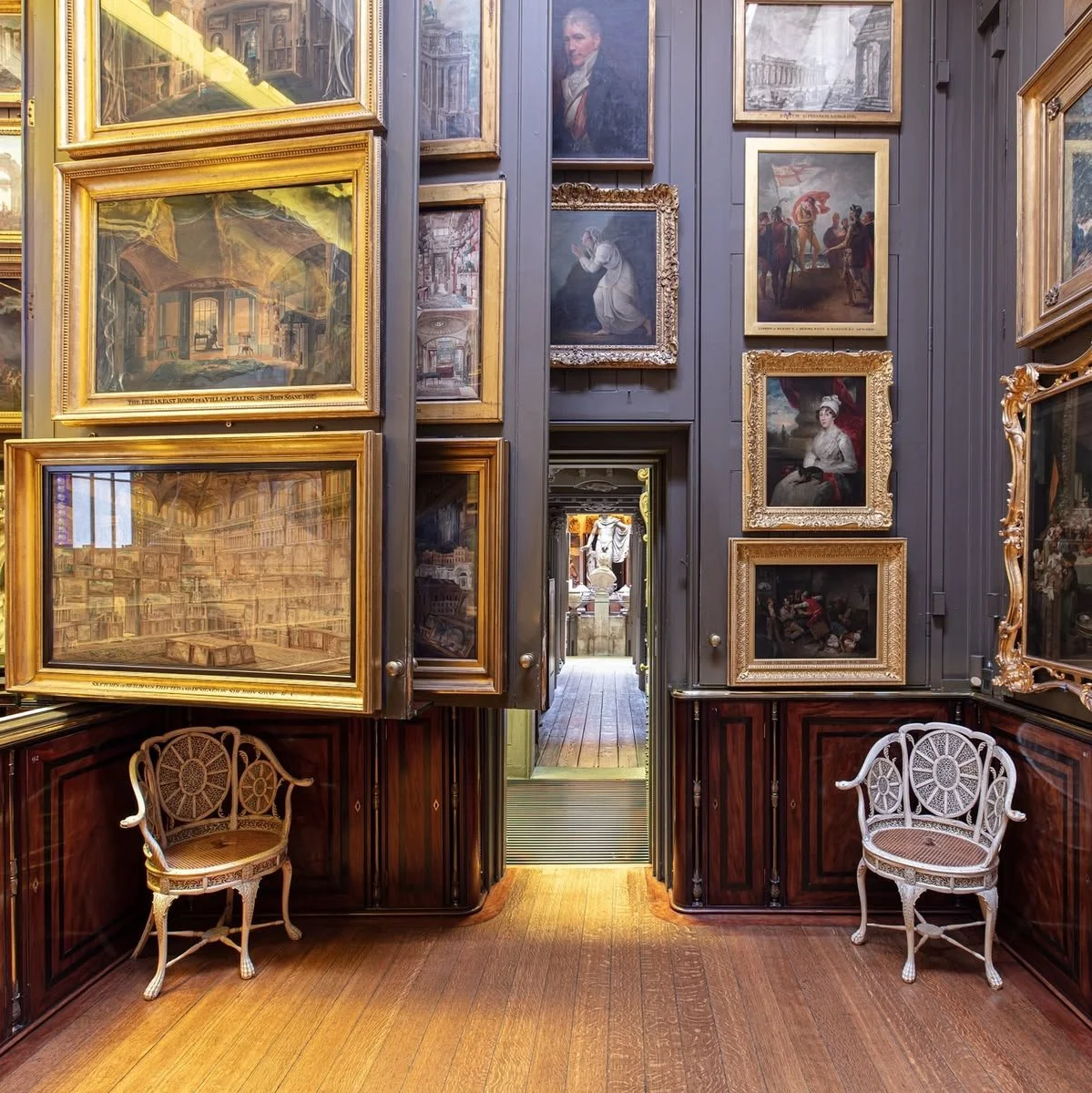
The Picture Room at Sir John Soane’s museum, with the panelled walls in motion revealing a further layer of paintings and a secret room
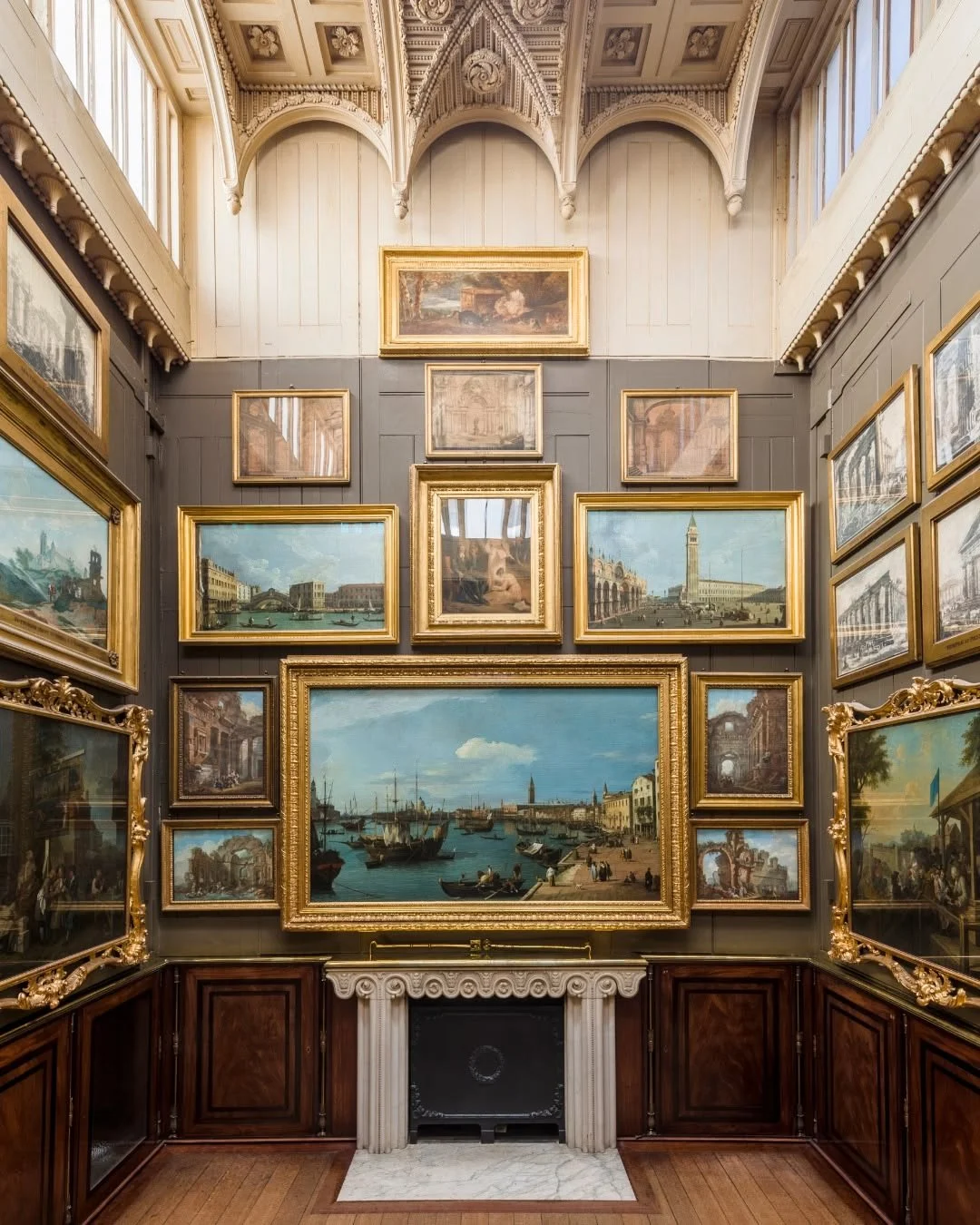
The Picture Room at Sir John Soane’s museum, with a painting by Antonio Canaletto (1697 - 1768), Riva degli schiavoni, Venice, c.1734-35, Oil on canvas
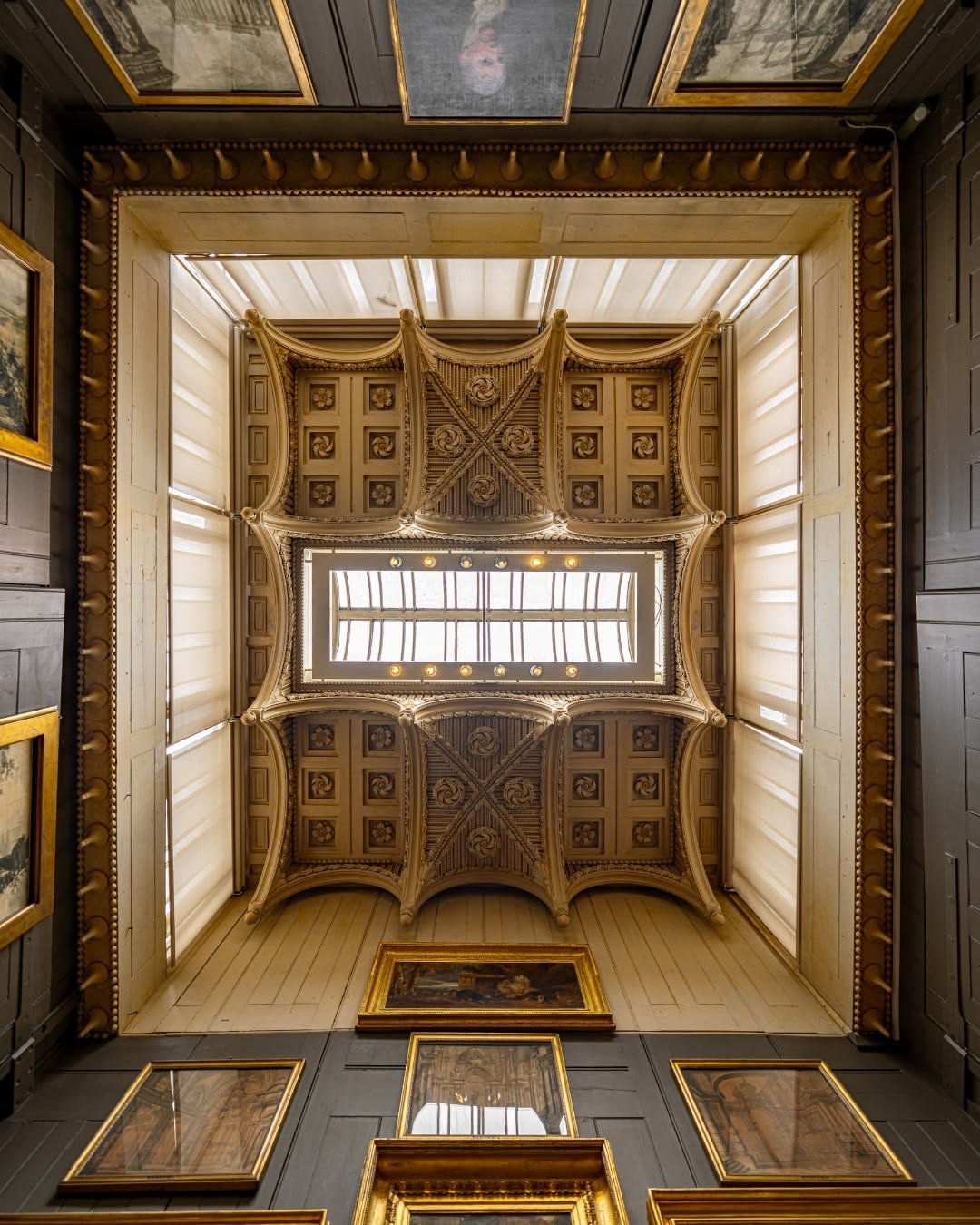
Sir John Soane’s museum - The Picture Room - Ceiling
In October 1823, when aged 70 John Soane bought No. 14 Lincoln’s Inn Fields, he earmarked part of the design to incorporate a gallery space to house some of his most impressive art - notably two famous series by William Hogarth - A Rake’s Progress and An Election. The rear of the house’s plot were stable yards and it is here that the gallery was built.
It was built in1824, the same year that the National Gallery was built, originally located on The Strand and some say that he wished to create a superior gallery. He created an innovatively designed, flexible room, with secret ‘moveable planes’ within the room enabling three times as many pictures to be hung than would normally fit into a room of its size. The room is only approx 4m × 3.5 m × 6m high (13 feet by 12 feet and 19 feet high).
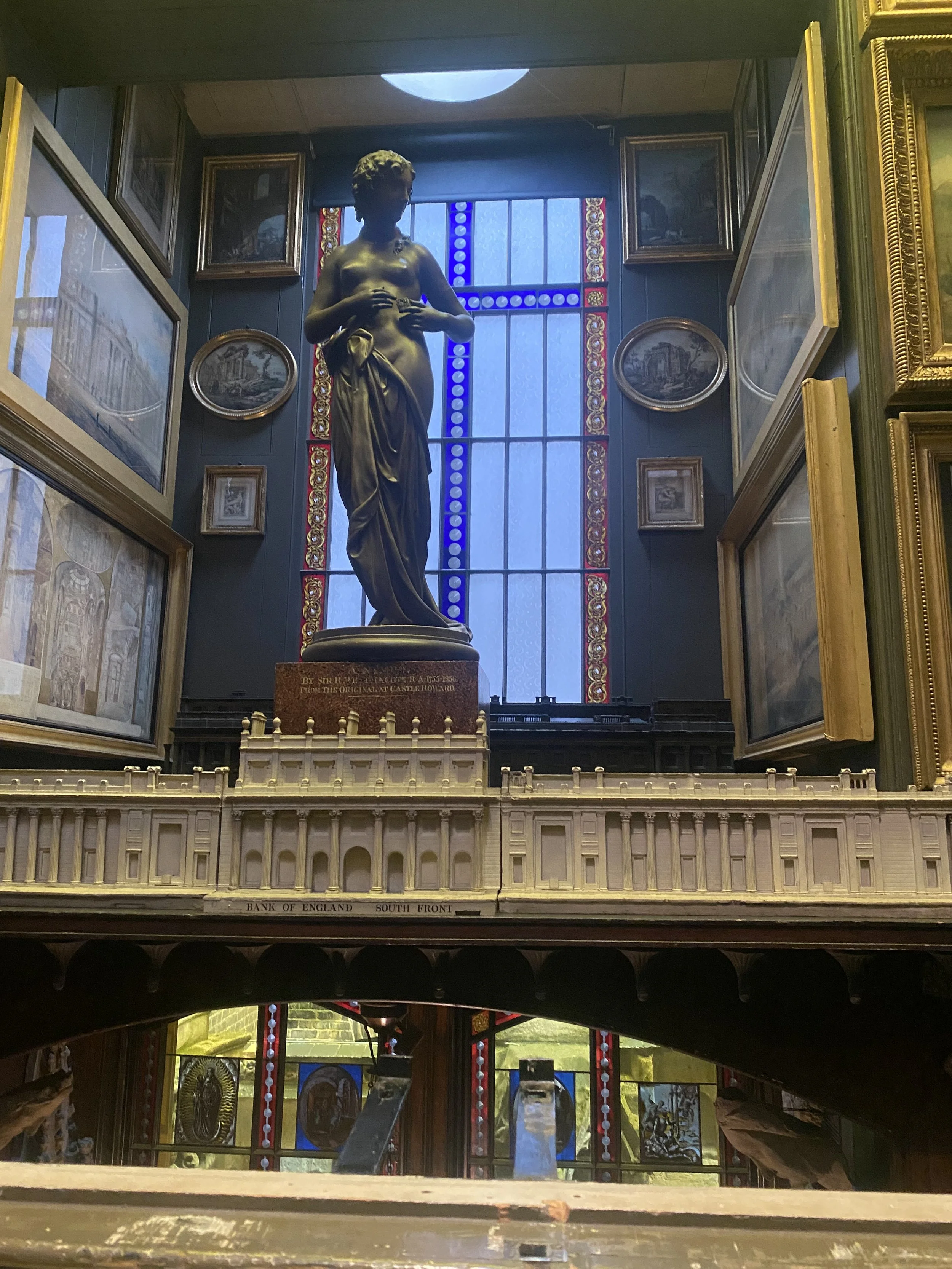
When the panelled walls are opened up, a further room is revealed with views down to the ‘Monk’s parlour’
In its original design, the room was envisaged not just as a gallery but as a library too. There were apparently shallow bookcases on three sides below a brass shelf. Inventories from 1837 record that there was a pull-out table in a niche on the north side of the room.
When we visited as an office for a private tour in 2024, we were able to experience this extraordinary room.
The North and South Drawing Rooms
First Floor, No 13 Lincoln’s Inn Fields
Painted in "Turner's Patent Yellow", a fashionable pigment of the day, this was one of the rooms used for entertaining guests. Mrs Soane once noted in her diary, "Mr Soane out of town... had a dance."
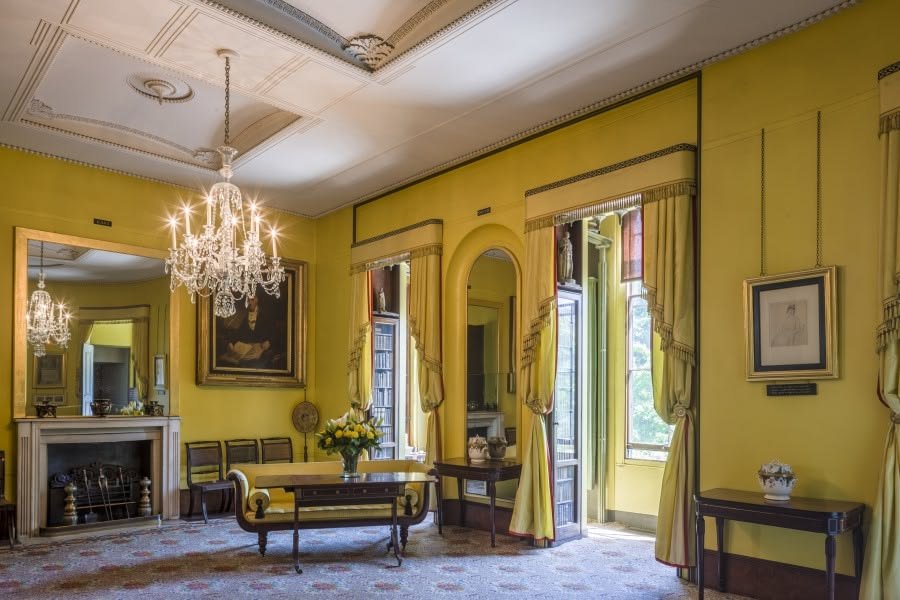
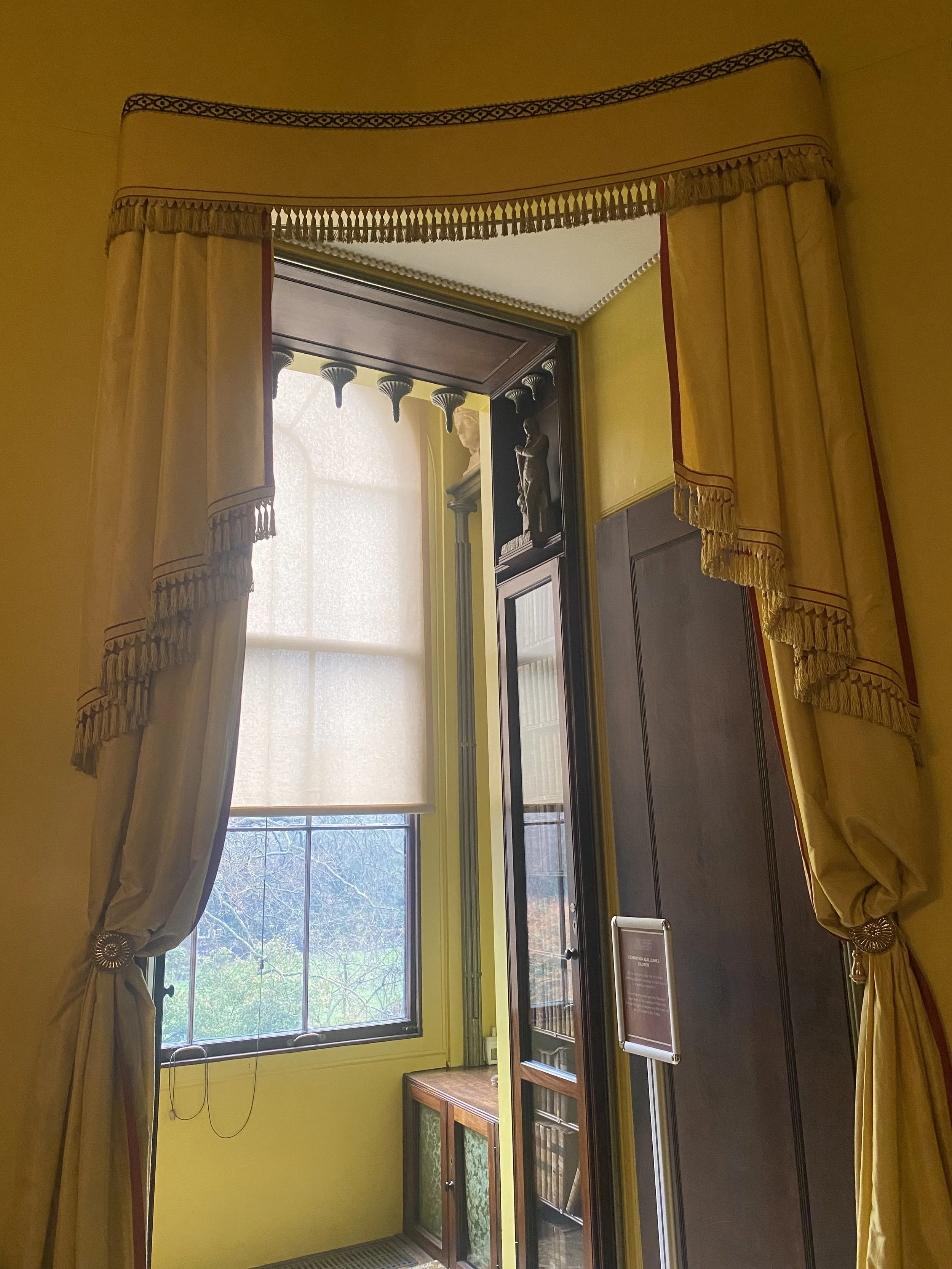
A satisfying nook in the Drawing room - I love the bookshelves and the area where a chair could be located next to the window, plus the spaces left for displaying artifacts and the
The Monk’s Parlour
Basement, No 14 Lincoln’s Inn Fields
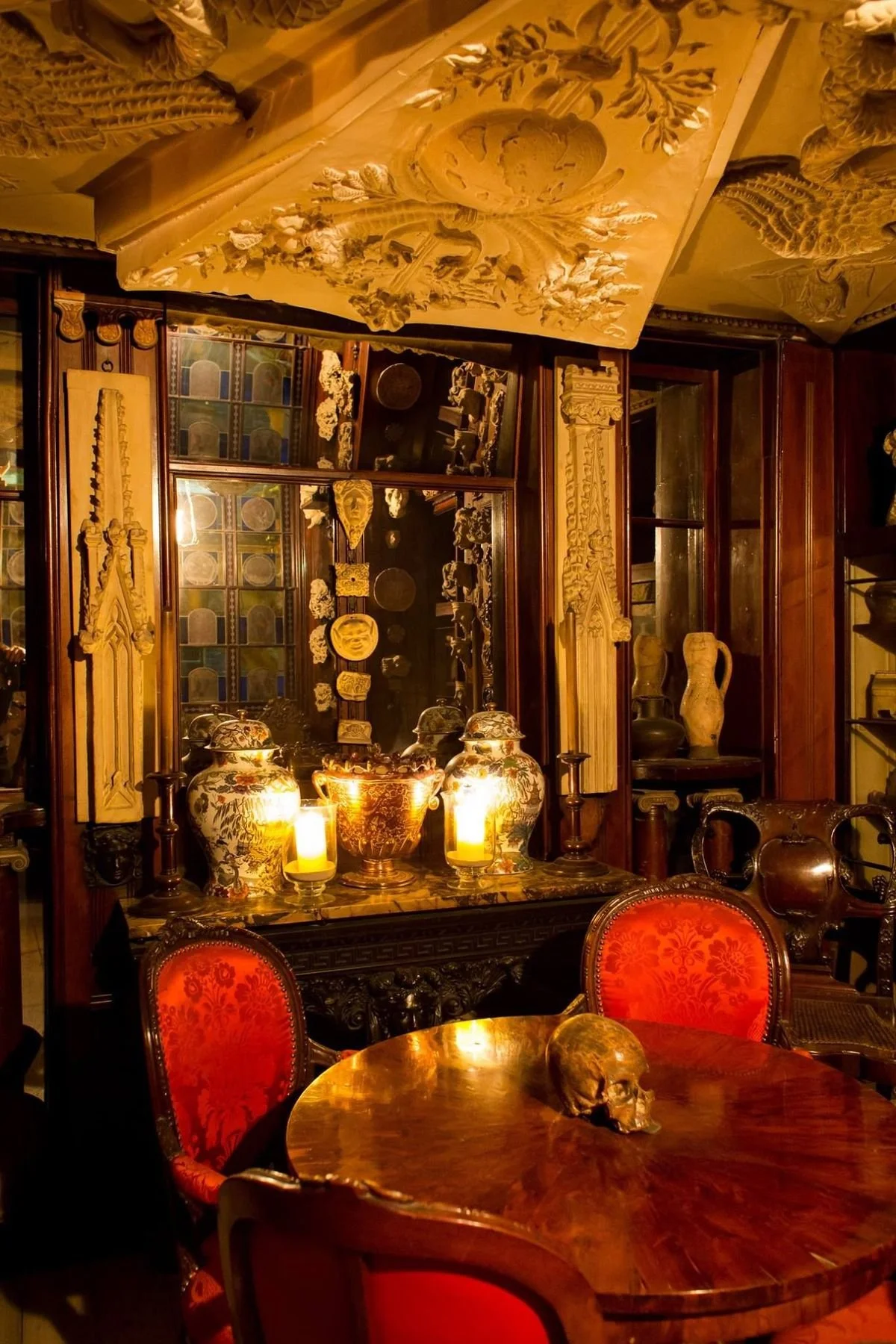
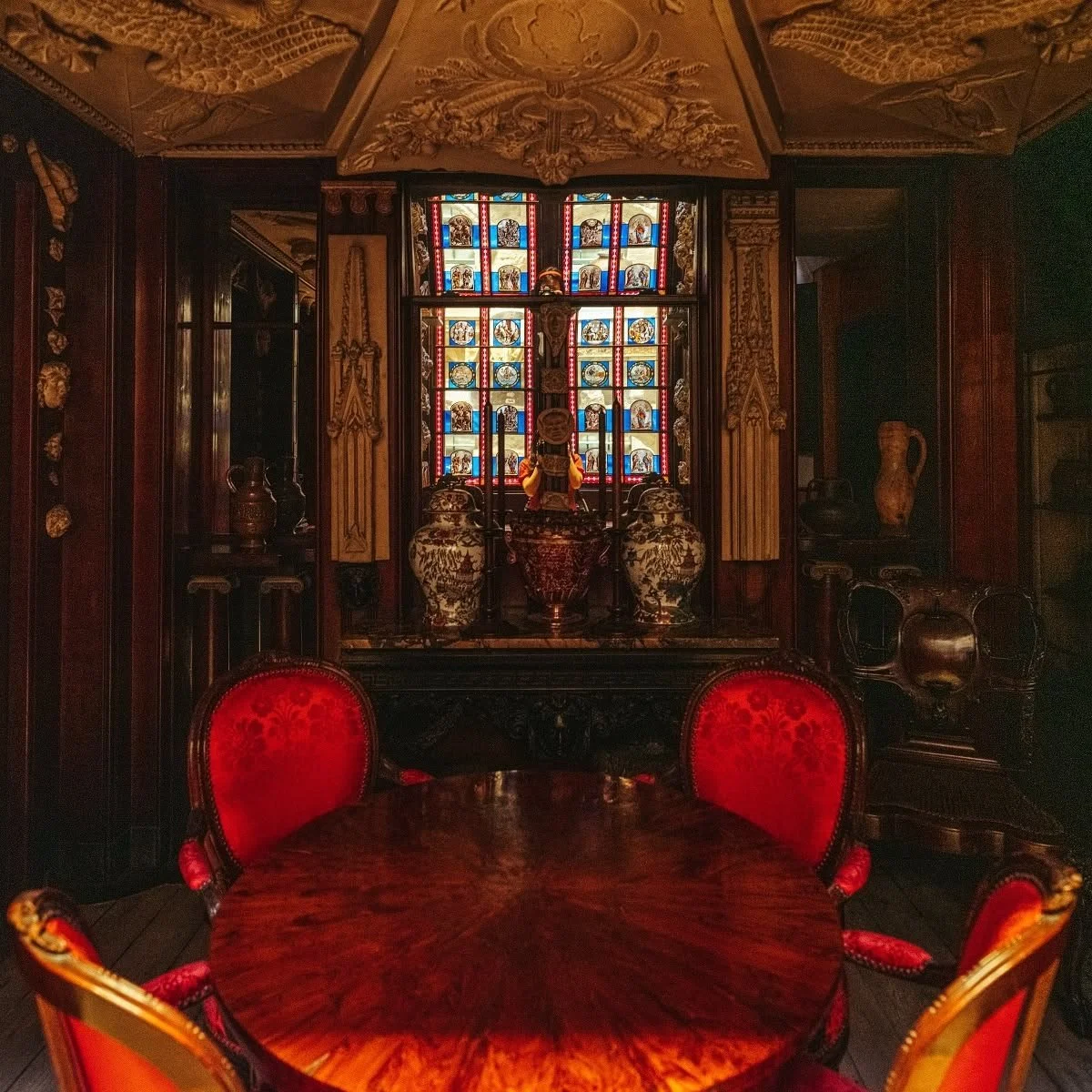
As you descend into the basement level from the collonade, you turn into a richly coloured burgundy Gothic space with dark stained glass windows known as the Monk’s Parlour, supposedly the cell of a Medieval monk Padre Giovanni. Padre Giovanni was in fact Soane himself.
This room feels as though it would have been suitable for scenes from The Rakes Progress late night card games and drinking and perhaps it was on occasion but was also somewhere that Sir John would retreat to when he wished to be alone, saying “Padre Giovanni has come to visit”.
The Yard
Basement, No 13 Lincoln’s Inn Fields
Next to the Monk’s Parlour is an outdoor courtyard space known as The Yard. It contains what is designed to look like the ruins of a medieval building. Soane had purchased remains from real medieval masonry which, like some other items in the house are are from the Palace of Westminster. The narrative was that items were from the ruins of the monastery of Padre Giovanni, the medieval monk, lived in the Monk’s Parlour. The grave of Padre Giovanni’s dearest ‘faithful companion’ Fanny is said to buried here but this was a tongue in cheek joke which can be seen to the left of the ruins. Soane added a quotation from the Roman author Horace Dulce est desipere in loco, which when translated means ‘it is pleasant to be nonsensical in due place’. Fanny was in fact his wife’s pet.
The Seminar Room
Raised Ground Floor, No 14 Lincoln’s Inn Fields
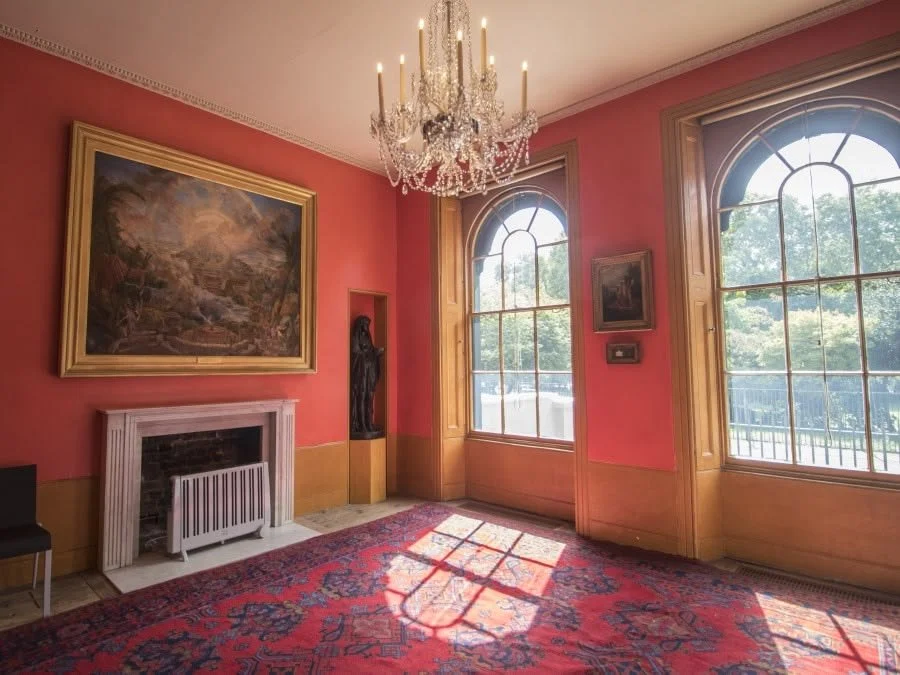
Sir John Soane’s Private Apartment Restoration
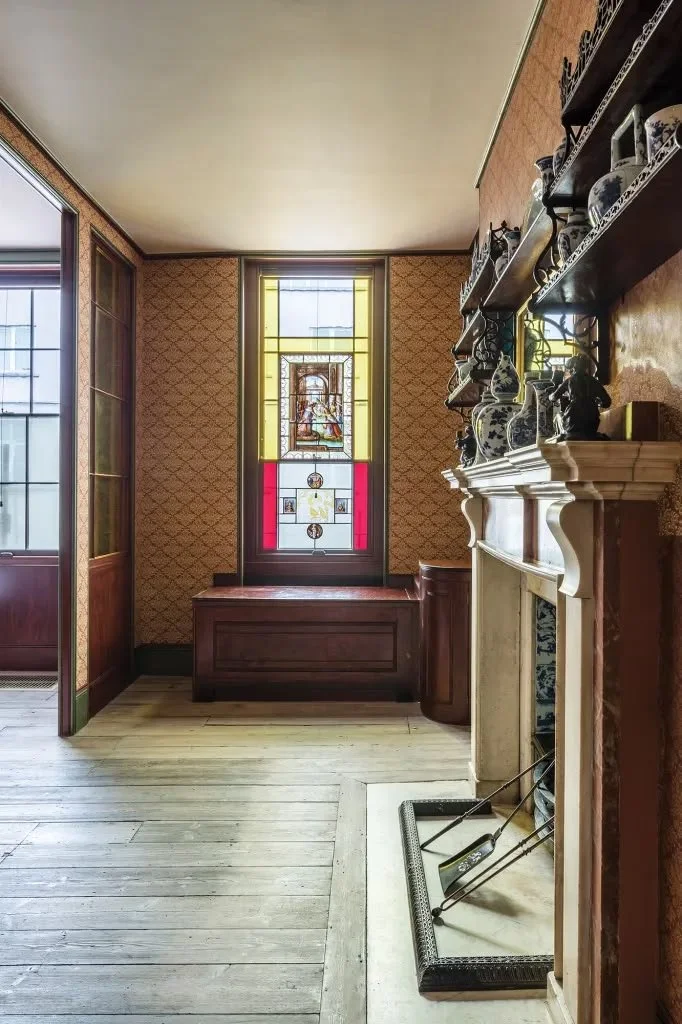
“The second floor of the main house at No. 13, which contains Soane’s private apartments, had been closed to visitors since the 1860s, but thanks to a meticulous restoration by London’s Julian Harrap Architects (JHA) in 2015, the suite of rooms is now open for private tours.
The research for the restoration took nearly two years, almost twice the length of the actual construction period that followed. The effort was focused on re-creating the space as it was in 1837, when Soane died; it’s the key date for all restoration of the museum, as stipulated in the Act of Parliament that gifted it to the country. The architects and historians consulted the museum’s archives, which included engravings of the rooms that were prepared for an illustrated 1835 catalog.”
“Until 2008, these curators used the private rooms either as their home or office, and some made substantive changes. Varnish had been applied to the perimeter of the wood floors (specifically, to the areas left exposed around large area rugs), wallpaper had been painted over (and over), architraves and elevations had been reworked, and entire rooms had been reconfigured. Nearly two centuries’ worth of alterations needed to be undone while the rest of the museum was still functioning—not just the public areas on the lower floors, but also the offices on the level above—providing no small logistical challenge.
Helpfully, the cost of materials spurred many of the past renovators to reuse Soane’s original materials. (When curator James Wilde carried out the most extensive retrofit in 1889, he removed doors and partitions and reused them in new cabinetry and decorative elements.) This allowed the restoration team to reclaim many original materials and return them to their rightful places, rather than having to resort to replication. But, Thow says, “if the archive and the drawings don’t tell you everything, sometimes you have to step into the mind of what he was trying to achieve.”
The result is a faithful return to Soane’s original vision. “I love to think of him not being able to sleep and wandering around the model stand,” Thow says. “It’s so interesting that he chose to sleep almost among his collection—he was so passionate about architecture.””
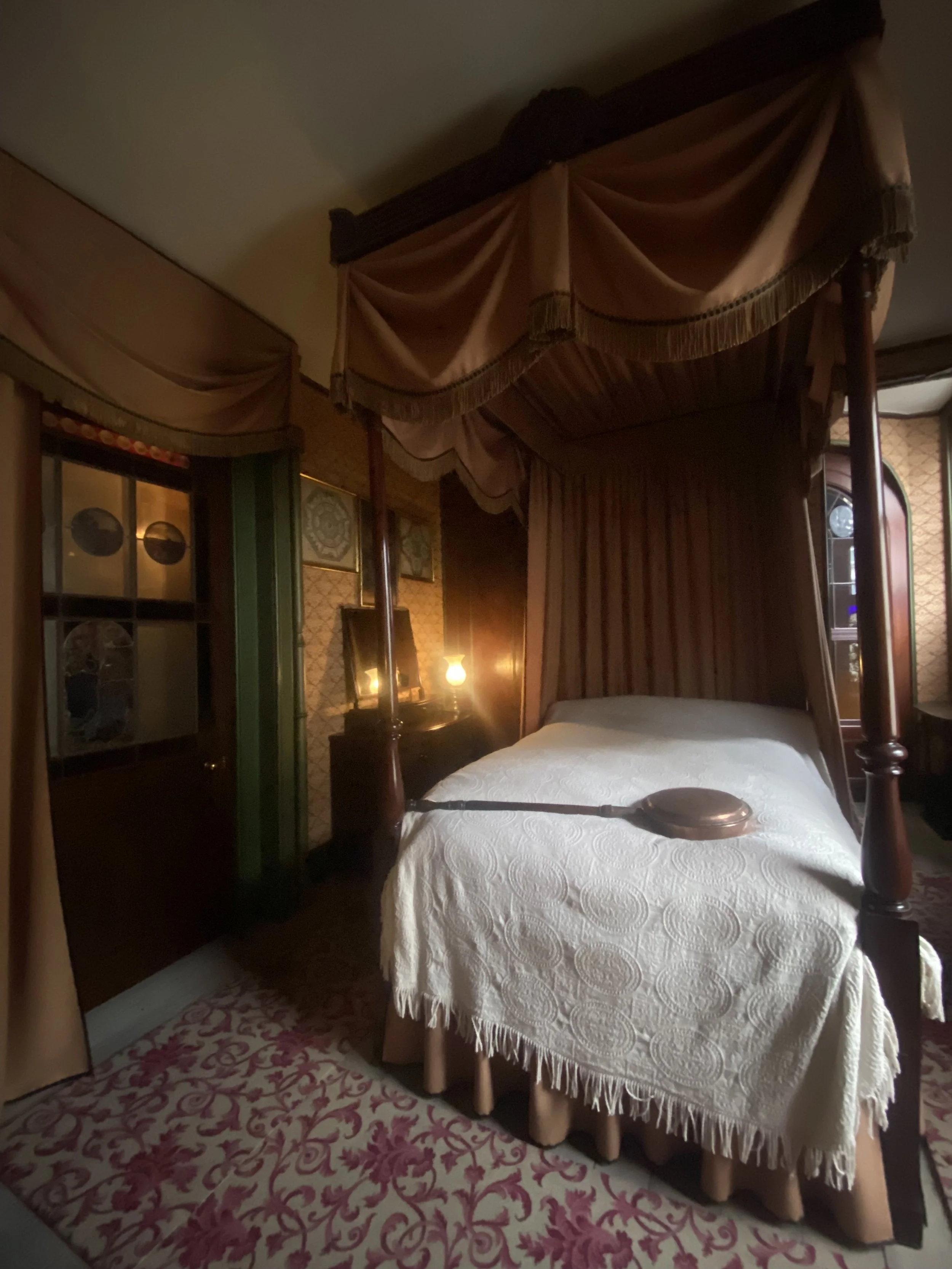
John and Eliza Soane’s bedroom
Second floor, No 13 Lincoln’s Inn Fields
Restored in 2015 as part of Sir John Soane’s Private Apartment Restoration
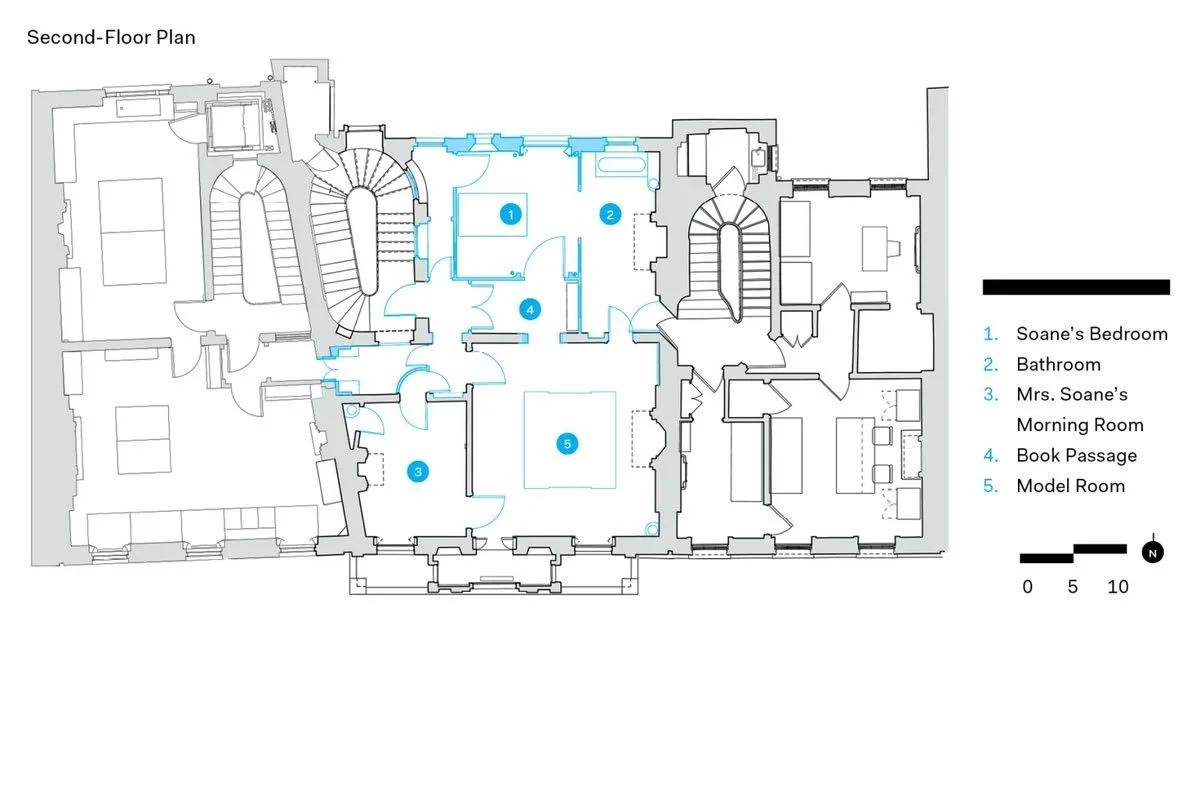
This is where Soane and Eliza slept and lived, as the house below them became engulfed with objects. The suite includes his and her bedrooms, a bathroom and her morning room, which she would occupy for only a few years until her death in 1815, which Soane blamed on the stress caused by their renegade and dissolute son George. Soane died in 1837 and for most of his remaining time he left her bedroom as a sort of memorial, until in 1834 it too succumbed to the objects.
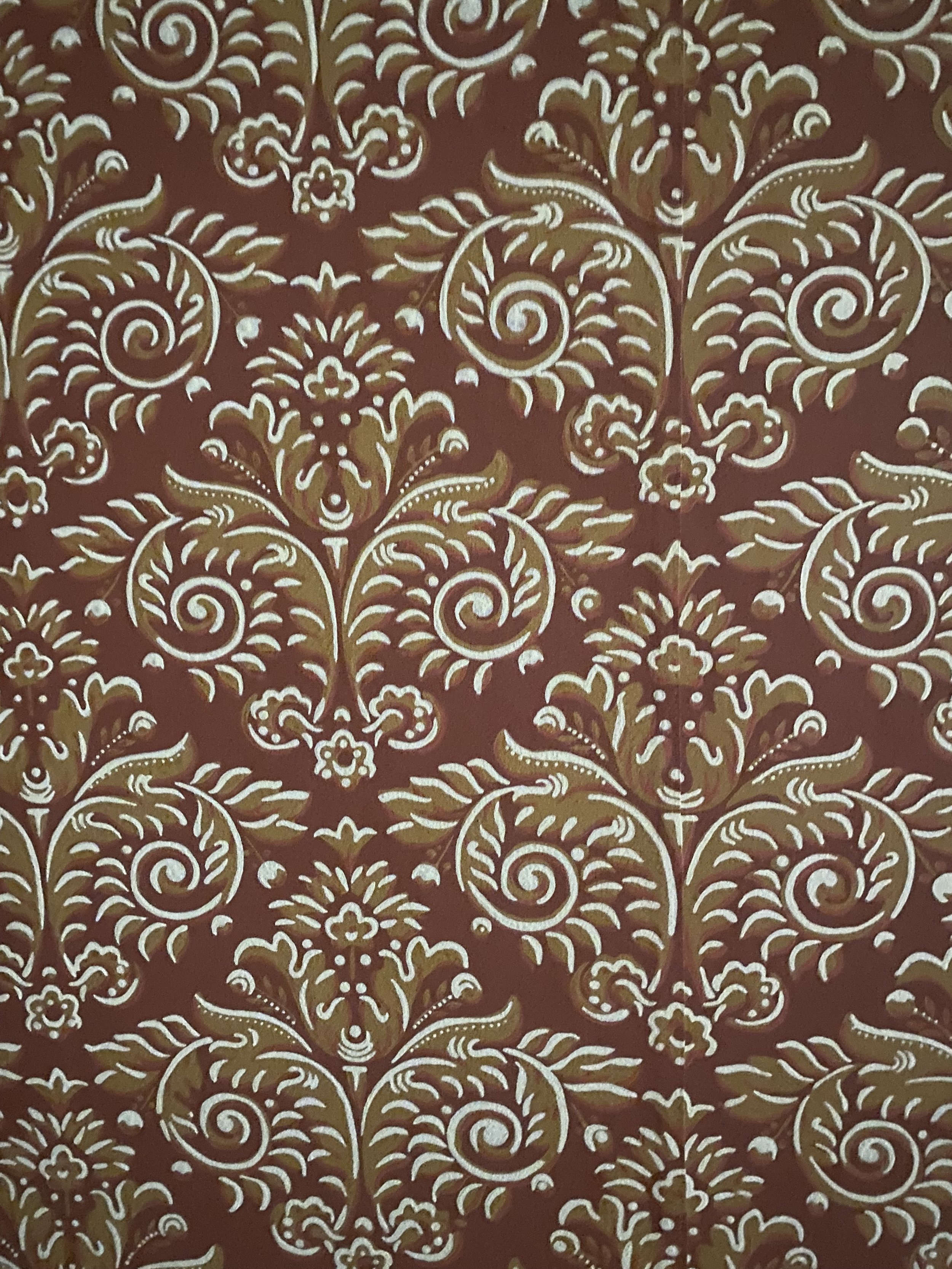
Sir John Soane’s museum - restored bedroom - Wall paper detail
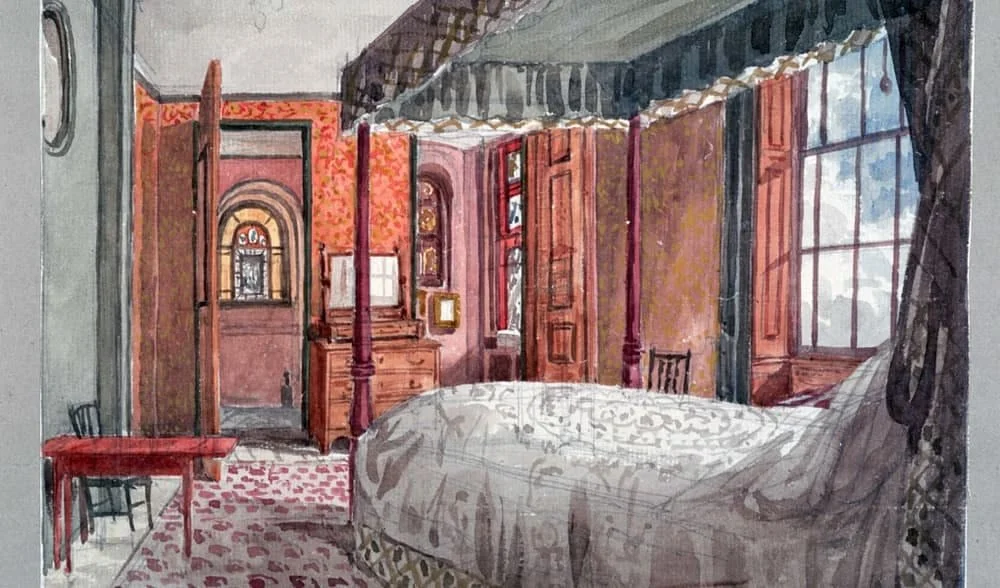
The Bathroom
Second floor, No 12 Lincoln’s Inn Fields
Restored in 2015 as part of Sir John Soane’s Private Apartment Restoration
In the bathroom you begin to wonder if George, when he challenged his father’s will on the grounds of insanity, had a case. His bath has been recreated, and its original wooden lid put on top. Why would a bath have a lid? Because late in life Soane decided to fill this and other containers with personal effects – spectacles, false teeth, documents – with the stipulation that they were not to be opened until the 50th anniversary of his wife’s death. It is not recorded what the architect did for personal hygiene, once he had made his tub into a Canopic jar of
The Model Room
Second floor, No 13 Lincoln’s Inn Fields
Restored in 2015 as part of Sir John Soane’s Private Apartment Restoration
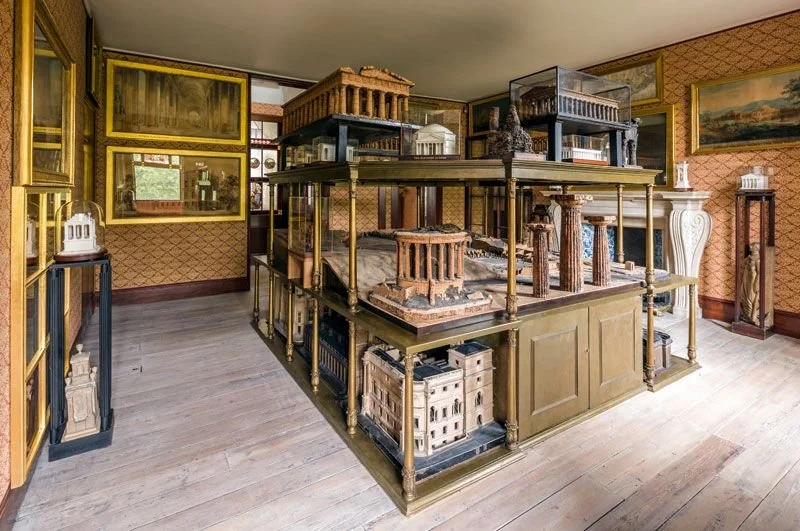
Eliza’s bedroom became a model room, which is now the centrepiece of the reopened rooms. It is filled almost to its edges with a central installation of models of Pompeii, Paestum and other ancient sites. Some are in cork, a material that is good at looking crumbled and aged, and show the sites as ruins. Others are in crisp plaster-of-Paris and are conjectures as to what they might have been when new. A third type of model, in wood, shows Soane’s own buildings. The implication is that these are the equals of famous ancient buildings on show.
The Kitchen
The Drawing Office
Second floor, No 13 Lincoln’s Inn Fields
Soane’s architectural studio, which the head of the Soane museum described as a Sleeping Beauty underwent a significant and painstaking restoration opened in 2023 to the public by pre booking on certain days. It is too small and fragile to be open to the public unsupervised.
Accessed via a small staircase from the raised ground floor of no. 14, it sits on a small mezzanine above the collonade area of no. 13 supported by metal columns, above the space that one walks through between the Dome and the Picture Room (also known as Hogarth’s room). Of note is the the ‘Collonade’ was once also Soane’s office space, referred to as the Lower Office.
The room as it is now was finally completed between 1824 and 1825. Before then Soane’s pupils had worked in various locations, as Soane’s career and practice developed. Soane took on his first pupil the year he married, in 1784 and he worked from Soane’s then home.
Over the years Soane took on more staff and pupils and at the height of his career employed six full time pupils who apparently worked twelve hours per day, six days per week. Soane took on his final pupil in 1824, the year the Drawing office started to be used. Even after he officially retired in 1833, he kept on two employees until his death in 1837.
With the Jerwood gallery, the Soane museum now offers Artist residences in the Drawing Room - for a few months a year.

Sir John Soane’s museum - cross section through the Dome, the collonade, with the Drawing office sitting above the collonade. The Picture room with its secret folding walls is on the right handside of the drawing.
