
How to design a staircase: an architect’s guide
Learn four essential architectural principles for designing a staircase that feels sculptural, beautifully integrated, and functional in a home’s design.
Often treated as a purely functional element, a staircase has the potential to be one of the most quietly powerful architectural moments in a house. These four rules set out how we approach staircase design so that it feels considered, integrated and part of the architecture as a whole.
Staircase design principles architects consider
Think of the staircase as a sculptural object
Bear in mind the design of the rest of the house and think of it as a sculptural object that needs to talk to the rest of the property as it travels through all floors.
A staircase should be considered as a three dimensional object rather than a purely practical element that connects the circulation of a home. Because it travels through multiple floors, it is experienced from many viewpoints and at different distances. It is often seen in long views, glimpsed through doorways, and encountered at close range every day.
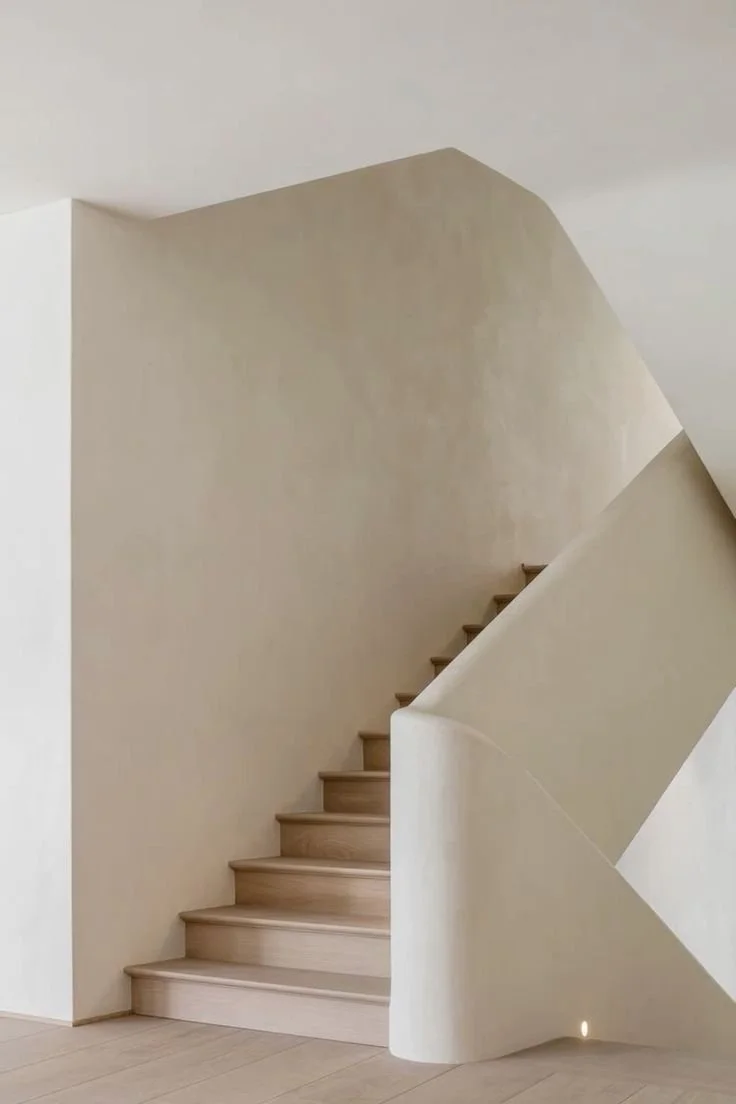
A beautiful sculptural curved plaster staircase with curved and rounded balustrade will anchor the design of the house
Designing a staircase as a sculptural object means thinking carefully about proportion, alignment and how it sits within the overall volume of the house. It needs to relate to the architecture around it and feel intentional from every level, not just the one where it begins.
In projects where the internal layout is being reworked, the staircase can act as a unifying element, visually connecting floors and helping the house feel coherent rather than fragmented.
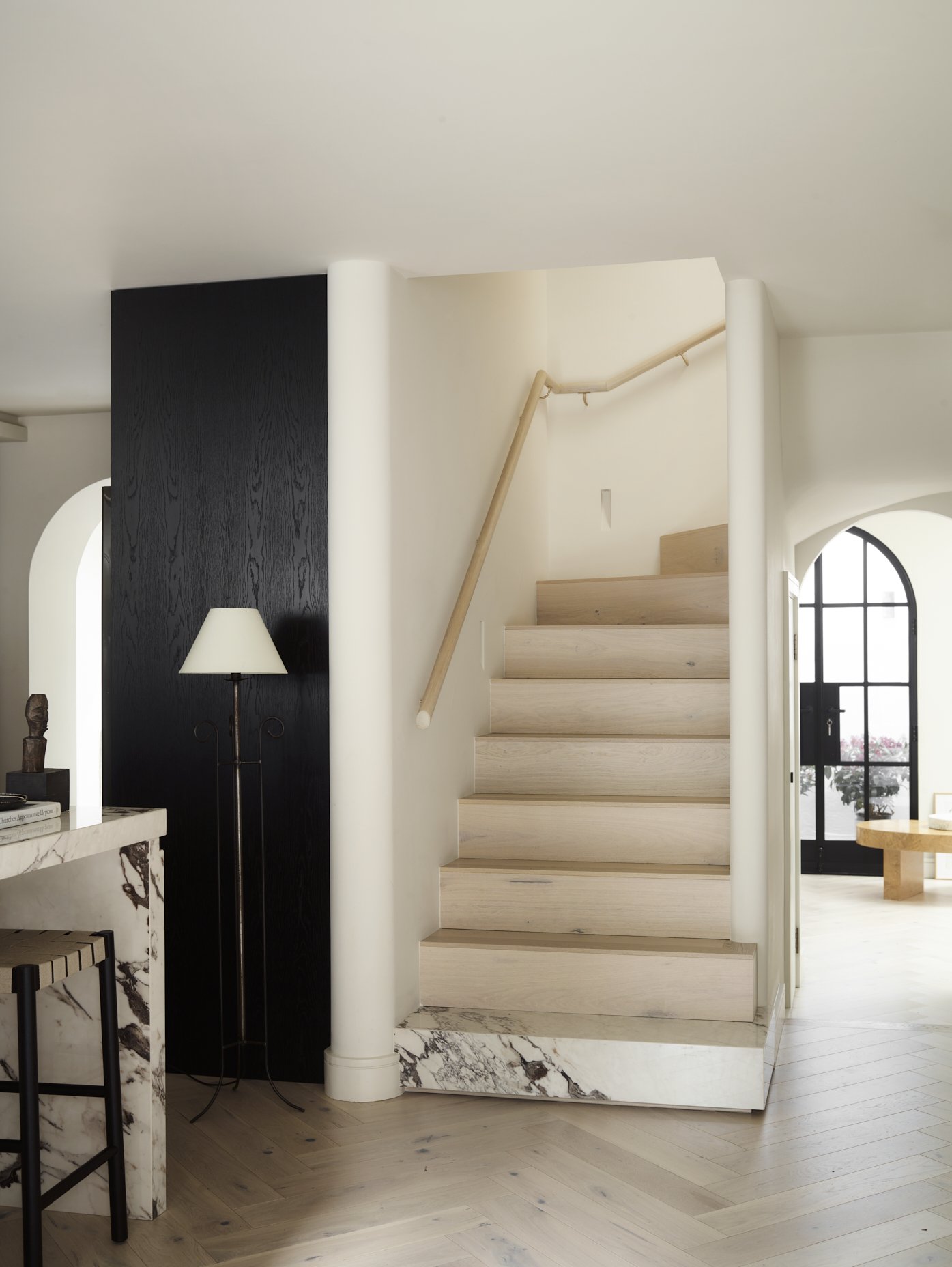
Our Chelsea Arches house, we created a subtly sculptural staircase to anchor the open plan arrangement of the room, it continued at each floor with its gentle curves, unifying the house.
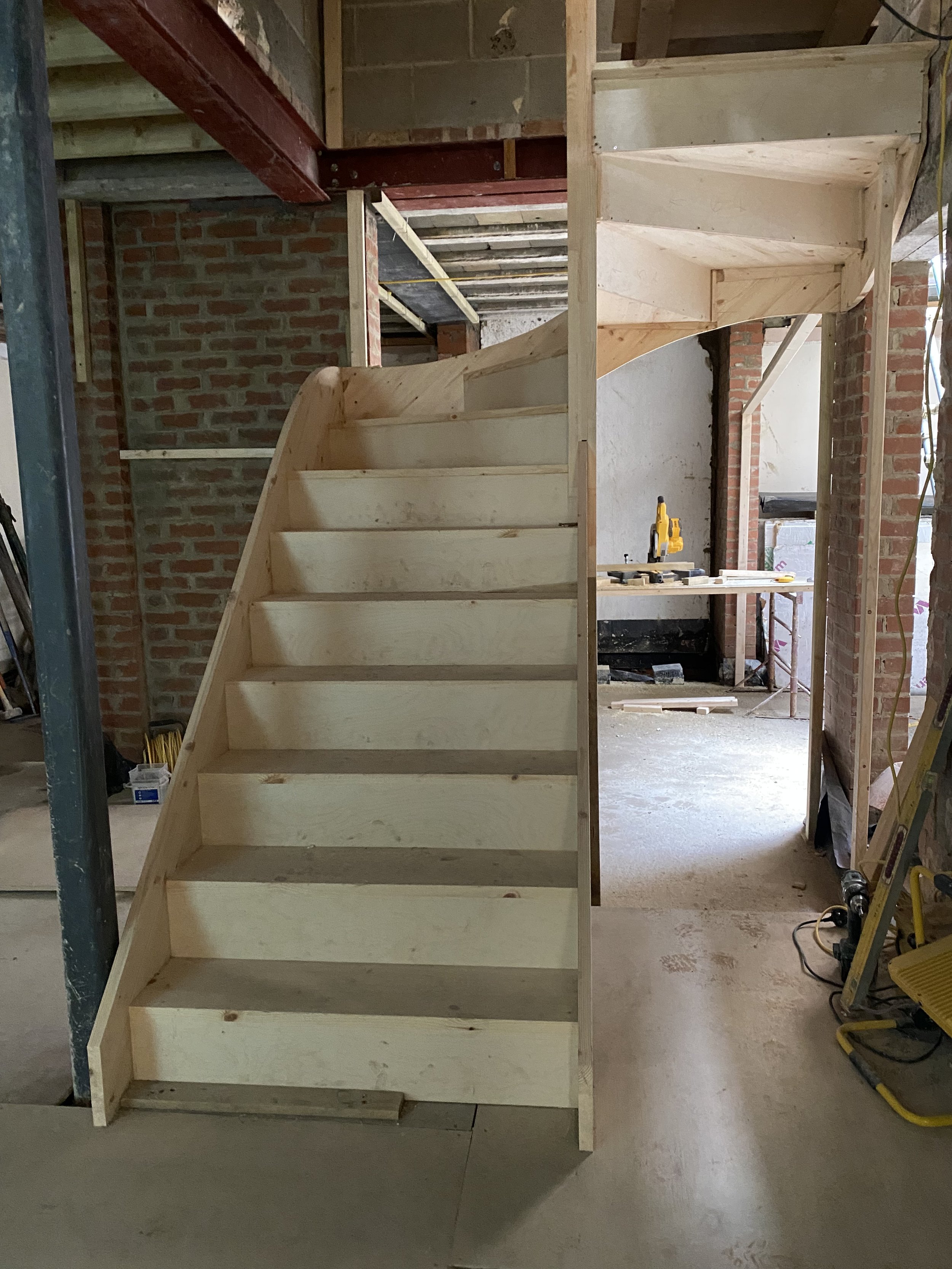
The Chelsea Arches house staircase formwork in progress - designed to be the central feature of the open plan areas. It needs to be designed to accommodate the necessary new structure to allow for the new open plan layout.
2. Create a unified visual language through materials and detailing
Create a unified visual language with the materials and detailing matching the rest of the house. For example, in this home we used the same modern detailing – crisp light timber edges with a matching oak stain for the stair treads, and the kitchen island’s marble is reflected in the bottom step of the staircase.
A successful staircase belongs to the house it sits within. This is achieved through a clear and consistent approach to materials and detailing.
Using the same timber species, stains and edge details as elsewhere in the interior helps the staircase feel integrated rather than separate. Detailing should be carefully resolved, particularly at junctions, where handrails meet walls or treads meet floors.
These subtle material connections reinforce the sense that the house has been designed as a whole, rather than as a series of unrelated elements.
3. Create a dramatic, contrasting, generous step
Design the first step as a contrasting feature step that is larger than the others and, if appropriate, in a different material. This creates a sense of grandness and generosity of space.
The first step of a staircase sets the tone for the entire journey upwards. Designing this step as a feature can introduce a sense of calm, generosity and arrival.
A larger first tread helps ground the staircase and makes the transition between levels feel deliberate rather than abrupt. In some cases, introducing a different material at this point can further emphasise the sense of threshold.
This approach works particularly well in open plan spaces, where the staircase is part of the main living environment and contributes strongly to the overall atmosphere of the room.
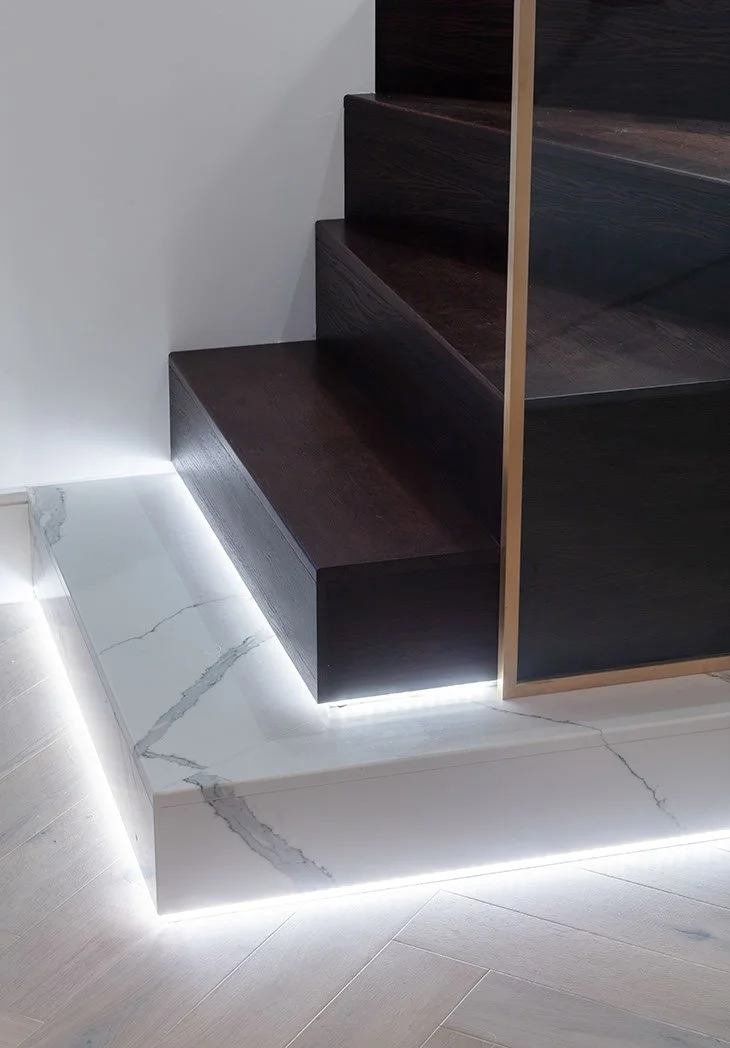
In our Chelsea Townhouse, we used a larger first step as a sculptural element to create a generous opening to the staircase.
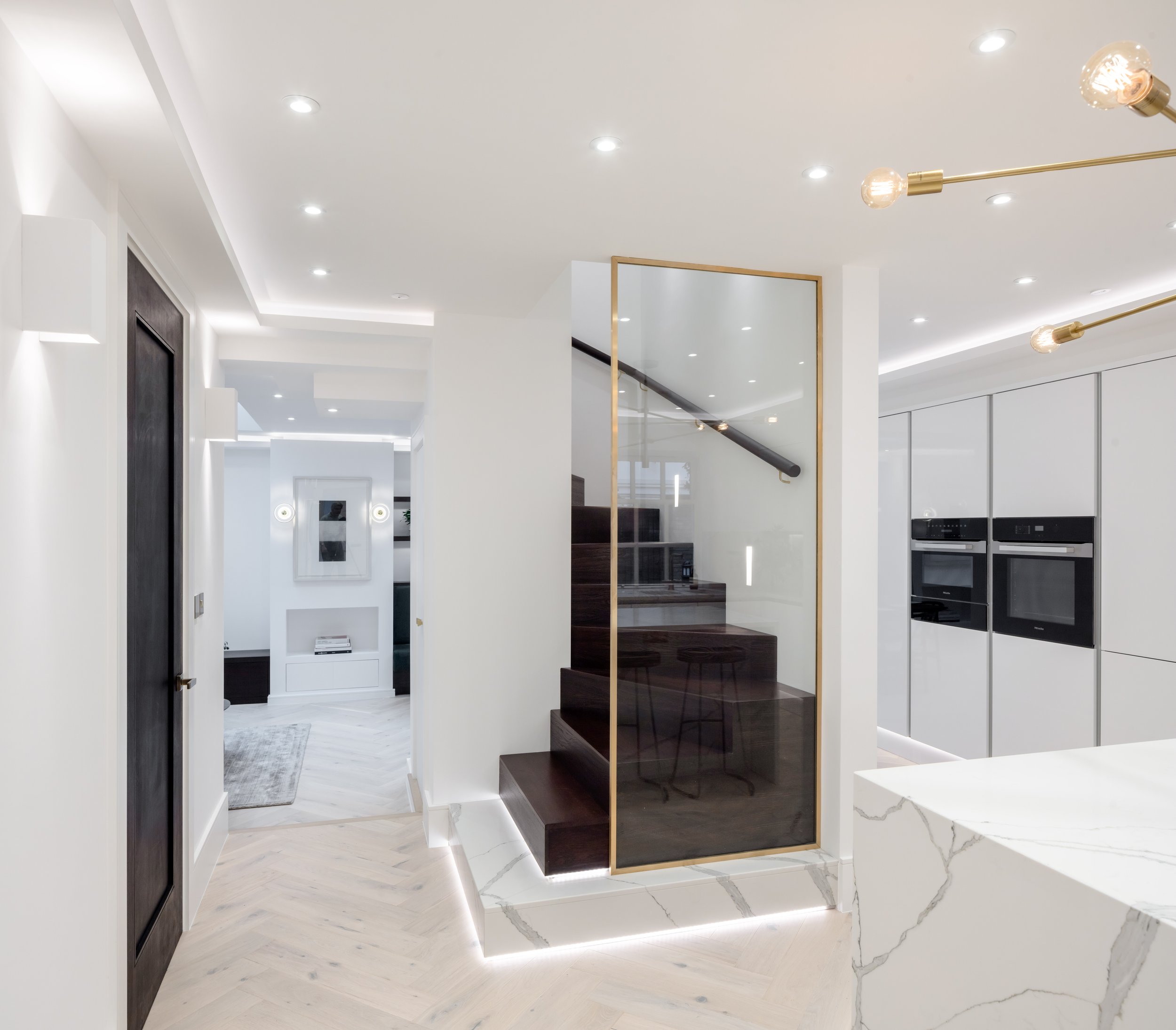
In our Chelsea Townhouse - we had an open plan layout with the staircase as the central feature connecting the the different places. We used a larger first step to unify the different spaces, using the same marble for the step and the kitchen surfaces.
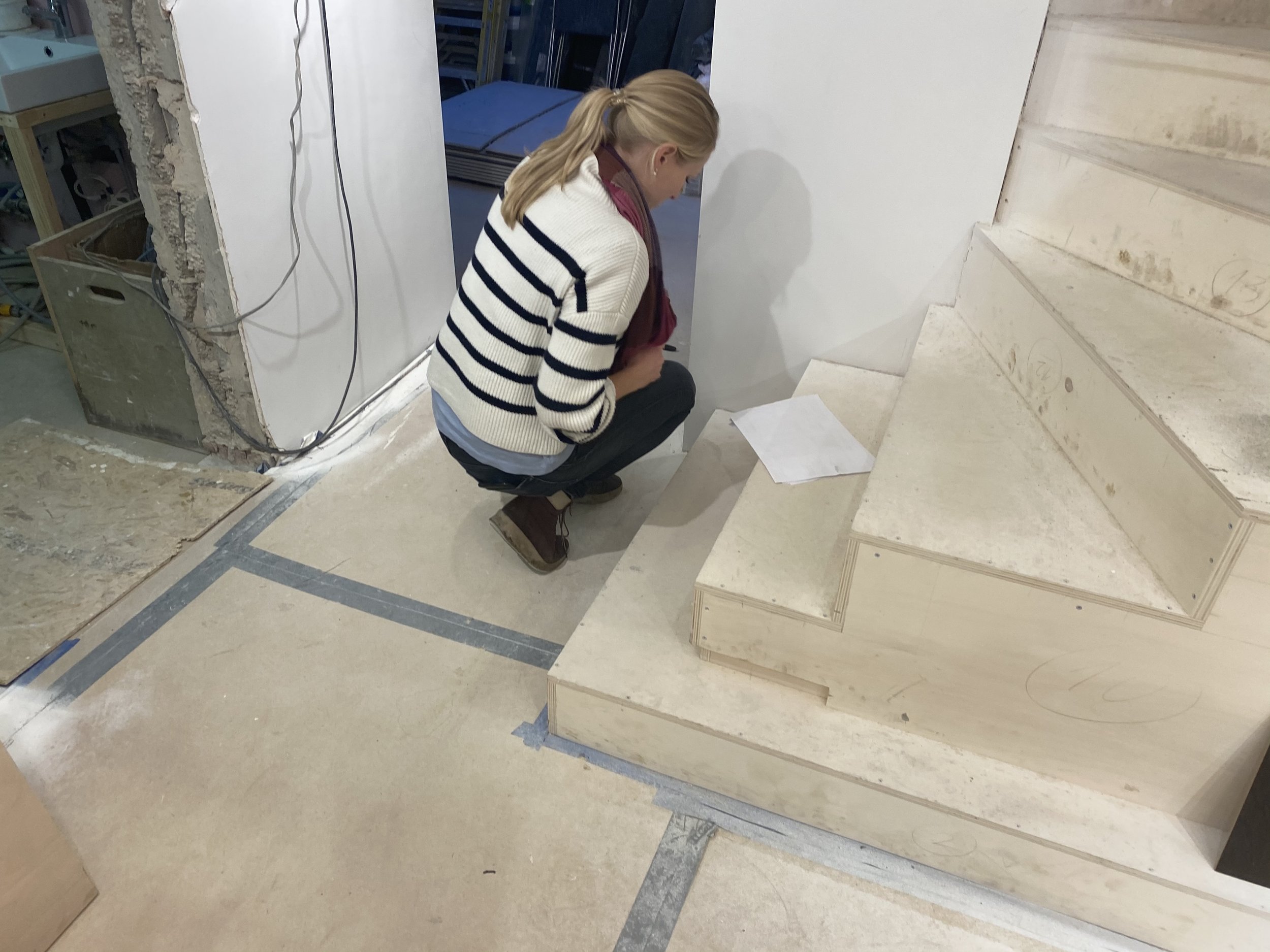
The structural engineer checking the staircase formwork on site during constuction at our Chelsea Townhouse project
4. Consider the handrail from the outset
Consider the handrail from the outset, make sure it is beautiful and works with the rest of the design, otherwise it can end up being an afterthought that has a big visual impact on how you enjoy your staircase everyday.
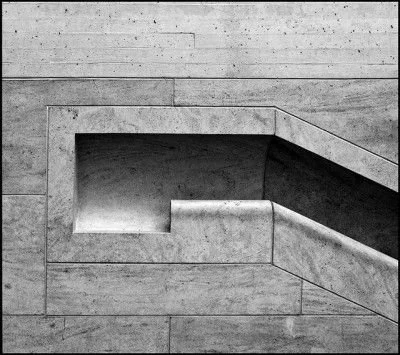
An expensive but beautiful detail is to build out the wall of the staircase so that you can rebate in a handrail into the wall. This is a subtle concealed way of achieving the safety needed provided by a handrail.
The handrail is one of the most visually prominent and physically engaged parts of a staircase. When it is left until late in the design process, it can undermine the clarity and elegance of the stair as a whole.
Handrails should be developed alongside the staircase itself, with careful consideration given to profile, material and fixing. They need to feel comfortable and intuitive to use, but also visually aligned with the rest of the architectural language.
In the Hampstead house, where a cantilevered staircase was designed, the handrail formed an integral part of the overall composition, complementing the lightness of the stair while remaining robust for everyday use.
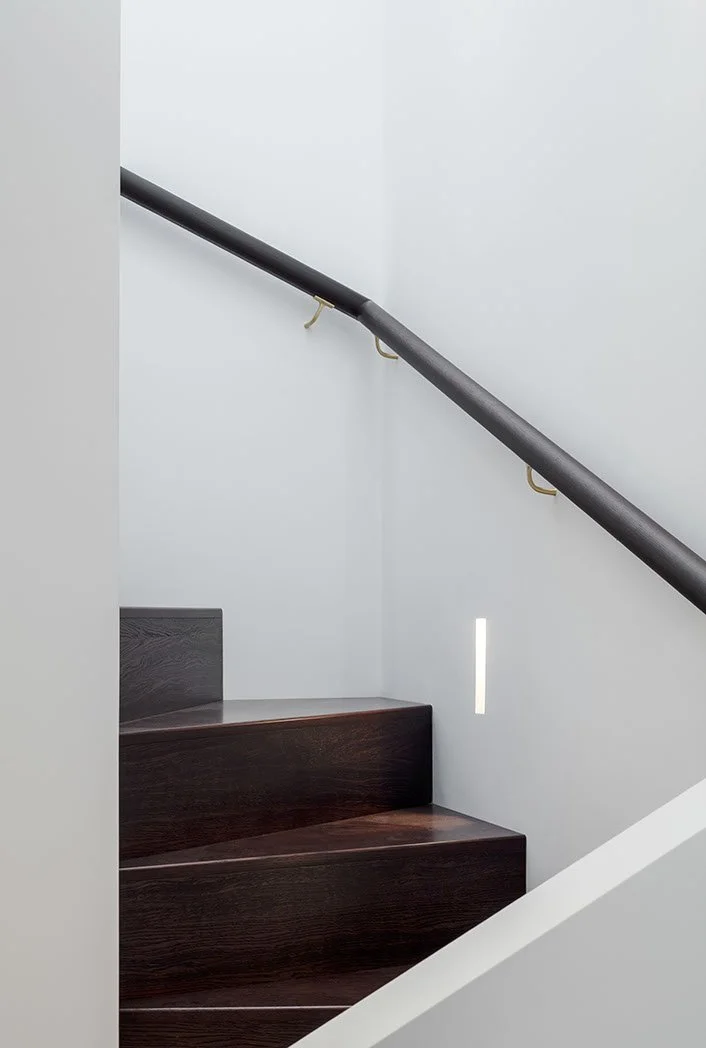
On this project we really did not want the fixings for the handrail suppports to be visible so they were set inside the wall in pads and then plastered over.
In our Hampstead Townhouse, in the new extension area set across two floors we added a cantilevered floating staircase with a delicate metal handrail and spindles
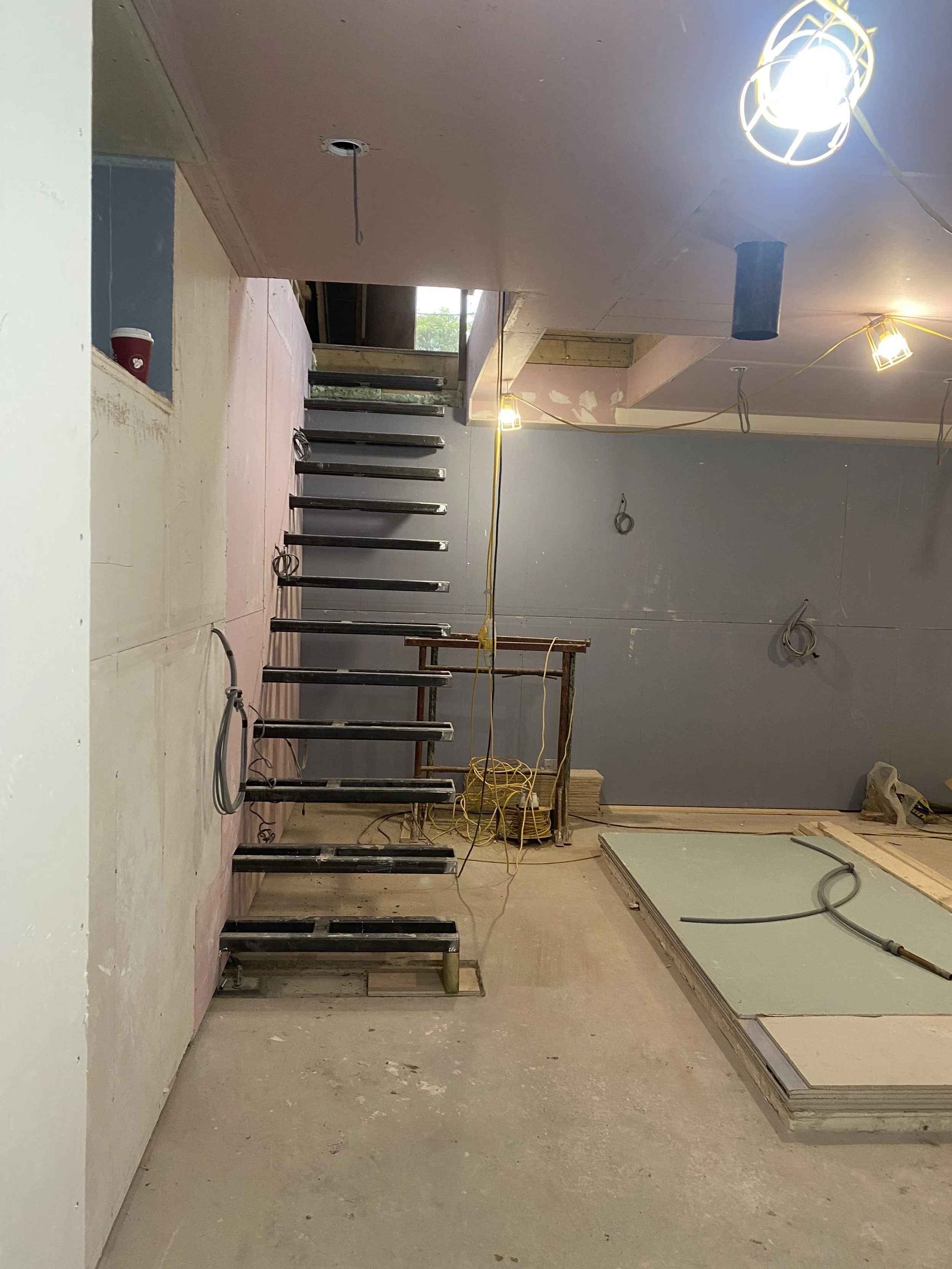
The cantilever staircase in our Hampstead Townhouse, in progress with the structural steel elements bolted back into a structure that sits inside the wall
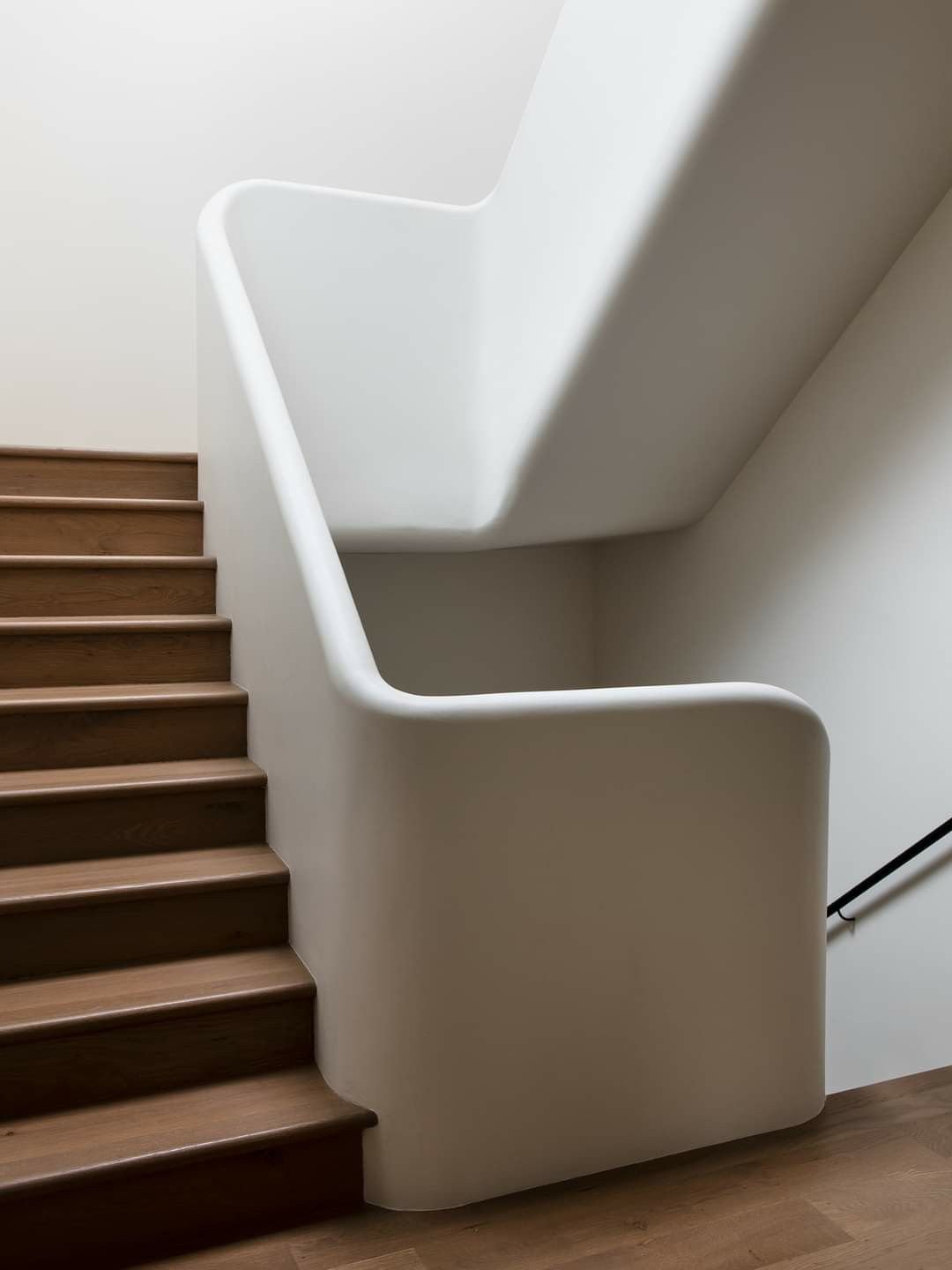
The soft curve of this staircase on the central balustrade top which doubles as a handrail is a difficult detail to achieve but looks amazing.
When a staircase is designed holistically, it becomes more than just a functional way to travel between floors. In projects where there is freedom to design a new staircase, taking the time to consider its sculptural presence, material language and detailing can make all the difference how you experience your house on a daily basis.
We regularly design staircases as part of wider residential projects, from listed houses to contemporary extensions. If you are at an early stage and would like to discuss how a new staircase could be integrated into your home, an initial conversation can help clarify what is possible and how best to approach it.