
5 Inspiring Gardens You Need To See
Words: Georgina Blaskey
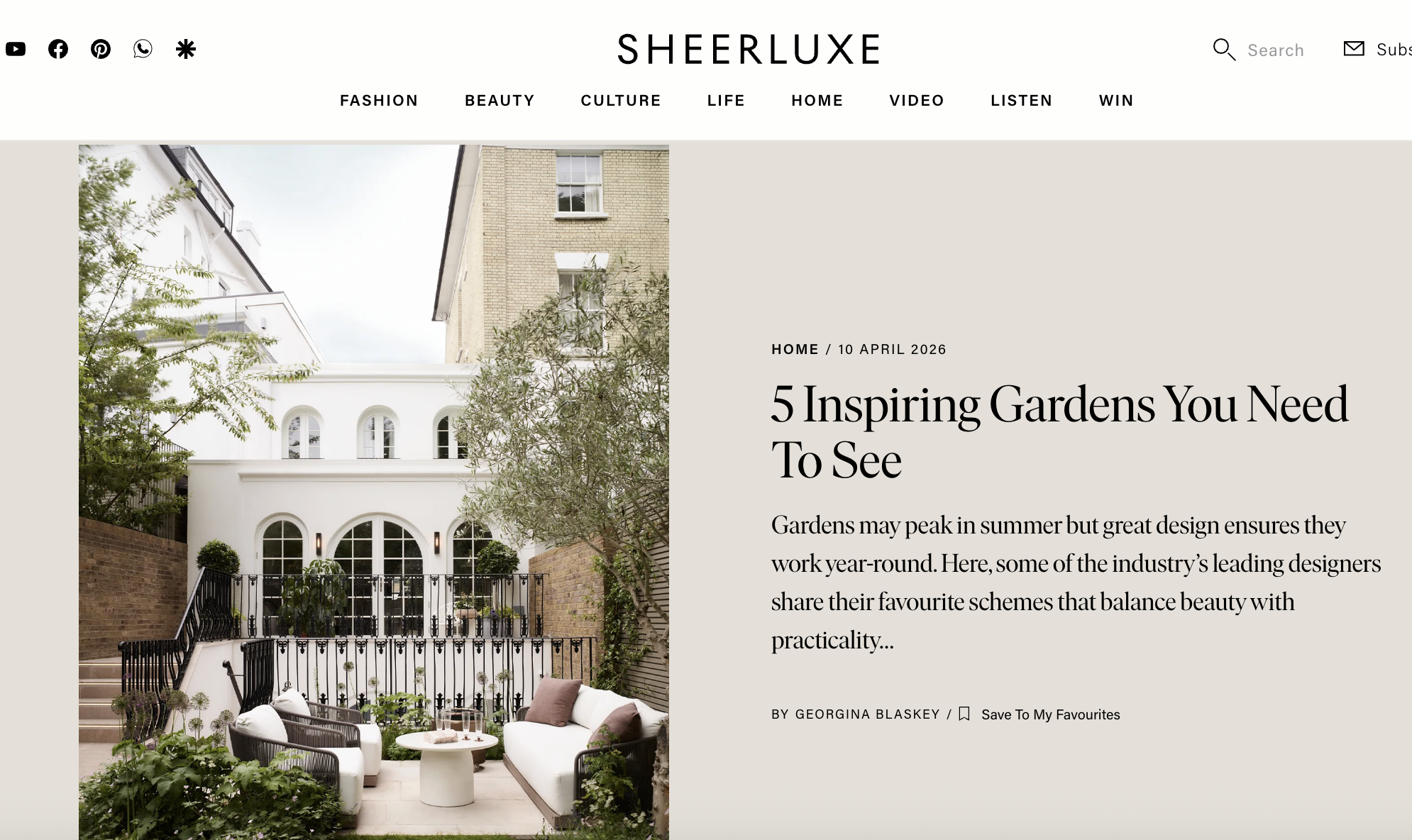
Gardens may peak in summer but great design ensures they work year-round. Here, some of the industry’s leading designers share their favourite schemes that balance beauty with practicality…
The Classically Elegant Garden
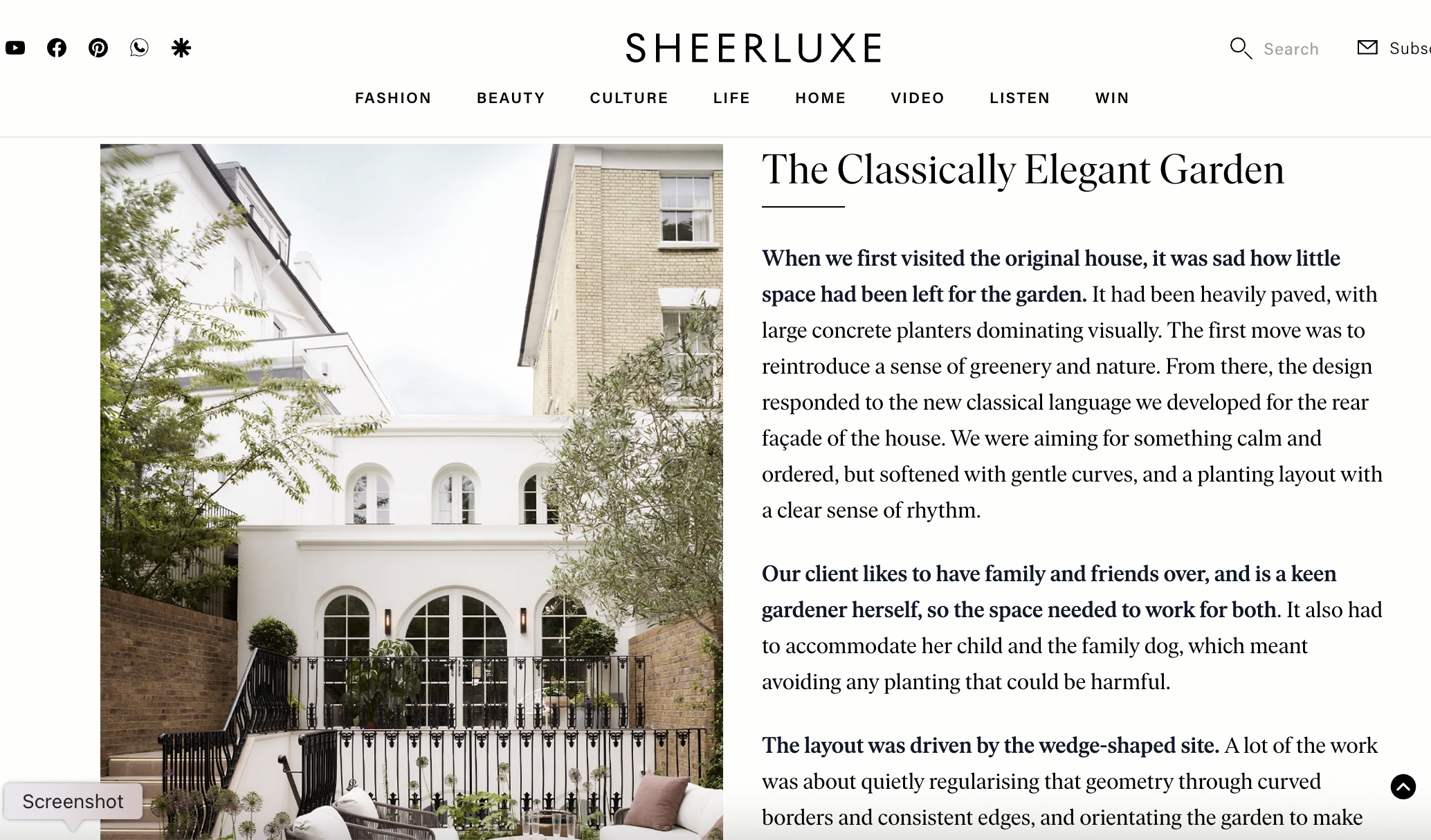
When we first visited the original house, it was sad how little space had been left for the garden. It had been heavily paved, with large concrete planters dominating visually. The first move was to reintroduce a sense of greenery and nature. From there, the design responded to the new classical language we developed for the rear façade of the house. We were aiming for something calm and ordered, but softened with gentle curves, and a planting layout with a clear sense of rhythm.
Our client likes to have family and friends over, and is a keen gardener herself, so the space needed to work for both. It also had to accommodate her child and the family dog, which meant avoiding any planting that could be harmful.
The layout was driven by the wedge-shaped site. A lot of the work was about quietly regularising that geometry through curved borders and consistent edges, and orientating the garden to make the most of the views from the ground floor rooms. The seating area moved several times during the design process. It was initially positioned further back but we found that bringing it closer to the house worked better, both practically and spatially. It allows for a stronger connection to the property and gives the best views back across the garden, without needing to walk across the lawn.
We mindfully chose a traditional palette. Natural limestone paving felt appropriate – something that will weather gently over time and sit comfortably with the architecture. For the fencing, we chose a timber-effect composite for durability and its softer, more natural appearance. The rest of the materials were defined by lush and verdant planting
Planting was key to softening the space. With boundary fences on all sides, there was a risk that the garden would feel enclosed or hard, so we focused on creating a sense of lushness which became a consistent reference point. It helped us stay focused on the overall atmosphere we were trying to achieve. We relied on symmetry where possible, alongside repetition and alignment, to bring a sense of order. The borders were also carefully shaped to disguise the irregular geometry of the site, so the garden reads as more composed and intentional.